





Baroque vs Modern Mirrors: Which Style Fits Your Interior?
Publié par Alessandro Conti / Décoration intérieure de luxe / September 22, 2026
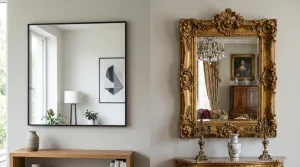
Choosing a mirror is rarely just about seeing your reflection. In interior design, a mirror acts as both a functional tool and a powerful design statement. It can expand a room, bounce light, create drama, or quietly disappear into the background. Two styles dominate the conversation when it comes to luxury mirrors: the ornate grandeur of Baroque and the clean restraint of Modern. The question of baroque mirror vs modern mirror is not simply about preference—it is about how visual weight, frame detail, architecture, and furniture pairings shape the entire feel of a space. Understanding these differences helps you decide whether a baroque or modern mirror for the living room (or any room) will elevate your interior or clash with it.
The Essence of Baroque Mirrors
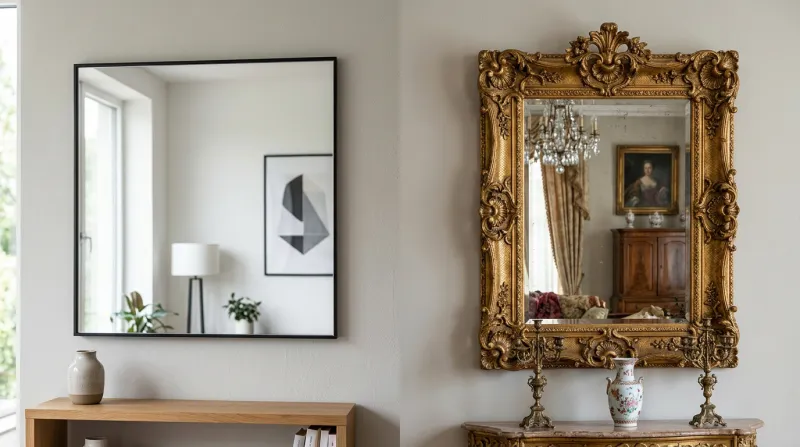
Baroque mirrors draw from the 17th- and early 18th-century European aesthetic that prized drama, movement, and opulence. Think Versailles, gilded palaces, and rooms designed to impress. These luxury mirrors typically feature heavily carved wooden frames finished in gold leaf, silver leaf, or dark lacquer. The frames often include scrolling acanthus leaves, shells, cherubs, floral motifs, and asymmetrical flourishes that catch the light and demand attention.
The glass itself may be slightly beveled or aged for a softer, more romantic reflection. Some pieces incorporate candle sconces or cresting at the top, turning the mirror into a sculptural object. Visual weight is substantial—these mirrors feel solid, present, and almost architectural. They do not merely hang on a wall; they become part of the wall’s composition.
The Essence of Modern Mirrors
Modern mirrors sit at the opposite end of the spectrum. Rooted in 20th-century design movements that valued function, simplicity, and material honesty, they favor clean geometry, minimal or absent frames, and an emphasis on the reflective surface itself. Frames, when present, are typically thin metal (brass, black steel, chrome), solid wood with crisp edges, or completely frameless with polished or beveled edges.
The overall effect is light, airy, and refined. Modern luxury mirrors often play with scale—oversized rectangles, lean floor-length pieces, or geometric compositions—rather than intricate surface decoration. The reflection is usually crisp and clear, designed to expand space and amplify natural light without adding visual clutter.
Visual Weight: Presence Versus Restraint
One of the most immediate differences in the baroque mirror vs modern mirror debate is visual weight.
A Baroque mirror carries significant visual mass. The ornate frame, reflective gold or silver finishes, and layered carvings create a sense of density. Even a medium-sized piece can dominate a wall, drawing the eye and establishing hierarchy in the room. This weight works beautifully in spaces that need an anchor—above a fireplace, over a console in a formal entry, or as the centerpiece of a living room vignette. The mirror becomes a focal point that justifies surrounding richness.
A Modern mirror, by contrast, feels lighter. Thin frames or frameless designs allow the glass to float. The eye moves across the surface rather than stopping at decorative details. This quality makes modern mirrors excellent for smaller rooms, low-ceiling spaces, or interiors that prioritize openness. They expand the perceived volume of a room without competing with furniture or architecture. In a living room, a large modern mirror can make the space feel more expansive while remaining quiet enough to let artwork, textiles, or views take precedence.
Choosing between the two often comes down to whether you want the mirror to perform as a statement sculpture or as a spatial enhancer.
Frame Detail: Ornament Versus Line
Frame detail is where the two styles declare their identities most clearly.
Baroque frames are studies in complexity. Hand-carved or high-relief molded elements create depth and shadow play. Gold leaf catches ambient light differently throughout the day, shifting from warm glow to cooler highlights. These details reward close inspection and pair naturally with other textured or patterned surfaces—brocade, velvet, marble, and carved wood. The craftsmanship signals luxury through accumulation of form.
Modern frames prioritize precision. A thin black metal edge, a seamless mitered wood joint, or a simple beveled glass edge communicates quality through restraint. The luxury here lies in material and proportion rather than decoration. A well-made modern frame feels intentional and refined; nothing is extra. This approach complements smooth surfaces, monochromatic palettes, and architectural details that already provide interest—think concrete, large windows, or clean-lined millwork.
If your interior already contains a lot of pattern, texture, or historical references, a modern mirror can provide necessary breathing room. If the room feels sparse or overly minimal, a Baroque piece can introduce the richness and focal energy it lacks.
Architecture and Spatial Pairings
Architecture sets the stage for which mirror style will feel at home.
Baroque mirrors thrive in traditional, transitional, and maximalist interiors. High ceilings, crown molding, paneled walls, fireplaces with classical surrounds, and formal room proportions all support the drama of an ornate frame. In historic homes or newly built residences with classical detailing, a Baroque mirror reinforces the architectural language rather than fighting it. Even in more eclectic spaces, a single strong Baroque piece can create intentional contrast when the rest of the room is quieter.
Modern mirrors align with contemporary, mid-century, industrial, and minimalist architecture. Floor-to-ceiling windows, open floor plans, exposed structural elements, and restrained material palettes benefit from the mirror’s ability to amplify light and space without adding ornament. In a loft with concrete floors and steel beams, a frameless or thin-framed modern mirror feels cohesive. In a Scandinavian-inspired living room with white walls and light wood, a modern piece maintains the calm, airy atmosphere.
That said, thoughtful contrast can be powerful. A Baroque mirror in an otherwise modern space can serve as a striking “found object” moment, while a sleek modern mirror in a traditional room can prevent the interior from feeling dated or overly themed. The key is intentionality: the mirror should either complete the architectural story or provide a deliberate counterpoint.
Furniture Pairings: Creating Cohesion
Furniture relationships determine whether a mirror feels integrated or awkward.
Baroque mirrors pair naturally with substantial, classical, or luxurious furnishings. Think velvet sofas with rolled arms, marble-topped consoles, carved side tables, tufted ottomans, and rich wood pieces. The ornate frame echoes the curves and details found in traditional upholstery and case goods. In a living room, a large Baroque mirror above a formal sofa or fireplace creates a symmetrical, gallery-like composition that feels complete. Metallic finishes on the mirror can also pick up brass or gold accents in lighting and hardware.
Modern mirrors work best with clean-lined furniture. Low-profile sofas, floating consoles, mid-century sideboards, and pieces with simple silhouettes allow the mirror to reinforce the overall sense of clarity. A large modern mirror leaning against a wall behind a minimalist sofa can create depth without visual competition. Materials such as glass, metal, leather, and light woods harmonize with the restrained aesthetic. Even in a more layered living room, a modern mirror can act as a calm counterbalance to patterned rugs or sculptural lighting.
Scale matters in both cases. An oversized Baroque mirror demands furniture with enough presence to hold its own. An oversized modern mirror benefits from surrounding negative space so the reflection and proportions can breathe.
Baroque or Modern Mirror for the Living Room
The living room is often the testing ground for this decision because it is both social and highly visible.
A Baroque mirror in the living room creates instant atmosphere. Hung above a fireplace or console, it can make the room feel more formal, glamorous, and collected. It works especially well in spaces used for entertaining, where a touch of drama enhances the experience. Guests notice the craftsmanship; the room feels intentional and rich. The risk is overcrowding—if the rest of the furnishings and accessories are also highly decorative, the space can tip into visual noise. Balance is essential: let the mirror be the star and keep supporting elements relatively restrained.
A modern mirror in the living room prioritizes light, space, and versatility. It is ideal for contemporary living rooms, open-concept homes, or rooms that need to feel larger and brighter. A floor-length modern piece can double as a full-length mirror while expanding the room. Thin-framed or frameless options keep the focus on the architecture and furniture rather than the mirror itself. The potential downside is a lack of personality if the rest of the room is already minimal; in those cases, the mirror may feel purely utilitarian rather than luxurious.
Many designers successfully mix the two by using one strong Baroque statement piece against a backdrop of modern furniture, or by introducing modern mirrors into rooms that already contain traditional elements for contrast and relief.
Making the Choice
There is no universal winner in the baroque mirror vs modern mirror conversation. The right choice depends on the existing architecture, the furniture you already own or plan to acquire, the atmosphere you want to create, and how much visual weight the room can comfortably carry.
Ask yourself:
- Do I want the mirror to be a sculptural focal point or a quiet spatial tool?
- Does my room already have strong architectural detail, or does it need an injection of interest?
- Are my furnishings ornate and substantial, or clean-lined and restrained?
- How important is light and the sensation of openness?
Luxury mirrors in either style succeed when they feel inevitable—when the choice supports rather than interrupts the larger design story. Both Baroque and modern approaches can deliver high-end results; they simply speak different design languages.
Whether you lean toward the theatrical richness of Baroque or the refined simplicity of Modern, the mirror you choose will shape how the room is experienced every day. Take the time to consider visual weight, frame character, architectural context, and furniture relationships. The result will be a space that feels coherent, intentional, and truly yours.
Explore Our Baroque and Modern Mirror Collections
Ready to bring the right style into your home? Browse our curated selection of Baroque mirrors for ornate, statement-making pieces that add drama and traditional luxury. Or discover our modern mirrors—clean, refined designs that enhance light and space with contemporary elegance.
ARTICLES RÉCENTS
-
Sculptural Illumination: Why Unique Contemporary Floor Lamps Are Becoming Modern Art Statements
September 26, 2026
-
Beyond Decoration: Why a Luxury Side Table Is a Smart Investment for Timeless Interiors
September 26, 2026
-

The Art of Hospitality on Wheels: How Luxury Trolleys Elevate Boutique Hotel Experiences
September 25, 2026
-
The Art of Grandeur: How Baroque Coffee Tables Transform Luxury Living Spaces
September 25, 2026
-
L'art de recevoir : comment le mobilier de bar haut de gamme transforme les intérieurs raffinés
September 24, 2026
-
Le nouvel art du repos : aménager une chambre à coucher de luxe axée sur le bien-être
September 24, 2026
-
Des reproductions encadrées qui apportent une touche d'élégance européenne toute en simplicité à la décoration intérieure des appartements
September 23, 2026
-

Comment les lustres en cristal transforment la lumière, la hauteur et le luxe des intérieurs
September 23, 2026
-
Sculptural Illumination: How Contemporary Floor Lamps Are Becoming Modern Art Statements
September 22, 2026
-
Baroque vs Modern Mirrors: Which Style Fits Your Interior?
September 22, 2026