





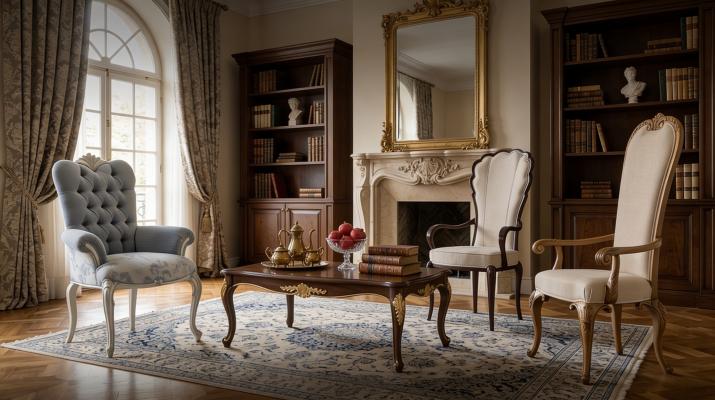
Baroque Chairs & Armchairs: Why Ornate Crown Crests and Carved Frames Define Timeless Luxury
Posted by Luxury Group International Design Team / Luxury Baroque Furniture / March 31, 2026
In an era of minimalist overload, the return to Baroque chairs and ornate luxury dining chairs represents something deeper than trend—it's a reclamation of heritage, drama, and unapologetic grandeur. The Baroque period (1600-1750) gifted us furniture that wasn't merely functional but theatrical—pieces designed to command attention, spark conversation, and elevate everyday moments into ceremonial experiences.Today's luxury homeowners and hospitality designers are rediscovering what European palaces knew centuries ago: true luxury speaks loudly. And nothing speaks louder than a Baroque armchair crowned with intricate crests, button-tufted velvet, and hand-carved mahogany frames.
The Anatomy of Baroque Majesty: What Defines These Investment Pieces
The Crown Crest: Your Room's Royal Signature
The crown back or crest rail isn't decorative excess—it's architectural punctuation. Rising above the seat like a coronet, these ornate toppers frame the sitter in nobility. Whether featuring:
- Scrolled acanthus leaves (symbolizing eternal life)
- Shell motifs (representing prosperity)
- Floral garlands (celebrating abundance)
...the crown crest transforms a chair into a throne. In formal dining rooms, these silhouettes create visual rhythm along table edges. In hotel lobbies, they establish immediate prestige.
Button-Tufted Mastery: The Luxury of Texture
Baroque button-tufted upholstery isn't merely comfortable—it's tactile jewelry. The deep diamond or channel tufting:
- Creates shadow play that shifts with daylight
- References 17th-century upholstery techniques
- Adds dimensional depth that flat modern seating cannot replicate
Premium velvet or brocade fabrics in jewel tones (emerald, sapphire, burgundy) amplify the effect, while neutral linens offer contemporary versatility without sacrificing heritage character.
The Carved Frame: Where Craftsmanship Becomes Art
True luxury Baroque chairs feature solid wood frames with hand-carved details that machines cannot replicate:
- Cabriole legs with ball-and-claw feet
- Scalloped back rails with pierced scrollwork
- Gilded accents or rich walnut/mahogany finishes
Each carving represents hours of artisan labor—an investment in human skill that mass production devalues but connoisseurs recognize instantly.
Styling Baroque Seating: From Palaces to Contemporary Spaces
The Formal Dining Room: Creating Ceremonial Spaces
The Vision: A dining experience that rivals European state banquets
The Execution:
- Position 6-8 Baroque armchairs around a substantial dining table (minimum 84" for proportion)
- Mix crown-back host chairs at table ends with scalloped-back side chairs for visual hierarchy
- Layer with crystal chandeliers, gilded mirrors, and heavy drapery
- Pro tip: Upholster in performance velvet for family-friendly durability without sacrificing luxury aesthetics
Why it works: The verticality of Baroque silhouettes draws eyes upward, emphasizing ceiling height and architectural details. In open-concept homes, these chairs define the dining zone as a destination rather than an afterthought.
Hospitality Excellence: Hotels That Guests Remember
The Vision: Lobby and restaurant spaces that photograph like museums
The Execution:
- Use Baroque armchairs in conversational groupings with modern sofas (the tension creates visual interest)
- Select carved frame pieces in unexpected colors—powder blue velvet with gold leaf, or charcoal linen with silver accents
- Position near statement lighting to highlight carving shadows
ROI Reality: Properties featuring signature Baroque seating in common areas report increased social media tagging and repeat bookings. Guests don't remember generic furniture—they remember thrones.
Contemporary Fusion: Baroque Meets Modern
Fear not the "too traditional" concern. The most sophisticated interiors pair ornate luxury dining chairs with:
- Clean-lined marble tables
- Abstract expressionist art
- Industrial lighting fixtures
The contrast creates curated tension—evidence of a collector's eye rather than a catalog purchase.
Investment Perspective: Why Authentic Baroque-Style Furniture Appreciates
Unlike trend-driven pieces that depreciate, luxury Baroque chairs offer:
| Value Factor | Baroque Advantage |
| Craftsmanship | Hand-carved details appreciate as artisan skills become scarcer |
| Materials | Solid hardwoods and premium upholstery age with patina, not deterioration |
| Timelessness | 400+ years of design history proves enduring appeal |
| Versatility | Transitions between traditional, eclectic, and maximalist interiors |
Collector's Note: When evaluating quality, examine the carving complexity, joint construction, and upholstery density. Authentic Baroque-style pieces from heritage manufacturers represent heirloom acquisitions, not disposable décor.
Curating Your Collection: Featured Baroque Masterpieces
For those ready to embrace dramatic elegance, consider these essential silhouettes:
The Regent Crown-Back Armchair Commanding presence with scrolled crest rail and deep button tufting. Ideal for host positions or statement corners.
The Venetian Scalloped-Back Side Chair Lighter visual weight with curved back rail and carved apron. Perfect for dining sets requiring 6+ pieces.
The Imperial Carved Frame Armchair Maximum ornamentation with pierced splats, cabriole legs, and gilded highlights. For spaces where more is more.
The Lasting Legacy: Why Baroque Will Never Fade
Minimalism asked us to apologize for occupying space. Baroque furniture demands we celebrate it. In a world of disposable everything, the Baroque chair remains a commitment—to craftsmanship, to beauty, to the radical act of surrounding yourself with objects that require time, skill, and intention to create.
Whether anchoring a formal dining room where generations gather, or greeting guests in a boutique hotel lobby, these pieces carry forward a 17th-century promise: luxury is not quiet, and elegance is not ashamed of its own grandeur.
The crown crest rises. The carved frame endures. The Baroque tradition continues—not as nostalgia, but as the future of aspirational living.
RECENT POSTS
-
The Art of Sitting Beautifully: Upholstered Bench Designs Where Comfort Meets Craftsmanship
October 08, 2026
-
Modern Luxury Lighting Trends That Are Quietly Transforming Elegant Interiors
October 08, 2026
-
The Quiet Power of Luxury Statues: Sculptural Accents for Opulent Interiors
October 07, 2026
-
The Art of Calm: Why Elegant Bedroom Furniture Never Feels Overwhelming
October 07, 2026
-
Royal Dressing Tables: The Elegant Centrepiece of a Sophisticated Bedroom
October 06, 2026
-
The Perfect Glow: How Luxury Dining Chandeliers Transform Formal Dining Spaces
October 06, 2026
-
When Lighting Becomes Art: Luxury Chandelier Designs That Define Grand Interiors
October 05, 2026
-
The Art of Entertaining: Luxury Bar Cabinets That Turn Home Lounges Into Statement Spaces
October 05, 2026
-
The Quiet Luxury Bathroom: Why Hidden Bathtubs Are Defining 2026
October 04, 2026
-
The Timeless Allure of Round Marble Coffee Tables in Luxury Interiors
October 04, 2026