








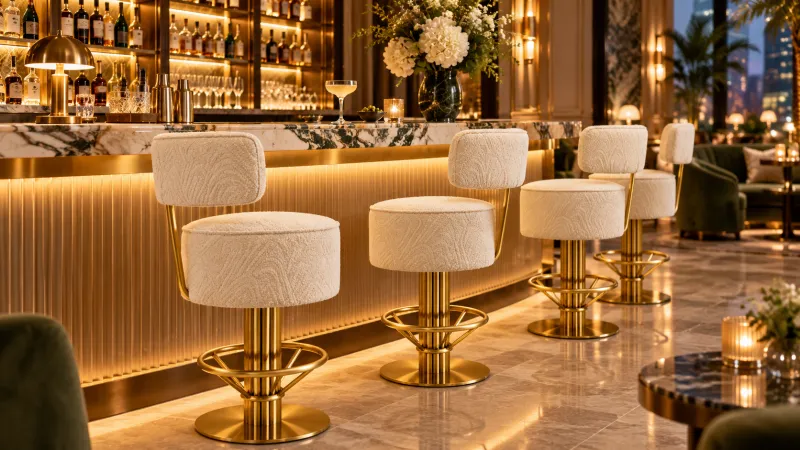
Swivel vs Fixed Bar Stools: Which Is Better for Everyday Use?
Publicado por Marco Bellini / Luxury Bar Furniture / October 20, 2026
A beautiful home bar is not just about the counter, lighting or decorative accessories. The seating plays an equally important role. Imagine enjoying your morning coffee at a kitchen island or spending an evening with friends around a private bar. If the stools feel uncomfortable or difficult to move, even a beautifully designed space can become less enjoyable.
Choosing between swivel and fixed bar stools may seem like a small decision, but it can affect comfort, movement, available space and long-term maintenance.
Both designs have their advantages. Swivel stools allow easy turning, while fixed stools provide a simple and stable seating arrangement.
When comparing swivel vs fixed bar stool designs, the best choice depends on how often the stools are used, the available space and the type of interior.
This guide will help you select the right luxury bar stools for private homes, elegant hotel bars and sophisticated restaurants.
1. What Is the Difference Between Swivel and Fixed Bar Stools?
The main difference is how the seat moves.
A swivel bar stool has a rotating seat that allows the user to turn without moving the entire stool. Some models rotate through 360 degrees, while others feature a limited turning movement.
This design is particularly useful in social spaces where people frequently turn to speak with others.
A fixed bar stool has a stationary seat attached to its frame. To change direction, the user normally needs to reposition the stool or their body.
Fixed stools are available in many styles, from simple contemporary designs to decorative upholstered models with carved wooden legs.
Neither design is automatically better.
The right option depends on your seating preferences, available floor space and the overall purpose of the bar area.
2. Swivel Bar Stools: Comfortable Movement for Social Spaces
One of the main advantages of swivel stools is the freedom to turn while remaining seated.
This can make everyday activities more convenient.
For example, someone sitting at a kitchen island can turn towards another person without dragging the stool across the floor.
In a home bar, guests can easily face the counter or turn towards the surrounding seating area.
Swivel stools can also make sitting down and standing up easier in certain layouts, especially when there is limited space to move the entire stool.
However, comfort depends on more than the rotating mechanism.
Seat padding, backrest support, footrest position and stool height all contribute to the seating experience.
For luxury interiors, upholstered swivel stools with supportive backs can provide a comfortable combination of movement and elegant design.
3. Fixed Bar Stools: Simple, Stable and Easy to Maintain
Fixed bar stools offer a more straightforward seating arrangement.
Because the seat does not rotate, the stool remains in one position unless someone moves it.
This makes fixed designs attractive for homeowners who prefer a neat and consistent furniture layout.
They are particularly suitable for kitchen counters, breakfast bars and formal dining areas where guests usually face one direction.
Fixed stools also tend to have fewer moving components than swivel models.
This can reduce the number of mechanical parts requiring inspection or maintenance.
However, stability still depends on the quality of construction, base dimensions and proper assembly.
A well-made fixed stool can provide reliable everyday seating while complementing both traditional and contemporary interiors.
For homeowners who prefer furniture with simple functionality, fixed stools are often a practical choice.
4. Which Bar Stool Is More Comfortable for Everyday Use?
Comfort is one of the most important factors when choosing between these two designs.
Swivel stools can feel more convenient because users can change direction without moving the entire stool.
This is particularly useful when people frequently interact with others around them.
Fixed stools may feel more settled because the seat remains in one position.
However, the rotating function alone does not determine comfort.
A stool with a supportive backrest, suitable seat depth and comfortable upholstery can be enjoyable whether it swivels or remains stationary.
For everyday use, consider the following features:
- Seat Padding: Provides comfort during longer periods of sitting.
- Backrest Support: Helps support a relaxed seated position.
- Footrest Height: Allows feet to rest comfortably.
- Seat Width: Provides enough room without overcrowding the counter.
- Armrests: Can improve comfort but require additional space.
When choosing the best bar stool for home bar use, prioritise the overall seating design rather than focusing only on the movement mechanism.
5. Swivel vs Fixed Bar Stool: Which Needs More Space?
Available floor space can influence which stool design works best.
Swivel stools allow users to turn while the base stays in position.
This can be useful in compact bar areas where moving a stool backwards is inconvenient.
However, rotating seats with backrests or armrests need enough surrounding clearance to turn without hitting nearby furniture.
Fixed stools do not require rotational clearance, but users may need additional room to pull them away from the counter.
The actual space required depends on stool dimensions and the surrounding layout.
As a general guideline, leave approximately 15 cm between the edges of neighbouring stools for comfortable everyday seating.
For wider upholstered stools with armrests, more spacing may be necessary.
Also consider the walking area behind the stools.
Allowing approximately 90 cm of clear space behind an occupied seating area is a useful starting point, with more room where people regularly pass behind seated guests.
6. Which Type of Bar Stool Is More Durable?
Durability is important when investing in quality furniture.
Fixed stools generally have fewer mechanical components because their seats do not rotate.
This can make their construction simpler to maintain.
Swivel stools contain a rotating mechanism that may require occasional inspection, especially when used frequently.
Over time, moving components can experience wear depending on the design, manufacturing quality and intensity of use.
However, a high-quality swivel stool can also provide many years of service when properly maintained.
The frame material, joints, upholstery and protective floor fittings are equally important.
Wooden stools should have securely assembled frames, while metal designs require suitable connections and protective finishes.
When selecting luxury bar stools, look for quality construction, appropriate weight capacity and manufacturer-recommended maintenance.
7. How Do Swivel and Fixed Stools Affect Your Flooring?
Bar stools are frequently moved, turned and repositioned during everyday use.
This makes floor protection an important consideration, especially in luxury homes featuring marble, wooden flooring or polished stone.
Swivel stools can reduce the need to drag the entire stool when changing direction.
However, the base may still move when someone sits down or stands up.
Fixed stools are more likely to be repositioned when users want to change their seating direction.
For both designs, choose suitable protective feet or glides.
Soft floor protectors can help reduce scratches and unwanted marks.
Avoid dragging heavy metal or wooden stools across delicate surfaces.
For highly polished flooring, confirm that the stool's protective fittings are compatible with the floor material.
Small precautions can help preserve the appearance of both your bar furniture and surrounding interior.
8. Best Bar Stools for Home Bars and Kitchen Islands
Home bars and kitchen islands often serve several purposes.
They may be used for breakfast, casual meals, working or entertaining friends.
Swivel stools are attractive in these spaces because users can easily turn towards the kitchen or surrounding living area.
They are particularly useful in open-plan homes where conversation takes place in different directions.
Fixed stools are suitable when the seating arrangement mainly faces the counter.
They also work well in minimalist kitchens where a clean and consistent furniture arrangement is preferred.
For a private luxury home, the best bar stool for home bar areas should match the counter height and provide sufficient comfort for regular use.
Consider the daily habits of your household before making a decision.
9. Swivel vs Fixed Bar Stools for Hotels and Restaurants
Commercial hospitality spaces have different seating requirements from private homes.
In luxury hotel bars, guests may spend extended periods sitting, socialising and enjoying drinks.
Swivel stools can make these spaces feel more interactive because guests can turn towards companions without moving their seats.
However, the rotating mechanisms should be suitable for frequent commercial use.
Fixed stools are often preferred in restaurants where seating arrangements need to remain organised.
They can also be practical in busy bar areas because they have fewer moving parts.
For hotel restaurants, seat comfort, cleaning requirements and upholstery durability deserve particular attention.
Commercial settings should prioritise furniture tested or rated for the expected level of use.
Explore our luxury hotel furniture collection for coordinated seating and furnishings suited to elegant hospitality interiors.
10. Choosing the Right Bar Stool Height
Even the most attractive bar stool can feel uncomfortable when its height does not match the counter.
Most European kitchen counters measure approximately 90–95 cm high, while traditional bar counters are often around 105–110 cm.
For a comfortable arrangement, aim for approximately 25–30 cm between the stool seat and the underside of the counter, adjusting for the actual design and the user's needs.
Counter-height stools commonly have seat heights of around 60–70 cm.
Bar-height stools generally measure approximately 75–80 cm at the seat.
Always measure your actual counter rather than relying only on standard dimensions.
If the stool has armrests, check whether they fit beneath the counter.
Proper height selection improves seating comfort and helps maintain a practical layout.
11. Which Design Works Better with Luxury Interior Styles?
Both swivel and fixed stools can complement sophisticated interiors.
Contemporary European homes often feature upholstered swivel stools with curved backs, slim metal frames and refined finishes.
These designs work beautifully in modern kitchens and open-plan living spaces.
Traditional interiors may benefit from fixed wooden bar stools featuring carved details and rich upholstery.
Baroque-inspired stools can introduce decorative character through shaped legs, elegant fabrics and detailed craftsmanship.
For modern luxury bars, a combination of comfortable upholstery and carefully selected materials can create an attractive seating arrangement.
The most important consideration is choosing stools that complement the counter, surrounding furniture and overall interior style.
Final Thoughts: Swivel or Fixed Bar Stools?
The choice between swivel and fixed bar stools comes down to how the seating will be used.
Swivel stools are particularly suitable for social spaces where people frequently turn, talk and move between different activities.
Fixed stools offer a simple seating experience and can be easier to maintain because they contain fewer moving components.
For private homes, comfort and available space should guide the decision.
For luxury hotels and restaurants, durability, maintenance and commercial suitability become equally important.
When comparing swivel vs fixed bar stool options, consider seat height, backrest support, floor protection and construction quality before purchasing.
Explore our luxury bar stools collection to discover elegant seating designs for sophisticated home bars, kitchen islands and hospitality interiors.
PUBLICACIONES RECIENTES
-
Side Table Height Guide: What Should Sit Next to a Sofa or Armchair?
October 21, 2026
-

Formal Dining Room Case Study: Seating 10 Without Overcrowding
October 21, 2026
-
What Size Dresser Fits Your Bedroom? A Simple Measurement Guide
October 20, 2026
-
Swivel vs Fixed Bar Stools: Which Is Better for Everyday Use?
October 20, 2026
-

How to Protect Luxury Outdoor Furniture Through Winter: A Complete Care Guide
October 19, 2026
-
How Luxury Furniture Delivery Works Across Europe: A Complete Shipping Guide
October 19, 2026
-

How to Clean and Protect a Marble-Top Table: A Complete Care Guide
October 18, 2026
-

How to Clean a Crystal Chandelier Without Damaging the Finish
October 18, 2026
-

Dining Table Size Guide: How Many Chairs Fit Without Feeling Cramped?
October 17, 2026
-

Round vs Square Coffee Tables for Family Living Rooms: Which Shape Works Best?
October 17, 2026


