








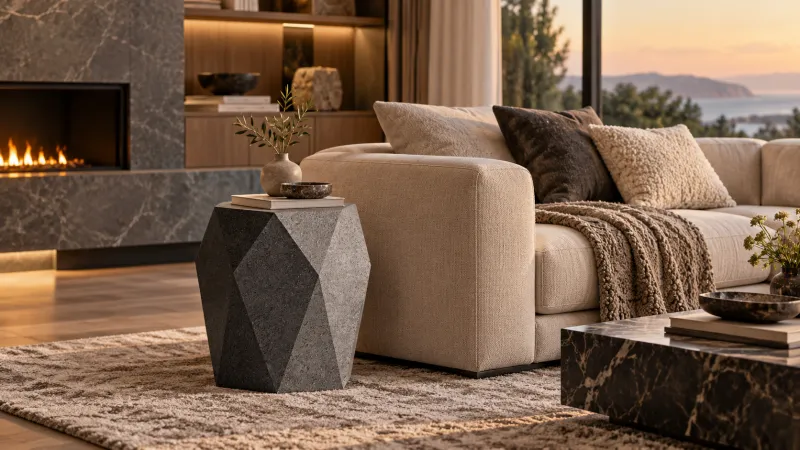
Side Table Height Guide: What Should Sit Next to a Sofa or Armchair?
Publié par Marco Bellini / Meubles de salon / October 21, 2026
A side table may be one of the smallest pieces of furniture in a living room, but its height can make a surprising difference. Imagine relaxing on your favourite sofa with a cup of coffee. If the table beside you is too low, you have to bend down every time you reach for your drink. If it is too high, it may feel awkward and interrupt the room's balanced appearance.
The right side table should be easy to reach, comfortable to use and beautifully matched with the surrounding furniture.
Whether you are furnishing a luxury home, a private villa or an elegant hotel lounge, choosing the correct side table height helps create a more practical and attractive seating arrangement.
This side table height guide explains how to measure your sofa or armchair, choose suitable table dimensions and create a comfortable layout for everyday living.
1. Why Does Side Table Height Matter?
Side tables are designed to keep everyday essentials within easy reach.
They provide a convenient surface for drinks, books, reading glasses, lamps and decorative accessories.
However, a beautiful side table may become inconvenient when its height does not match the surrounding seating.
A table positioned too low requires unnecessary bending, while an overly tall table may feel uncomfortable beside a low sofa.
Correct proportions also improve the overall appearance of the living room.
For example, a sleek contemporary sofa often looks best with a side table that follows its clean, balanced lines.
A traditional Baroque armchair may complement a decorative side table with a carefully proportioned top and sculptural legs.
Understanding the ideal side table height next to sofa arrangements helps balance everyday comfort with interior design.
2. What Is the Standard Height of a Side Table?
Most side tables measure approximately 45–65 cm in height, although some designs fall outside this range.
The ideal measurement depends on the furniture placed beside them.
For a standard living room sofa, side tables measuring around 50–60 cm are often suitable.
Lower lounge furniture may work better with a table measuring approximately 40–50 cm.
Traditional armchairs with higher armrests may require slightly taller designs.
Instead of choosing a table based only on standard dimensions, measure your existing seating first.
The goal is to position the tabletop where it can be reached naturally from a comfortable seated position.
This simple approach makes selecting the right side table height much easier.
3. How to Measure the Ideal Side Table Height Next to a Sofa
The most useful starting point is the height of your sofa's armrest.
Measure vertically from the floor to the top of the armrest.
For everyday use, choose a side table with a tabletop approximately level with the armrest.
A difference of around 5 cm above or below the armrest is often comfortable, depending on the furniture design and personal preference.
For example, if your sofa armrest measures 58 cm high, a side table measuring approximately 53–63 cm may work well.
However, the most comfortable option is usually close to the armrest height.
If the sofa has unusually wide or padded arms, consider how easily you can reach the table without leaning.
The ideal side table height next to sofa seating should allow you to place or collect a drink with a natural arm movement.
4. Choosing Side Table Height for Low-Profile Sofas
Contemporary living rooms often feature low-profile sofas with wide seats and relaxed proportions.
These designs create a comfortable atmosphere but require careful furniture coordination.
A tall side table placed beside a low sofa may look disproportionate.
It can also make reaching for objects less convenient.
For low sofas, consider side tables measuring approximately 40–50 cm, depending on the armrest height.
Round concrete tables, compact marble designs and low wooden side tables often complement this style.
However, always check the actual height of the sofa arm rather than relying on the sofa's overall back height.
A low-profile sofa may have surprisingly tall armrests.
Choosing furniture based on measured proportions helps maintain a natural and attractive arrangement.
5. What Side Table Height Works Best Next to an Armchair?
Armchairs come in many different styles, from low modern lounge chairs to tall traditional upholstered designs.
As a result, there is no single table height suitable for every armchair.
For a standard upholstered armchair, a side table measuring around 50–65 cm may provide comfortable access.
The exact height should be selected according to the armrest.
For example, an armchair with a 60 cm armrest will often pair well with a side table of similar height.
If the chair has no armrests, use the seated person's natural reach as your guide.
The tabletop should be accessible without excessive bending or stretching.
For decorative Baroque armchairs, consider the shape of the carved arms and surrounding furniture.
A traditional marble-top side table can complement the chair while providing a practical surface for everyday use.
6. Side Table Height for Reading Chairs and Lounge Seating
A reading corner should feel comfortable and relaxing.
The side table plays an important role because it holds books, reading glasses, drinks and often a table lamp.
For a reading chair, the tabletop should be positioned close enough to reach without changing your seated posture.
A height similar to the chair's armrest is usually a suitable starting point.
If the table will support a reading lamp, consider the total height of the lamp and its position relative to your eyes.
The light should illuminate your book comfortably without creating unnecessary glare.
For lower lounge chairs, a compact side table may work better than a tall decorative pedestal.
In luxury hotel suites, this arrangement can create an inviting corner where guests can read or relax.
7. How Close Should a Side Table Be to a Sofa?
Height is important, but the distance between the table and seating also affects comfort.
A side table should be positioned close enough to reach naturally while sitting.
As a practical guideline, a gap of approximately 5–15 cm between the table and sofa arm may work well, depending on the design.
However, this is not a fixed requirement.
Some tables can sit almost directly beside the sofa, while others need more space because of projecting bases or decorative details.
Avoid positioning the table where it blocks access to the seating area.
For sofas with reclining features, check the space required when the seat is fully extended.
If the table is placed near a main walkway, ensure that people can move comfortably without bumping into its edges.
A well-planned arrangement should feel natural rather than crowded.
8. Does Side Table Shape Affect the Ideal Height?
The shape of a side table does not directly determine its ideal height, but it can influence how comfortably the table fits beside the seating.
Round Side Tables
Round tables are often useful in compact seating arrangements. Their curved edges create a softer appearance and allow easier movement around nearby furniture.
Square Side Tables
Square tables offer a practical surface for books, decorative objects and small lamps. They work well beside sofas with straight arms and contemporary designs.
Rectangular Side Tables
Rectangular designs provide additional surface length and can be useful between two chairs or beside larger sofas.
Pedestal Side Tables
Pedestal designs feature a central supporting base and may provide a compact footprint, depending on their construction.
Regardless of shape, the tabletop should remain easy to reach and proportionate to the surrounding furniture.
9. Choosing the Right Side Table Size for Luxury Living Rooms
Luxury living rooms often include large sofas, decorative armchairs, marble coffee tables and carefully selected lighting.
The side table should complement these pieces without overwhelming the seating area.
For spacious living rooms, a larger marble or wooden side table may create an attractive decorative feature.
In smaller interiors, a compact round side table can provide useful surface space while keeping the room visually open.
The material also influences the overall appearance.
Marble introduces natural patterns, wood creates warmth, and metal offers a refined architectural character.
For traditional European interiors, carved wooden tables and decorative metal finishes can complement classical furniture.
Contemporary spaces may benefit from simple geometric shapes and smooth surfaces.
When following a side table height guide, remember to consider width and depth alongside height.
A correctly sized table should look balanced from every angle.
10. Side Table Height for Luxury Hotels and Guest Suites
Side tables are important features in hotel bedrooms, lounge areas and private suites.
They provide guests with convenient surfaces for drinks, books, phones and decorative accessories.
In luxury hotel lounges, side tables should be comfortable to use from the surrounding sofas and armchairs.
If the seating arrangement includes different chair heights, it may be necessary to select different table dimensions.
For example, low lounge chairs may work best with shorter side tables, while taller upholstered armchairs may require higher surfaces.
Hotel designers should also consider furniture stability, cleaning access and durability.
A properly positioned side table improves guest comfort without interrupting movement through the room.
Explore our luxury hotel furniture collection for coordinated seating and complementary furnishings suited to elegant hospitality interiors.
11. Common Side Table Height Mistakes to Avoid
Several common mistakes can affect the comfort and appearance of a seating arrangement.
Choosing Height Based Only on Appearance
A beautiful table may be inconvenient if the tabletop is difficult to reach.
Ignoring Sofa Armrest Measurements
The height of the sofa back does not indicate the correct side table height. Measure the armrest instead.
Selecting an Overly Tall Table
A tall table beside a low sofa can feel awkward and visually unbalanced.
Placing the Table Too Far Away
Even a correctly sized table becomes inconvenient when positioned beyond comfortable reach.
Overlooking the Table Base
Wide or projecting bases can prevent a table from sitting close to the sofa.
Checking these details before purchasing can help you avoid unnecessary problems.
Final Thoughts: Find the Perfect Side Table Height
Choosing the right side table is about finding a comfortable balance between height, proportions and everyday use.
As a starting point, select a table with a surface approximately level with the sofa or armchair armrest.
Pair your side table with elegant seating from our luxury sofa collection to create a comfortable, stylish and well-balanced living room.
For standard seating, tables measuring around 50–60 cm are often suitable, while lower lounge furniture may require shorter designs.
Remember to consider the distance from the seating, the available walking space and the overall interior style.
Whether you prefer a traditional Baroque side table or a contemporary marble design, accurate measurements help create an attractive and practical arrangement.
Use this side table height guide when furnishing your living room, reading corner or luxury hotel suite.
Explore our luxury side table collection to discover elegant furniture designs for sophisticated European homes and hospitality interiors.
ARTICLES RÉCENTS
-
Side Table Height Guide: What Should Sit Next to a Sofa or Armchair?
October 21, 2026
-

Formal Dining Room Case Study: Seating 10 Without Overcrowding
October 21, 2026
-
What Size Dresser Fits Your Bedroom? A Simple Measurement Guide
October 20, 2026
-

Swivel vs Fixed Bar Stools: Which Is Better for Everyday Use?
October 20, 2026
-

How to Protect Luxury Outdoor Furniture Through Winter: A Complete Care Guide
October 19, 2026
-

How Luxury Furniture Delivery Works Across Europe: A Complete Shipping Guide
October 19, 2026
-

How to Clean and Protect a Marble-Top Table: A Complete Care Guide
October 18, 2026
-

How to Clean a Crystal Chandelier Without Damaging the Finish
October 18, 2026
-

Dining Table Size Guide: How Many Chairs Fit Without Feeling Cramped?
October 17, 2026
-
Round vs Square Coffee Tables for Family Living Rooms: Which Shape Works Best?
October 17, 2026


