





Legacy Over Trends: Why Hotels Invest in Hand-Carved, Gold-Leaf Furniture
Posted by Luxury Group International Design Team / Luxury Hotel Interior / August 15, 2026
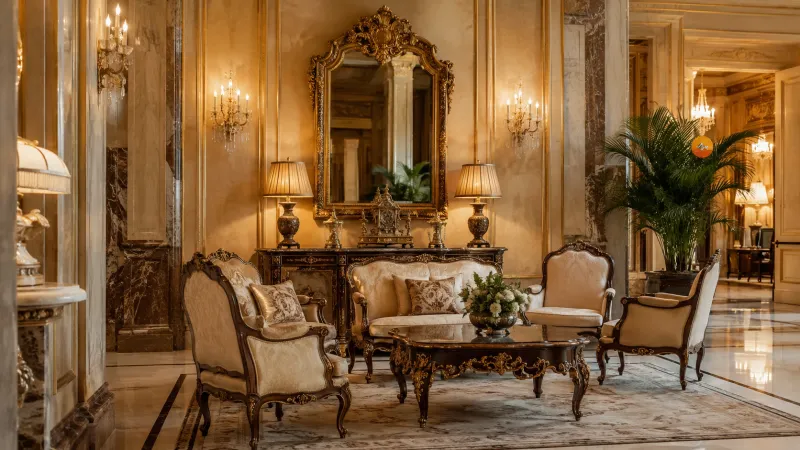
A hotel lobby may be renovated every few years, but a guest remembers the pieces that give it character. The carved console beneath a mirror. The gilded armchair beside a fireplace. The statement table that makes the entrance feel unlike every other property on the itinerary.
That is why more owners are looking at luxury hotel furniture differently. Instead of asking, “What is the cheapest way to refresh this space today?” they are asking a harder question: “What will still deserve to be here ten years from now?”
That question is bringing hand-carved wood, gold-leaf detailing, substantial joinery and repairable finishes back into serious hospitality conversations. In the right property, these become heirloom quality hospitality pieces—objects that help define the hotel’s identity while reducing dependence on repeated trend-led replacement.
The Hidden Cost of Furniture That Ages Too Quickly
Fast-trend interiors have an obvious appeal: lower entry cost, quick coordination and an instantly current look. For a tight opening schedule, that can be useful. The problem appears later.
Luxury hotel furniture lives a harder life than residential furniture. Chairs move constantly, table edges meet luggage, and upholstery faces frequent cleaning. Even when a piece remains usable, a thin finish, dated silhouette or non-repairable surface can make it look tired before the owner wants another refurbishment.
Industry guidance commonly places guestroom case goods and broader luxury hotel furniture FF&E within multi-year replacement cycles, often around seven to ten years depending on category, condition and brand requirements.
For luxury hotel furniture, purchase price is only one part of the equation. Owners should also consider freight, installation, downtime, maintenance, reupholstery, disposal and the cost of procuring replacements again.
The 10-Year Lifecycle Calculation Owners Should Run
Consider this simplified example for one high-visibility lobby or lounge furniture package. These figures are illustrative, not market quotations.
| 10-Year Cost Item | Hand-Carved / Gold-Leaf Legacy Package | Fast-Trend Replacement Package |
|---|---|---|
| Initial furniture investment | €30,000 | €14,000 |
| Routine care and minor repairs | €3,500 | €3,000 |
| Planned restoration / reupholstery | €6,000 | €0 |
| Full furniture replacements | €0 | €28,000 |
| Freight, installation and disposal | €1,500 | €6,000 |
| Estimated 10-year total | €41,000 | €51,000 |
The legacy package costs more than twice as much on day one, yet the lower-cost route ends this example €10,000 higher after ten years because it is replaced twice.
That is why a 10-year hotel furniture lifecycle cost comparison matters. It shifts the discussion from invoice price to cost per year of service. When evaluating luxury hotel furniture, owners should ask what can be repaired, refinished, reupholstered or adapted before asking what can be bought most cheaply.
Hand Carving Gives a Hotel Something Trends Cannot Easily Copy
Hand-carved furniture has visible depth. Scrolls, leaves, shells and architectural details catch light differently across the day. Small variations reveal the hand of the maker rather than the uniformity of a moulded decorative surface.
That matters because memorable hotels need objects with a point of view.
Casa Padrino, for example, presents baroque collections that include handcrafted pieces, solid woods and furniture finished with details such as gold or silver leaf. (Casa Padrino) For palatial suites, boutique lobbies, grand restaurants or heritage-inspired interiors, baroque style furniture can become a strong visual anchor.
The best luxury hotel furniture does not require every object to be ornate. One carved console, ceremonial chair, mirror frame or centre table can carry the room while simpler pieces give it breathing space.
Why Gold Leaf Works When It Is Used With Restraint
Gold-leaf furniture for hotels can be misunderstood. Used badly, gold becomes theme. Used well, it becomes light.
A gilded edge can catch warm reception lighting. Gold details on mirror frames, chair arms or table bases can connect furniture to brass hardware and decorative lighting without overwhelming the room.
This is where specification matters. Gold-leaf furniture for hotels is most convincing when gilding belongs to the design language rather than being added simply to make a piece appear expensive.
In luxury hotel furniture, restraint often communicates more confidence than excess.
Legacy Pieces Can Coexist With Modern Luxury
Choosing heirloom quality hospitality pieces does not mean turning the entire hotel into a period interior.
A hand-carved console can sit beneath a minimal mirror. A gilded lounge chair can face a restrained stone table. A richly detailed centrepiece can feel even more important when the surrounding architecture is quiet.
For projects with a contemporary direction, modern luxury furniture can provide cleaner silhouettes and a complementary visual language. Casa Luxury currently presents furniture, lighting and accessories for high-end interiors, including contemporary collections suited to modern schemes.
The objective is not to choose “old” or “new.” It is to build luxury hotel furniture schemes with enough identity that they do not need to chase every passing trend.
Provenance Makes the Furniture Part of the Hotel Story
Luxury hospitality sells more than comfort. It sells place, story and discernment.
When a designer can explain where a piece was made and how it was crafted, luxury hotel furniture becomes part of the guest narrative.
For owners sourcing authentic Italian furniture, Fatto Italia focuses on made-in-Italy pieces produced through specialist workshops, with solid wood, hand carving, inlay and made-to-order options described across its collections.
That provenance strengthens the appeal of heirloom quality hospitality pieces. A chair, cabinet or console becomes more than an item on an FF&E schedule; it becomes an object with a story worth preserving.
Repairability May Be the Most Underrated Luxury Feature
Owners often judge luxury hotel furniture by fabric, finish and silhouette. They should also ask what happens after year three.
Can a scratched surface be refinished? Can a loose joint be repaired? Can the upholstery be renewed without discarding the frame? Can gilding be touched up? Can damaged carved details be restored?
A well-made timber frame with accessible joinery and a renewable finish gives the owner options. A low-cost composite piece with an irreparable decorative surface may offer only one: replacement. High-quality solid materials can also offer greater scope for refinishing and long-term care than disposable surface treatments.
That difference is central to the economics of luxury hotel furniture. The most valuable piece is not necessarily the one that never shows wear. It is the one still worth maintaining when wear appears.
Where Legacy Furniture Makes the Strongest Case
Not every hotel item needs to become an heirloom.
Reserve higher investment for places where guests notice design most: reception, lobby lounges, signature suites, private salons, restaurants, bars, wedding spaces and other high-visibility zones. Heavily used functional pieces may deserve a more pragmatic specification.
This selective approach keeps the luxury hotel furniture budget disciplined. Owners spend more where identity matters and remain practical elsewhere.
Key pieces can then survive multiple refreshes while rugs, lighting and fabrics change around them.
Five Questions to Ask Before Signing Off the FF&E Package
Before approving luxury hotel furniture, ask:
-
Will this piece still look intentional if the dominant trend changes in three years?
-
Can its frame, finish and upholstery be repaired or renewed?
-
Does it give guests a reason to remember or photograph the space?
-
Does its craftsmanship or provenance add to the hotel story?
-
What does the 10-year hotel furniture lifecycle cost comparison show after maintenance, freight and replacement are included?
A higher purchase price becomes easier to defend when the answers are strong.
Poll: Heirloom Piece or Trendy Replacements?
Option A: One hand-carved, gold-leaf statement piece designed to remain for a decade or more.
Option B: A lower-cost trend-led piece replaced every three to five years as the interior changes.
There is no universal answer. A lifestyle hotel that frequently reinvents its concept may value flexibility. A five-star independent hotel, heritage property, luxury resort or destination restaurant may gain more from continuity.
But one principle is difficult to ignore: when an interior is designed to be remembered, disposable-looking furniture can become an expensive shortcut.
The best luxury hotel furniture earns its place twice—first in the room, then through the years it continues to serve. When owners combine craftsmanship, repairability, provenance and disciplined lifecycle costing, hand-carved and gold-leaf pieces stop looking like indulgences. They start looking like long-term hospitality assets.
RECENT POSTS
-
The Art of Sitting Beautifully: Upholstered Bench Designs Where Comfort Meets Craftsmanship
October 08, 2026
-
Modern Luxury Lighting Trends That Are Quietly Transforming Elegant Interiors
October 08, 2026
-
The Quiet Power of Luxury Statues: Sculptural Accents for Opulent Interiors
October 07, 2026
-
The Art of Calm: Why Elegant Bedroom Furniture Never Feels Overwhelming
October 07, 2026
-
Royal Dressing Tables: The Elegant Centrepiece of a Sophisticated Bedroom
October 06, 2026
-
The Perfect Glow: How Luxury Dining Chandeliers Transform Formal Dining Spaces
October 06, 2026
-
When Lighting Becomes Art: Luxury Chandelier Designs That Define Grand Interiors
October 05, 2026
-
The Art of Entertaining: Luxury Bar Cabinets That Turn Home Lounges Into Statement Spaces
October 05, 2026
-
The Quiet Luxury Bathroom: Why Hidden Bathtubs Are Defining 2026
October 04, 2026
-
The Timeless Allure of Round Marble Coffee Tables in Luxury Interiors
October 04, 2026