





Luxury Outdoor Furniture Trends 2026: What Europe’s Elite Are Choosing for Their Gardens
Posted by Luxury Group International Design Team / Luxury Outdoor Furniture / February 12, 2026
There is a quiet revolution unfolding across Europe's most beautiful gardens.
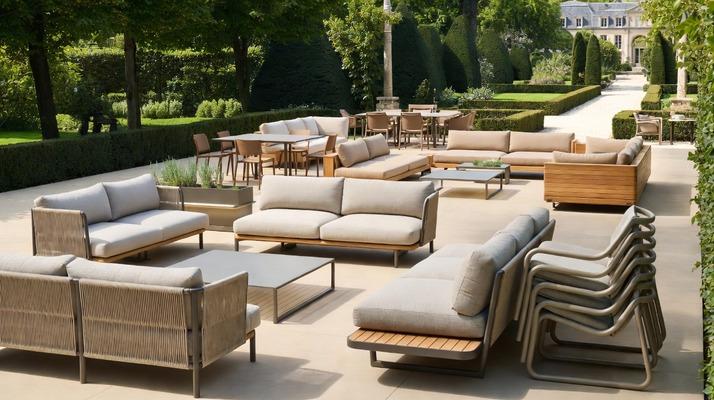
It does not announce itself with bold logos. It does not clamour for attention. Instead, it reveals itself in the way morning light catches a curved teak armrest. In the silvered patina of a table that has weathered five seasons with increasing grace. In the deliberate placement of a swivel chair—angled not toward company, but toward the garden itself.
Welcome to luxury outdoor furniture in 2026.
After months observing debut collections at Maison&Objet Paris, analysing market intelligence from Mordor Intelligence and Business Research Insights, and consulting the designers shaping this moment, one truth emerges with clarity:
Europe's elite are no longer buying furniture to impress their guests. They are buying it to serve their lives.
This is not austerity. This is sophistication, redefined.
The Garden Takes Back Its throne
For two decades, we treated outdoor spaces as interior extension. Sofas mimicked indoor sectionals. Dining areas replicated formal rooms. The garden became a second living room, only with better weather.
In 2026, that era ends.
"Furniture no longer dominates the setting," writes Rowan Grey of Luxus Home & Garden EU. "Instead, it settles into the garden, framed by greenery and open skies."
Dining tables once anchored to paved terraces now rest beneath established trees. Luxury garden sofas that previously faced each other—enforcing sociability—now turn outward, angled toward pathways and planting.
The garden is no longer backdrop. It is protagonist.
The 2026 litmus test: If a piece screams for attention, it does not belong here. If it whispers—through refined proportions, recessive palettes, materials that improve with age—it has found its moment.
Teak's Second Act: Sustainability Without Sacrifice
Teak has long occupied a curious position in luxury outdoor furniture. Buyers demanded it. Few questioned its origins.
2026 marks the year the European elite stopped asking "Is this teak?" and started asking "Is this certified teak?"
According to Mordor Intelligence, wood maintains a commanding 40.3 per cent share of the European outdoor furniture market. But the narrative around that wood has transformed entirely.
The appeal is no longer teak's golden, just-unboxed glow. The appeal is its ageing grace.
The silver patina that develops naturally is now understood not as maintenance deferred, but as authenticity earned. European buyers are rejecting annual oiling regimens that preserve manufactured perfection. They are embracing the honest surface that announces: This furniture has lived.
FSC certification has moved from differentiator to expectation. Supply chain transparency is now table stakes.
Yet the most significant material story of 2026 is not teak's reinvention.
It is teak's successor.
The Accoya Revolution: When Wood Becomes Smarter
Talenti Elton, unveiled at Maison&Objet Paris by acclaimed designers Ludovica Serafini and Roberto Palomba, represents a watershed.
Its structure is Accoya—radiata pine transformed through acetylation, a non-toxic process that renders softwood more stable than tropical hardwood. Warranty: 25 years above ground. Sustainability: carbon-negative cradle-to-gate.
This is not a compromise material. It is a superior material, achieved through intelligence rather than extraction.
When one of Europe's most prestigious outdoor brands leads with Accoya across multiple collections, the trajectory is clear. Modified wood will not replace teak overnight.
But for the informed buyer in 2026, it is no longer the alternative. It is the upgrade.
Circular Luxury: The End of Planned Obsolescence
If Accoya represents material innovation, MUSOLA VAIREA represents material revolution.
Designed by Yonoh Studio and debuted at Maison&Objet, VAIREA is constructed from 100 per cent recycled and 100 per cent recyclable polypropylene. Its stainless steel frame is fully recyclable. Its upholstered seat covers are removable.
Not for cleaning. For replacement.
Consider the implications. A client purchases VAIREA in 2026. In 2031, their aesthetic preferences evolve. The structure remains perfect. The frame remains flawless.
They do not discard the chair. They do not purchase an entirely new set.
They simply refresh the upholstery.
This is circular luxury. It is the antithesis of planned obsolescence. And it arrives precisely when Europe's most discerning buyers demand that their consumption align with their conscience.
The Comfort Breakthrough Outdoor Seating Has Waited For
Steve Nichols, Head of Product at Tupelo Goods and formerly of YETI and Adidas, articulates a tension that has long plagued outdoor furniture:
"Furniture is utilitarian by nature, but most of its life is spent unoccupied. When it's not functioning as furniture, its job becomes aesthetic. It must support the environment as sculpture."
Indoor seating solved this dual mandate decades ago. Outdoor seating, constrained by weather resistance and material limitations, lagged behind.
Talenti Elton closes the gap.
Its breakthrough: the first integrated adjustable backrest and armrest mechanism fully concealed within a sofa structure. Individual customisation of inclination and module position. A "tailor-made revolution," as Archiproducts described it, that "gives the sofa dynamic sinuosity."
For the first time, luxury garden furniture offers the ergonomic sophistication of a high-design indoor sofa.
The trade-off between comfort and durability has been engineered away.
Fire at the Centre: The Dining Table Transformed
Perhaps the most unexpected trend of 2026 concerns not seating but gathering.
The dining table—long treated as a peripheral terrace element, positioned at the garden's edge for convenient service—is migrating inward.
Statement tables now rest centrally within the garden, not at its perimeter. Fire features are integrated as the nucleus. Seating balances solid benches with luxury garden chairs designed for hours of occupation, not perfunctory meals.
"Fire features become the nucleus," Luxus Europe reports, "creating warmth and glow that draws people together as evening sets in."
This is temporal expansion. The garden that once retired at sunset now remains vital. The table that once hosted Sunday lunch now hosts Monday evening conversation.
Furniture that withstands both afternoon heat and evening firelight earns its place.
Micro-Sanctuaries: The Introvert's Garden
Among the most revealing developments in 2026 garden design is the rise of the micro-sanctuary.
Not an outdoor room. Not a full seating group. Something smaller, more intimate: a shaded nook, a sheltered corner, a single chair positioned for morning coffee and nothing else.
Champions include RHS Chelsea luminaries Tom Stuart-Smith and Jinny Blom. The aesthetic draws from arbours, trellises, and privacy screens—not to enclose, but to discover.
This trend speaks directly to the psyche of the 2026 luxury buyer. The post-pandemic garden initially served as social stage, hosting gatherings delayed for two years.
By 2026, the impulse has rotated inward.
The ultimate luxury is no longer entertaining well. It is being alone well.
Furniture that serves this impulse must be sculptural when empty and enveloping when occupied. It must earn its place visually during the 23 hours it stands unoccupied. It must deliver transcendently during the hour it is inhabited.
This is a demanding brief. The collections meeting it—Talenti Itaca's soft nest embrace, MUSOLA BOIRA's modular intimacy—represent outdoor furniture's highest expression.
2026 Belongs to the Informed Buyer
What unites these trends is not aesthetic coherence.
It is buyer sophistication.
The European elite of 2026 are not passive recipients of designer dictates. They are active curators. They understand the difference between certified teak and uncertified stock. They recognise Accoya's superiority. They appreciate that removable upholstery represents not inconvenience but future freedom.
They ask better questions. They expect better answers.
For the brands serving this clientele, the mandate is clear: transparency is the new luxury. Not mystery. Not exclusivity achieved through obscurity. Exclusivity achieved through knowledge.
The buyer who understands why their luxury garden sofa costs what it costs, why its materials were chosen, how it will age, and how it can evolve with their taste—
That buyer is not shopping for status.
That buyer is shopping for permanence.
The Furniture That Disappears
As we move deeper into 2026, one prediction feels secure:
The furniture that endures will not be the furniture that shouted loudest at the trade fair. It will be the furniture that settled into gardens with quiet confidence. That aged without apology. That served both gathering and solitude with equal grace.
It will be furniture that understood its role was not to dominate the garden.
But to disappear into it.
RECENT POSTS
-
The Art of Hospitality on Wheels: How Luxury Trolleys Elevate Boutique Hotel Experiences
September 25, 2026
-
The Art of Grandeur: How Baroque Coffee Tables Transform Luxury Living Spaces
September 25, 2026
-
The Art of Entertaining: How Luxury Bar Furniture Transforms Sophisticated Interiors
September 24, 2026
-
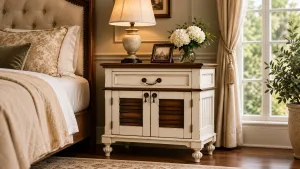
The New Art of Rest: Curating a Wellness-Focused Luxury Bedroom
September 24, 2026
-
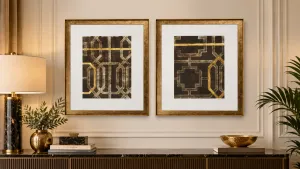
Framed Prints That Bring Effortless European Elegance to Apartment Interiors
September 23, 2026
-

How Crystal Chandelier Lighting Transforms Light, Height and Luxury Interiors
September 23, 2026
-
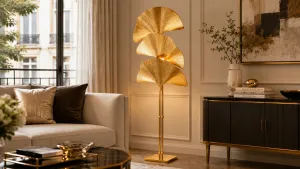
Sculptural Illumination: How Contemporary Floor Lamps Are Becoming Modern Art Statements
September 22, 2026
-
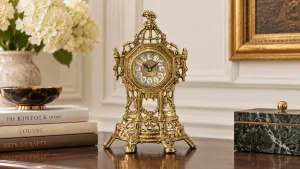
The Art of Choosing a Luxury Table Clock: A Guide to Size, Style & Placement
September 21, 2026
-
Elegant Wall Lamps: The Secret to Warmer, More Characterful Luxury Interiors
September 21, 2026
-
Pairing Luxury TV Units with Living Room Furniture: Create Cohesive Elegance in Modern Homes & Hotel
September 20, 2026