





Outdoor Armchair Anthropology: How Different Cultures Design Patio Seating
Posted by Luxury Group International Design Team / Luxury Outdoor Furniture / March 21, 2026
When you sink into an outdoor armchair, you're not just sitting—you're experiencing centuries of cultural wisdom about how humans should relax, socialize, and connect with nature. From the bustling terracotta terraces of Santorini to the serene gardens of Kyoto, every culture has developed distinctive approaches to outdoor seating that reflect their climate, social customs, and philosophical relationship with the outdoors.Let's embark on a fascinating journey exploring how different corners of the world have shaped the modern outdoor armchair and global patio furniture styles we see today.
Mediterranean Soul: Where Shade Meets Social Life
Step onto a Greek island or Italian coastal village, and you'll immediately notice how outdoor seating embraces the art of lingering. Mediterranean cultures have perfected low-profile seating positioned strategically under pergolas and olive trees.
The classic Mediterranean outdoor lounge armchair features terracotta tones, ceramic tile accents, and wrought iron frames that have withstood generations. These aren't just chairs—they're gathering points for hours-long conversations over coffee and wine.
"In Mediterranean design, outdoor furniture must invite you to stay, not just sit," explains Elena Rossini, a Rome-based landscape designer. "We design for the long afternoon, not the quick rest."
The mosaic details, whitewashed finishes, and emphasis on shaded placement all stem from a climate that demands clever heat management and a culture that values unhurried social connection.
Scandinavian Simplicity: Form Follows Function in the North
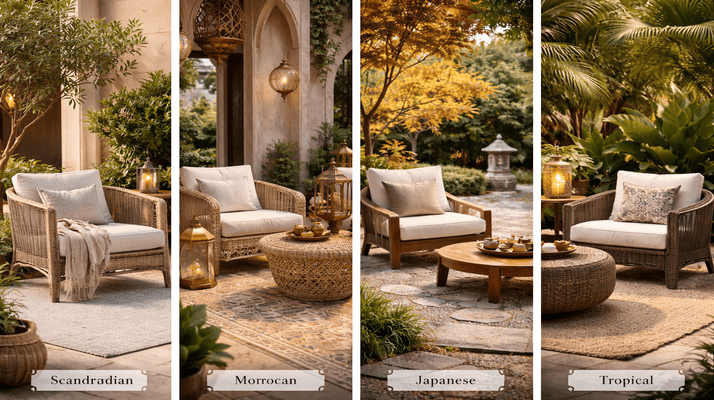
Travel north to Scandinavia, and outdoor furniture philosophy shifts dramatically. Here, the outdoor wooden armchair embodies minimalist beauty married to serious weather resistance.
Scandinavian design prioritizes clean lines, natural materials like teak and pine, and finishes that celebrate rather than hide wood grain. Every piece serves a purpose, with zero tolerance for purely decorative elements.
These chairs must endure harsh winters and brief, precious summers. The result? Furniture that's built to last decades, not seasons, with a stripped-down aesthetic that lets nature provide the decoration.
The Scandinavian modern outdoor armchair typically features ergonomic angles for genuine comfort during long summer evenings when daylight stretches until midnight. It's furniture designed by people who treasure every outdoor moment.
Japanese Zen: Harmony Between Garden and Seating
Japanese outdoor seating philosophy approaches furniture as an extension of the garden itself, not an intrusion into it. Low platforms, natural wood, and minimalist forms create what might be called "invisible comfort."
The traditional Japanese outdoor wooden armchair sits close to the ground, encouraging contemplation and a humble relationship with nature. Bamboo, cedar, and teak are finished naturally, allowed to weather and grey with time—a feature, not a flaw.
"In Japanese design, outdoor furniture should whisper, not shout," notes Kenji Yamamoto, a Kyoto-based garden designer. "It complements the landscape rather than competing with it."
This philosophy has influenced contemporary global patio furniture styles worldwide, introducing Western designers to the beauty of aged materials and the concept of wabi-sabi—finding perfection in imperfection.
Moroccan Magic: Color, Pattern, and Comfort Collide
Cross the Mediterranean to North Africa, and outdoor seating explodes with color, texture, and ornate detail. Moroccan outdoor lounge armchair designs embrace low seating piled with vibrant cushions, intricate mosaic tile work, and metalwork that doubles as art.
These spaces prioritize comfort through abundant textiles rather than ergonomic engineering. Outdoor rooms feature built-in seating along walls, creating intimate conversation nooks protected from intense sun.
The Moroccan approach teaches us that outdoor furniture can be simultaneously practical and decorative, serving daily life while celebrating craftsmanship and beauty.
American Comfort: Bigger, Bolder, Built for Entertaining
American outdoor furniture design reflects a culture of casual entertaining and prioritizing comfort. The iconic Adirondack chair—with its wide armrests perfect for holding drinks and reclined back—epitomizes this philosophy.
Contemporary American modern outdoor armchair designs tend toward generous proportions, plush cushioning, and configurations optimized for group gatherings. Outdoor kitchens, fire pits, and entertainment systems influence furniture placement and scale.
This approach has globalized the concept of the "outdoor room"—treating patios as extensions of indoor living space rather than separate garden areas.
Australian Coastal Resilience: Built for Sun and Salt
Australian outdoor furniture design prioritizes extreme durability against harsh coastal conditions. Salt air, intense UV exposure, and a culture centered on outdoor living have produced global patio furniture styles that marry toughness with laid-back aesthetics.
Powder-coated aluminum, marine-grade fabrics, and weather-resistant synthetics dominate. Yet the designs remain relaxed and inviting, reflecting the Australian philosophy that outdoor living shouldn't feel precious or formal.
British Garden Elegance: Tradition Meets Function
British garden furniture traditions emphasize formality, traditional materials like teak and cast iron, and arrangements suited to afternoon tea rather than all-day lounging.
The classic British outdoor wooden armchair often features slatted backs, arms designed for teacup stability, and finishes that require annual maintenance—a practice embraced as part of seasonal garden care rituals.
Latin American Vibrancy: Suspended Comfort and Bold Hues
Latin American cultures have contributed hammocks, hanging chairs, and vibrant color palettes to global patio furniture styles. Tropical climates favor breathable materials, elevated seating for air circulation, and designs that accommodate afternoon siestas.
Woven textiles, bright colors, and adaptable furniture that transitions between relaxation and socializing reflect cultures that blur indoor-outdoor boundaries year-round.
Climate Shapes Culture, Culture Shapes Seating
Every outdoor furniture tradition ultimately reflects its environment. Mediterranean shade-seeking, Scandinavian weather-resistance, Japanese garden integration, and Australian coastal durability all emerged from necessity before becoming cultural aesthetics.
Today's modern outdoor armchair market beautifully blends these traditions. You might find Moroccan-inspired mosaic tables paired with Scandinavian teak chairs, or Japanese minimalism meeting American comfort in hybrid designs.
Bringing Global Wisdom to Your Patio
Understanding these cultural approaches helps you make more intentional choices about your own outdoor space. Ask yourself: Do you value the Mediterranean's social lingering, Japanese contemplation, American entertaining, or Scandinavian simplicity?
The most successful outdoor spaces often blend traditions—perhaps a Scandinavian outdoor wooden armchair with Moroccan cushions, or American comfort with Japanese restraint.
The beauty of today's global patio furniture styles is that you're no longer limited by geography. You can honor multiple traditions, creating outdoor spaces that tell your own cultural story while respecting the wisdom of designers across continents and centuries.
Your outdoor armchair is more than furniture—it's a bridge across cultures, climates, and philosophies about how humans should experience the outdoors.
RECENT POSTS
-
The Art of Hospitality on Wheels: How Luxury Trolleys Elevate Boutique Hotel Experiences
September 25, 2026
-
The Art of Grandeur: How Baroque Coffee Tables Transform Luxury Living Spaces
September 25, 2026
-
The Art of Entertaining: How Luxury Bar Furniture Transforms Sophisticated Interiors
September 24, 2026
-
The New Art of Rest: Curating a Wellness-Focused Luxury Bedroom
September 24, 2026
-
Framed Prints That Bring Effortless European Elegance to Apartment Interiors
September 23, 2026
-

How Crystal Chandelier Lighting Transforms Light, Height and Luxury Interiors
September 23, 2026
-
Sculptural Illumination: How Contemporary Floor Lamps Are Becoming Modern Art Statements
September 22, 2026
-

The Art of Choosing a Luxury Table Clock: A Guide to Size, Style & Placement
September 21, 2026
-
Elegant Wall Lamps: The Secret to Warmer, More Characterful Luxury Interiors
September 21, 2026
-
Pairing Luxury TV Units with Living Room Furniture: Create Cohesive Elegance in Modern Homes & Hotel
September 20, 2026