





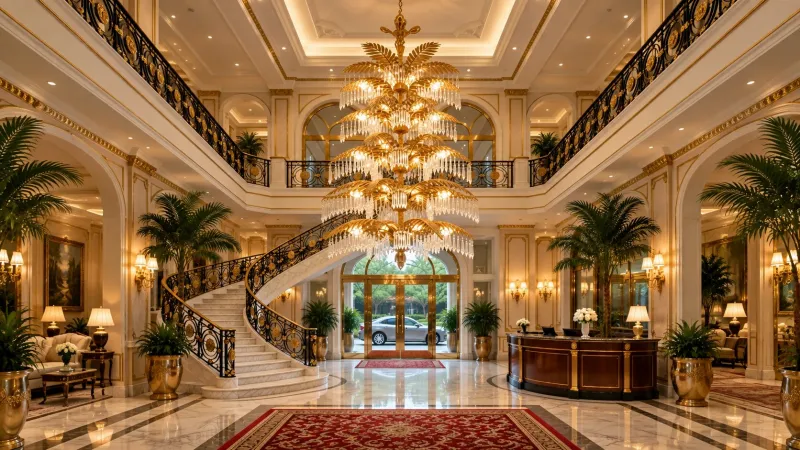
The Drama of Height: A Luxury Chandelier Case Study for Double-Height Interiors
Posted by Lukas Berger / Luxury Chandelier / October 01, 2026
A double-height room has a natural sense of drama. Tall walls, expansive windows, and generous vertical space create an architectural canvas that ordinary lighting can easily leave feeling incomplete. The challenge is finding a chandelier that does not simply fill the height, but belongs to it.
This is where a carefully planned double height chandelier case study becomes valuable. Choosing a fixture for a soaring entrance, grand living room, or luxury hotel lobby requires more than selecting the largest design available. Diameter, drop, viewing angles, ceiling proportions, furniture placement, and the visual relationship between floors must work together.
The right chandelier should feel impressive from the moment someone enters the room — while remaining proportionate from every important viewpoint.
The First Question: How Large Should the Chandelier Be?
In a double-height space, scale is often the most important consideration. A chandelier that looks substantial in a showroom may appear surprisingly small once suspended within a large architectural volume.
For a large chandelier high ceiling, designers typically consider the dimensions of the room rather than focusing only on ceiling height. The fixture should have enough visual presence to anchor the space without overwhelming architectural details.
Diameter becomes particularly important in wide living rooms and entrance halls. A narrow chandelier suspended in a broad double-height space can lose its impact, while an oversized fixture with excessive width may compete with windows, balconies, or architectural features.
The objective is visual proportion — the chandelier should appear as though it was designed specifically for the room.
Understanding Chandelier Drop in a Double-Height Room
Once the diameter has been established, the next challenge is suspension height.
Chandelier sizing for double height room applications requires designers to consider both the physical drop of the fixture and the height from which it will be viewed. A chandelier suspended too close to the ceiling can appear disconnected from the room below. One positioned too low may interfere with circulation, sightlines, or the relationship between floors.
In an entrance hall, the suspension point may be determined by the main arrival path and the height of surrounding architectural elements. In a living room, the position may relate more closely to the seating arrangement and the visual centre of the space.
The drop should therefore be considered as part of the entire room composition rather than as an isolated measurement.
Sightlines Change Everything
One of the most fascinating aspects of a double-height lighting project is that the chandelier is rarely viewed from just one position.
Guests may see it from the entrance, the ground floor, a staircase, an upper-level gallery, or across the room. Each angle reveals a different relationship between the fixture and the architecture.
This is why sightlines are essential when selecting luxury chandeliers for tall interiors. A multi-tiered design can create a beautiful vertical rhythm when viewed from below, while its silhouette may become even more dramatic from an upper landing.
A successful installation should look intentional from every major viewpoint.
Choosing Between Contemporary and Royal Chandelier Designs
The architectural character of the room often determines the personality of the chandelier.
A contemporary double-height interior may benefit from a sculptural chandelier featuring clean geometry, cascading glass, or streamlined metallic elements. These designs reinforce the openness of modern architecture without introducing unnecessary visual weight.
In classical or European-inspired interiors, royal chandeliers can create a very different atmosphere. Crystal drops, elaborate metalwork, multiple tiers, and traditional detailing can complement ornate mouldings, marble floors, decorative wall panels, and grand staircases.
The most successful choice is one that responds to the architecture rather than simply following a trend.
The Relationship Between Chandelier and Furniture
Scale does not stop at the ceiling. The chandelier should visually connect with the furniture below it.
In a grand living room, the lighting fixture should relate to the dimensions of the seating arrangement, coffee table, and surrounding architectural features. Over a dining table, its width and drop should correspond with the table itself while maintaining comfortable clearance.
This creates a visual axis between ceiling, lighting, furniture, and floor — making the entire interior feel cohesive.
A chandelier that is technically impressive but disconnected from the furniture can make an otherwise luxurious room feel unbalanced.
Testing the Fixture Before the Final Installation
One of the most valuable stages of a double height chandelier case study is visual testing. Before finalising the fixture, designers can examine its proposed diameter, drop, and position in relation to important sightlines.
Digital visualisation and scaled drawings can help reveal whether the chandelier will dominate the architecture or disappear within it. Viewing the proposed position from the entrance, staircase, seating area, and upper floor can uncover proportion issues before installation.
This process is particularly important for bespoke or large-scale luxury chandeliers, where changing the suspension height or overall dimensions after installation can be complicated.
When the Chandelier Becomes Architecture
The finest chandeliers in double-height interiors do more than illuminate a room. They contribute to its architecture.
A cascading crystal fixture can echo the verticality of a staircase. A sculptural modern design can reinforce geometric architectural lines. A grand traditional chandelier can connect ornate ceiling details with the furnishings below.
This is where lighting becomes part of the design language rather than an accessory added at the end.
The Final Perspective
Designing lighting for a double-height room is ultimately an exercise in proportion, perspective, and restraint. The perfect fixture is not necessarily the biggest one. It is the one whose diameter feels right, whose suspension creates the intended visual drama, and whose silhouette remains beautiful from every important viewpoint.
Whether the project calls for contemporary luxury chandeliers or elaborate royal chandeliers, thoughtful attention to scale and sightlines can transform a tall interior from impressive to unforgettable.
In a double-height space, the chandelier is often the first thing people look up to — and the last detail they remember.
Note:- Discover the ultimate shopping experience with our luxury furniture app — browse handcrafted Baroque pieces, luxury living room collections, and exclusive designs, all from the convenience of your phone.
RECENT POSTS
-
The Art of Sitting Beautifully: Upholstered Bench Designs Where Comfort Meets Craftsmanship
October 08, 2026
-
Modern Luxury Lighting Trends That Are Quietly Transforming Elegant Interiors
October 08, 2026
-

The Quiet Power of Luxury Statues: Sculptural Accents for Opulent Interiors
October 07, 2026
-
The Art of Calm: Why Elegant Bedroom Furniture Never Feels Overwhelming
October 07, 2026
-
Royal Dressing Tables: The Elegant Centrepiece of a Sophisticated Bedroom
October 06, 2026
-
The Perfect Glow: How Luxury Dining Chandeliers Transform Formal Dining Spaces
October 06, 2026
-
When Lighting Becomes Art: Luxury Chandelier Designs That Define Grand Interiors
October 05, 2026
-
The Art of Entertaining: Luxury Bar Cabinets That Turn Home Lounges Into Statement Spaces
October 05, 2026
-
The Quiet Luxury Bathroom: Why Hidden Bathtubs Are Defining 2026
October 04, 2026
-
The Timeless Allure of Round Marble Coffee Tables in Luxury Interiors
October 04, 2026