





The Missing Pieces: What Most Homes Overlook in Contemporary Bedroom Furniture
Posted by Luxury Group International Design Team / Luxury Bedroom Furniture / March 06, 2026
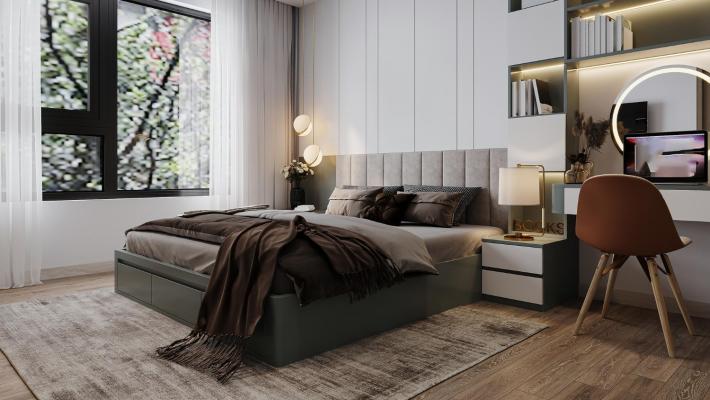
When we think of contemporary bedroom furniture, the mind usually drifts to sleek lines, minimalist palettes, and the "less is more" philosophy. We see a glossy catalog image and think, I can do that. But more often than not, homeowners find that once the pieces are delivered, the room feels more like a sterile hotel lobby than a sanctuary of modern bedroom luxury.The truth is, achieving a sophisticated contemporary space isn't just about buying the right bed frame; it’s about avoiding common contemporary furniture mistakes that compromise both comfort and character. If your room feels "almost there" but lacks that designer edge, you’re likely missing these three foundational pillars.
1. The Scale and Proportion Trap
One of the most frequent contemporary furniture mistakes involves a misunderstanding of scale. In the quest for minimalism, many people choose furniture that is either too small for the room—leaving awkward "dead zones"—or so oversized that the "breathable" feel of contemporary design is lost.
Contemporary bedroom furniture relies on the relationship between objects and negative space. If you have a high ceiling, a low-profile platform bed without a substantial headboard can look swallowed by the architecture. Conversely, shoving a massive, wide-dresser into a compact room kills the flow.
The Fix: Measure your "path of travel." Ensure there is at least 30 to 36 inches of walkway around your furniture. Luxury isn't just the material; it’s the ease of movement within the space.
2. Neglecting "Tactile Warmth"
Contemporary design is often wrongly equated with "cold." When homeowners select contemporary bedroom furniture with hard surfaces—think glass, polished metal, or high-gloss lacquers—and forget to balance them with texture, the room loses its soul.
To achieve true modern bedroom luxury, you must introduce a tactile hierarchy. If your bed frame is a sleek, dark wood, pair it with an upholstered bench in a heavy weave or a velvet lounge chair.
- Layering Materials: Incorporate natural elements like stone, wood grain, or matte metals.
- The Goal: Every surface should invite a different sense of touch. This prevents the "showroom" effect and creates a lived-in elegance.
3. Lighting: The Invisible Furniture
Most people treat lighting as an afterthought, but in a contemporary setting, the light fixtures are as much a part of the furniture as the nightstands. A common mistake is relying solely on harsh overhead recessed lighting, which flattens the dimensions of your contemporary bedroom furniture.
Modern bedroom luxury is defined by "pools of light."
- Task Lighting: Sleek, adjustable bedside lamps or hanging pendants.
- Accent Lighting: LED strips behind a headboard or under a floating dresser to create a weightless, ethereal glow.
- Ambient Lighting: A statement chandelier that acts as the room’s sculptural centerpiece.
Balancing Form and Functionality
Finally, the biggest oversight is choosing form over function. Contemporary design should simplify your life, not complicate it. If your gorgeous nightstand doesn't have a drawer for your essentials, clutter will inevitably pile up on top, ruining the minimalist aesthetic you worked so hard to achieve.
When shopping for contemporary bedroom furniture, look for integrated technology—USB ports hidden in drawers, "soft-close" hinges, and hidden compartments. True luxury is a space that works for you as much as it looks good for guests.
Conclusion
Creating a contemporary sanctuary is about more than just following the latest trends; it’s about understanding the principles of space, texture, and light. By avoiding common contemporary furniture mistakes—like ignoring scale or settling for a "cold" atmosphere—you can transform your sleeping quarters into a masterclass of modern bedroom luxury.
Stop looking at what's trendy and start looking at how each piece interacts with your specific space. When you prioritize proportion and tactile warmth, your bedroom stops being a collection of furniture and starts being an experience.
RECENT POSTS
-

The Art of Hospitality on Wheels: How Luxury Trolleys Elevate Boutique Hotel Experiences
September 25, 2026
-

The Art of Grandeur: How Baroque Coffee Tables Transform Luxury Living Spaces
September 25, 2026
-
The Art of Entertaining: How Luxury Bar Furniture Transforms Sophisticated Interiors
September 24, 2026
-
The New Art of Rest: Curating a Wellness-Focused Luxury Bedroom
September 24, 2026
-
Framed Prints That Bring Effortless European Elegance to Apartment Interiors
September 23, 2026
-

How Crystal Chandelier Lighting Transforms Light, Height and Luxury Interiors
September 23, 2026
-
Sculptural Illumination: How Contemporary Floor Lamps Are Becoming Modern Art Statements
September 22, 2026
-

The Art of Choosing a Luxury Table Clock: A Guide to Size, Style & Placement
September 21, 2026
-

Elegant Wall Lamps: The Secret to Warmer, More Characterful Luxury Interiors
September 21, 2026
-
Pairing Luxury TV Units with Living Room Furniture: Create Cohesive Elegance in Modern Homes & Hotel
September 20, 2026