





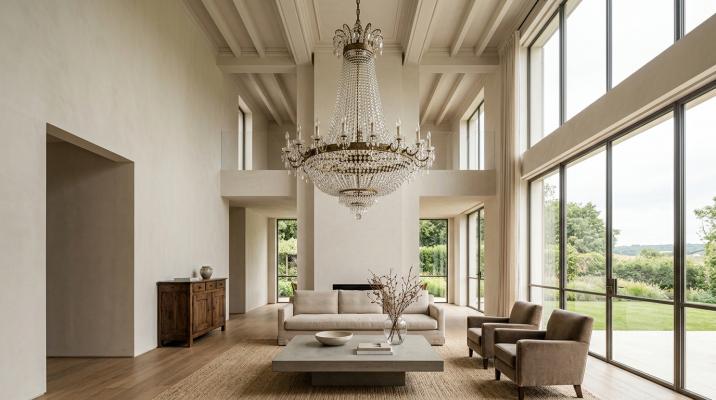
Vintage Chandeliers in Modern Homes: The Art of Timeless Contrast
Posted by Luxury Group International Design Team / Luxury Chandelier / April 04, 2026
There's a moment in every great interior when you spot something unexpected—a 19th-century crystal cascade suspended above a sleek marble dining table, or ornate brass arms reaching down toward a minimalist kitchen island. Your eye pauses. Your brain registers the tension. And then, somehow, it just works.Vintage chandeliers have become the ultimate power move in contemporary design. But styling them without veering into "grandma's formal dining room" territory requires intention. This is where practical styling meets bold confidence.
Why Modern Spaces Crave Vintage Sparkle
Contemporary interiors risk becoming sterile. Clean lines, neutral palettes, and restrained material choices create calm—but sometimes at the cost of soul. Luxury chandeliers with history inject exactly what's missing: patina, craftsmanship, and visual narrative.
The magic happens in the contrast. A vintage chandelier doesn't belong in a period room. It belongs in deliberate opposition to its surroundings.
The Contrast Formula: Three Proven Pairings
1. Ornate Crystal + Raw Minimalism
Picture this: A cascading 1930s Bohemian crystal chandelier suspended above a concrete dining table. Unfinished plaster walls. Floor-to-ceiling windows with sheer linen curtains. No other decorative objects competing for attention.
The chandelier becomes sculpture. Its complexity reads as art precisely because the surrounding space refuses to compete. The neutral palette (warm grays, soft whites, natural concrete) provides the quiet stage that allows vintage brilliance to command focus.
Practical tip: Keep the chandelier's chain or rod elongated—let it hang lower than traditional placement suggests. This emphasizes the intentional, gallery-like quality of the pairing.
2. Brass Patina + Contemporary Clean Lines
Mid-century modern vintage chandeliers in aged brass or bronze pair exceptionally with contemporary furniture featuring similar material warmth—but utterly different DNA.
Imagine a 1960s Sputnik chandelier above a low-profile sectional in ivory bouclé. The brass echoes in side tables and lamp bases, creating material continuity. Yet the chandelier's explosive geometry contrasts against the sofa's soft horizontality.
This approach works because you're not mixing periods randomly—you're mixing forms deliberately while maintaining material harmony.
3. Wrought Iron Drama + Organic Modernism
Heavy, dark luxury chandeliers from the early 20th century (think Spanish Revival or French Provincial styles) find surprising homes in contemporary organic interiors.
The pairing: A weighty iron chandelier with scrolling arms above a live-edge walnut dining table. Woven pendant shades on peripheral lighting. Natural fiber rugs. Greenery climbing nearby walls.
The iron's darkness grounds the organic lightness. The chandelier's formal structure provides architectural backbone to otherwise free-form natural elements. It's the design equivalent of a tailored blazer over a flowing linen dress—structure meeting softness.
The Non-Negotiables: Avoiding the "Dated" Trap
Even the most spectacular vintage chandeliers for modern homes fail when surrounding elements send mixed signals. Here's your prevention checklist:
Ceiling Treatment Never install a vintage showpiece against a textured popcorn ceiling or dated crown molding. Smooth, clean ceiling planes are essential. If your ceiling has unwanted texture, consider a ceiling medallion—but choose a simple, contemporary profile rather than ornate Victorian reproduction.
Adjacent Lighting Match the chandelier's metal finish in at least one other nearby fixture, but choose utterly modern forms. If your vintage piece is brass, add a streamlined brass floor lamp. If crystal, consider a minimalist glass table lamp. This creates dialogue between eras rather than confusion.
Scale Confidence Undersized vintage chandeliers look apologetic. Oversized ones make unmistakable statements. When choosing vintage chandeliers, err toward generous proportions. In modern spaces with high ceilings and open plans, petite fixtures get lost.
The "One Vintage Rule" Unless you're a committed maximalist, let your chandelier be the single vintage statement in the room. Pair it with contemporary furniture, modern art, and current accessories. Multiple vintage layers quickly read as period recreation rather than curated contrast.
Sourcing with Intention
Not all old chandeliers deserve resurrection. When hunting luxury chandeliers with history, prioritize:
- Original patina over polished perfection (signs of age add authenticity)
- Working condition or straightforward rewiring needs (avoid structural repairs unless you're experienced)
- Proportion appropriate to your ceiling height and room scale
- Quality materials (crystal, solid brass, hand-forged iron) that age beautifully
Marketplaces, architectural salvage yards, and specialized vintage lighting dealers offer better selections than generic antique shops. Photograph your space before shopping—having visual reference prevents scale mistakes.
Installation Nuances That Elevate
Dimming is Mandatory Vintage bulbs at full brightness often feel harsh. Install dimmers to control intensity, allowing your vintage chandelier to shift from functional illumination to ambient glow as occasions demand.
Consider Swag Hooks When ceiling junction boxes don't align with dining tables or seating areas, swag hooks allow dramatic repositioning without electrical work. Embrace the draped chain as part of the aesthetic—many contemporary designers intentionally highlight this casual elegance.
Bulb Selection Edison-style filaments complement early 20th-century pieces. Clean globe LEDs suit mid-century modern chandeliers. The wrong bulb choice can undermine your styling efforts instantly.
The Confidence Factor
Here's the truth about styling vintage chandeliers in modern homes: hesitation reads as mistake. Commitment reads as brilliance.
The most successful installations share one quality—unapologetic presence. The chandelier isn't apologizing for its ornateness. The modern furniture isn't compromising its simplicity. Both exist fully, creating tension that energizes the space.
Your role is curator, not matchmaker seeking compatibility. You're orchestrating deliberate contrast, not blending into beige obscurity.
Ready to Take the Leap?
Start with one space. Identify where your modern interior feels flat—where "clean" has slipped into "boring." That's your candidate for vintage chandelier intervention.
Source boldly. Hang confidently. Edit everything else to provide quiet support.
The result? A living room, dining space, or bedroom that feels collected over time rather than purchased last weekend. A space with depth, story, and that particular electricity that happens only when past and present truly converse.
RECENT POSTS
-
The Art of Sitting Beautifully: Upholstered Bench Designs Where Comfort Meets Craftsmanship
October 08, 2026
-
Modern Luxury Lighting Trends That Are Quietly Transforming Elegant Interiors
October 08, 2026
-
The Quiet Power of Luxury Statues: Sculptural Accents for Opulent Interiors
October 07, 2026
-
The Art of Calm: Why Elegant Bedroom Furniture Never Feels Overwhelming
October 07, 2026
-
Royal Dressing Tables: The Elegant Centrepiece of a Sophisticated Bedroom
October 06, 2026
-
The Perfect Glow: How Luxury Dining Chandeliers Transform Formal Dining Spaces
October 06, 2026
-
When Lighting Becomes Art: Luxury Chandelier Designs That Define Grand Interiors
October 05, 2026
-
The Art of Entertaining: Luxury Bar Cabinets That Turn Home Lounges Into Statement Spaces
October 05, 2026
-
The Quiet Luxury Bathroom: Why Hidden Bathtubs Are Defining 2026
October 04, 2026
-
The Timeless Allure of Round Marble Coffee Tables in Luxury Interiors
October 04, 2026