





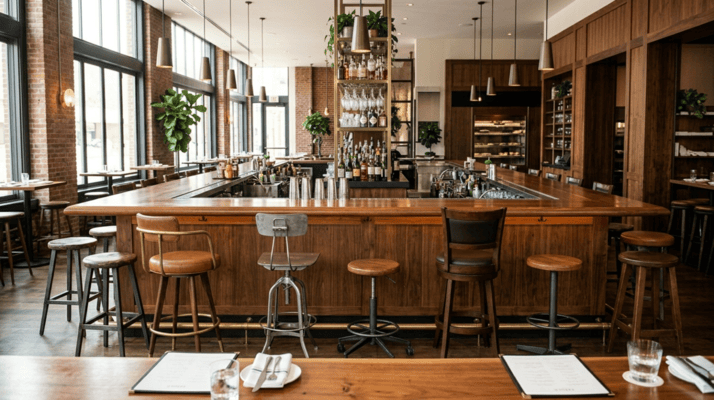
7 Mistakes Interior Designers Make When Choosing Bar Stools for Restaurant Spaces
Posted by Luxury Group International Design Team / Luxury Home Bar Accessories / March 23, 2026
The bar counter is where guests settle in, order another round, and decide whether they will come back tomorrow. Yet time and again, interior designers treat the seating around it as a secondary decision — something to finalise after the countertop material and pendant lights have been chosen.That single misjudgement can unravel months of careful design work.
Choosing the wrong height chairs, ignoring upholstery durability, or misreading the spatial dynamics of a bar area are among the most common — and most costly — errors made during restaurant fit-outs. This post walks through seven of those mistakes, and more importantly, how to avoid every single one of them.
Mistake 1: Getting the Height Completely Wrong
This is the most fundamental error, and it happens more often than professionals care to admit. Selecting a high counter chair without first verifying the exact counter or table height results in stools that are either too low for comfortable elbow resting or so tall that guests feel perched rather than seated.
The rule of thumb is straightforward: there should be approximately 25 to 30 centimetres of clearance between the seat surface and the underside of the counter. Standard bar-height seating typically sits between 65 and 80 centimetres, while counter-height stools range from 55 to 65 centimetres.
Always measure first, specify second.
Mistake 2: Prioritising Aesthetics Over Ergonomics
A visually stunning modern bar chair that leaves guests shifting uncomfortably after twenty minutes is a design failure, regardless of how well it photographs. Bar seating in restaurants is not lounge seating — guests sit upright, lean forward, and interact across a surface for extended periods.
Seat depth, backrest angle, the presence of a footrest, and lumbar support all directly affect how long a guest stays comfortable — and how long they stay at all. When evaluating luxury bar chairs, designers should sit in them, not just style them.
Mistake 3: Choosing Upholstery That Cannot Withstand Commercial Use
Residential-grade fabrics have no place in a commercial restaurant bar setting. What looks exquisite in a showroom can begin to deteriorate within months under the pressure of daily service: spilled cocktails, cleaning products, friction from constant use, and the inevitable stress of a busy Saturday night.
For high-traffic environments, upholstery must be selected for its commercial durability first. Performance velvets, treated leathers, and tightly woven fabrics that resist staining and abrasion are the professional choice. Beauty and resilience are not mutually exclusive — the right luxury bar chairs deliver both.
Mistake 4: Ignoring the Frame Material in Favour of the Seat
The seat fabric draws the eye, but the frame carries the weight — literally. Designers frequently overlook frame construction when specifying restaurant bar stool options, only to find that pieces warp, loosen, or corrode after a year of intensive use.
Solid hardwood frames with properly reinforced joints, polished metal frames with rust-resistant finishes, and ebony or walnut constructions with architectural joinery are the benchmark for commercial environments. A well-built frame is the invisible guarantee behind every great-looking height chair.
Mistake 5: Misreading the Spatial Flow of the Bar Area
A bar stool does not exist in isolation. It is part of a flow — a carefully calibrated sequence of movement between guests, service staff, and the counter itself. Selecting stools that are too wide, too deep, or that lack swivel functionality can create bottlenecks, obstruct service, and make the entire space feel cramped.
Before finalising any high counter chair, designers should map out a scaled floor plan and test clearances. There should be at least 30 centimetres between each occupied stool to allow comfortable social interaction without friction. In narrower bar arrangements, stools with a slender profile and a footrest that tucks cleanly beneath the counter are invaluable.
Mistake 6: Breaking Visual Consistency Across the Space
Nothing signals a disjointed design brief faster than a set of bar stools that feel borrowed from a different interior. This happens when height chairs are specified separately from the broader furniture scheme — chosen to fill a gap rather than complete a vision.
The most refined hospitality interiors treat every seat as part of a family. The curve of a backrest should echo the arch of a nearby lounge chair. The frame finish — whether brushed brass, polished ebony, or matte black — should align with the metal tones used throughout the dining room and reception. Visual coherence is the hallmark of considered luxury design.
Mistake 7: Overlooking Maintenance Requirements During Specification
Specifying a cream velvet modern bar chair for a high-volume cocktail bar without considering the cleaning protocol is a decision that will be regretted by the operations team within the first week. Maintenance requirements must be part of the specification conversation from day one.
Designers should liaise with venue operators to understand cleaning routines, the products used by housekeeping staff, and how frequently stools are moved or stacked. Pieces should be specified with finishes and materials that align with those realities — not work against them.
Conclusion: Elevate the Brief, Elevate the Bar
The difference between a forgettable restaurant bar and one that guests genuinely want to return to often comes down to decisions that seem minor during the design phase but prove defining in daily experience.
Every choice made around restaurant bar stool selection — from seat height and frame construction to upholstery durability and spatial planning — is an opportunity to demonstrate the depth of craft that separates competent interiors from truly exceptional ones.
Approach height chairs with the same rigour applied to every other element of the space. The guests sitting in them will notice, even if they cannot articulate exactly why.
RECENT POSTS
-
Old Walls, New Stories: How Contemporary Furniture Revives Heritage Hotels
August 18, 2026
-
Designing Upward: Why 8 Drawer Dressers Belong in High-Ceiling European Bedrooms
August 18, 2026
-
From Lobby to Suite: The Art of a Seamless Luxury Material Story
August 17, 2026
-
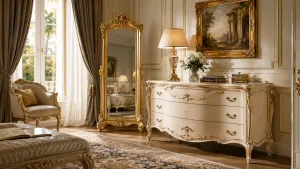
Modern Dressers That Bring Timeless Luxury to Refined Interiors
August 17, 2026
-
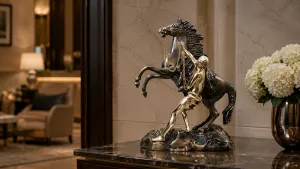
Behind the Craft: How Master Sculptors Create Luxury Bronze Sculptures
August 16, 2026
-

Where Elegance Meets the Outdoors: Luxury Dining Tables for European Terraces
August 16, 2026
-
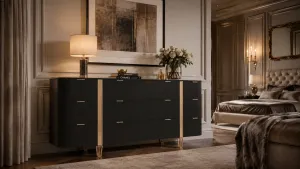
Grand Storage, Regal Style: 9 Drawer Dressers for Palace-Inspired Bedrooms
August 15, 2026
-
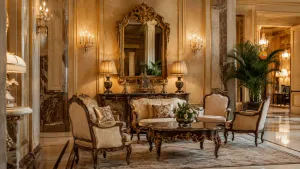
Legacy Over Trends: Why Hotels Invest in Hand-Carved, Gold-Leaf Furniture
August 15, 2026
-
Sustainable Luxury That Lasts: Materials Built for High-Traffic Hotel Interiors
August 14, 2026
-
Heritage Under the Open Sky: Vintage Dining Tables for Elegant Garden Living
August 14, 2026