




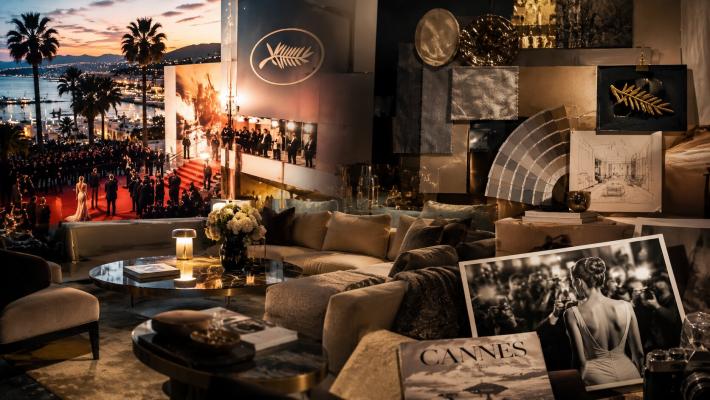
The Cannes Effect: How Cinema's Most Glamorous Event Shapes Interior Design Trends
Posted by Luxury Group International Design Team / Cannes Film Festival 2026 / May 12, 2026
An Editorial Deep-Dive into the Alchemy Where Red Carpet Glamour Becomes Living Space PoetryIntroduction: The Invisible Thread Between La Croisette and Your Living Room
Every May, the French Riviera undergoes a metamorphosis. The Cannes Film Festival 2026 (May 12–23) doesn't merely roll out a 24-step red carpet at the Palais des Festivals—it unfurls an aesthetic blueprint that interior designers, luxury brands, and tastemakers will decode, distill, and deploy into homes from Bel Air to Belgravia for the next twelve months.
This is The Cannes Effect: a phenomenon where the ephemeral magic of cinema's most glamorous event crystallizes into tangible luxury interior design trends that define how we live, entertain, and dream within our walls. It's not just about watching films; it's about inhabiting them.
In 2026, this cross-pollination between cinematic spectacle and domestic sanctuary has never been more potent. As cinematic interiors emerge as the defining mood-driven movement of the year, and the Cannes red carpet sees a triumphant return of velvet, gold, and baroque opulence, we find ourselves at a fascinating intersection where the silver screen's drama meets the drawing room's intimacy.
This editorial explores how Cannes doesn't just reflect culture—it creates the visual language of Cannes luxury décor, and why your next interior design decision may have already premiered on the Croisette.
Chapter 1: The Anatomy of Cannes Aesthetics—Decoding the Visual DNA
The Red Carpet as a Runway for Living Spaces
To understand how Cannes shapes interiors, we must first dissect its visual ecosystem. The festival operates on a carefully calibrated hierarchy of aesthetics:
1. The Baroque Revival on the Carpet The 2026 red carpet has witnessed a deliberate resurgence of velvet textures, gold accents, and sculptural silhouettes that echo 17th-century grandeur filtered through a modern lens. When A-list celebrities arrive in embroidered haute couture—think Halle Berry's celebrated Chanel Spring 2025 pantsuit adorned with beaded organza flowers, or the sheer chiffon and lace creations in mint green and dusty rose dominating the Spring/Summer 2026 collections
—they're not merely wearing fashion. They're previewing interior palettes.
These textile choices translate directly into upholstery trends. The heavy drapery, the tactile richness of embroidered surfaces, and the interplay of opacity and transparency seen in red-carpet gowns are being replicated in window treatments, bed linens, and decorative pillows. The message is clear: after years of minimalist restraint, Cannes luxury décor embraces maximalism with intellectual rigor.
2. The Riviera Light and Its Chromatic Influence Cannes possesses a singular quality of light—the famous lumière provençale—that has seduced artists from Picasso to present-day cinematographers. This golden, diffuse illumination demands a specific color response. The 2026 festival sees an overwhelming preference for:
- Burnished blush and champagne tones that catch the Mediterranean light without competing with it
- Deep plum and midnight blue that provide dramatic contrast against the azure sea
- Warm metallics—brass, bronze, and soft gold—that mirror the sunset over the Esterel mountains
These aren't arbitrary fashion choices; they're chromatic solutions to a specific luminous environment, and interior designers are rapidly adapting these palettes for spaces seeking that same Riviera glow.
3. The Architecture of Arrival The Palais des Festivals itself—its brutalist modernism softened by decades of glamour—creates a fascinating tension. The sweeping staircase, the geometric red carpet, the precise alignment of photographers' flashes: this is choreography as architecture. Homes influenced by Cannes increasingly incorporate "arrival sequences"—vestibules with dramatic lighting, hallways that build anticipation, and living rooms designed as "sets" for entertaining rather than mere functional spaces.
Chapter 2: Cinematic Interior Design—The 2026 Movement Defined
From Screen to Sanctuary: How Film Grammar Informs Spatial Design
The emergence of cinematic interior design as the defining luxury trend of 2026represents more than a stylistic shift—it signals a philosophical revolution in how we conceptualize domestic space. Where previous design movements asked "How does this look?", cinematic interiors ask "How does this feel?" and, more importantly, "What story does this tell?"
The Six Pillars of Cinematic Interiors:
1. Emotional Architecture Over Pure Aesthetics Minimalism's reign is ending not with a bang, but with a slow dissolve. The sterile white room, optimized for Instagram photography, is yielding to spaces designed for emotional resonance. As one leading design voice notes, "Spaces are no longer designed to photograph well. They are designed to be felt"
.
This mirrors Cannes' own evolution. The festival has increasingly prioritized films that offer emotional authenticity over technical spectacle—a value now permeating interior design. Rooms are being conceived as emotional sequences: the hush of an entry hall giving way to the warmth of a living space, culminating in the intimacy of a bedroom designed as a "private stage."
2. Lighting as Narrative Device If there is one element defining cinematic interiors in 2026, it is the revolutionary approach to lighting. Overhead glare has been replaced by layered, directional illumination that sculpts space much as a cinematographer uses key, fill, and backlight to shape a scene.
Consider the Cannes red carpet at twilight: photographers' flashes create staccato bursts of brilliance against the deepening blue sky, while the Palais' strategic uplighting casts dramatic shadows. Interior designers are replicating this chiaroscuro through:
- Table lamps creating pools of intimacy rather than uniform room brightness
- Chandeliers that hover rather than dominate, serving as floating light sculptures
- Shadow curation—deliberately allowing darkness to exist as a design element rather than something to be eliminated
3. The Return of Ceremony to Domestic Rituals After years of casual, open-plan living, 2026 sees the dining room reclaiming its significance as a ceremonial space. This directly channels the Cannes premiere experience: the anticipation, the ritual of arrival, the collective witnessing of something significant.
Round tables encourage closeness. Upholstered chairs invite lingering. Marble and wood introduce permanence. The cinematic dining room is not perfect—it is intentional. It understands that the best conversations, like the best films, require a setting that signals their importance.
4. Sculptural Furniture as Character Development In cinematic interior design, furniture acts as a cast of characters, each piece holding presence and contributing to the room's rhythm. The straight lines of mid-century modernism are giving way to fluid curves, architectural headboards, and dining chairs that wrap around the body like costume design.
This sculptural approach reflects Cannes' influence in two ways: first, through the physical presence of red-carpet gowns that occupy space as three-dimensional art objects; second, through the festival's celebration of production design in cinema, where furniture often serves as storytelling shorthand (think the rounded, womb-like chairs in 2001: A Space Odyssey or the angular severity of The Grand Budapest Hotel).
5. Materiality and the Authenticity Imperative What separates cinematic interior design from mere theatrical styling is craftsmanship. Hand-applied finishes, natural stone veining, and artisanal carving signal true luxury in 2026. Mass-produced perfection feels hollow; texture, imperfection, and evidence of the human touch feel powerful.
This aligns with Cannes' increasing celebration of auteur cinema—films bearing the unmistakable mark of their creator's hand. Just as festival-goers can discern the difference between a blockbuster and a Palme d'Or contender, discerning homeowners can sense the difference between a mass-manufactured sofa and a piece shaped by an artisan's expertise.
6. The Bedroom as Emotional Epicenter Bedrooms in 2026 are no longer secondary spaces—they are emotional epicenters designed with the same care as a film's climactic scene. Enveloping upholstery, sculptural beds, and bedside lighting designed for warmth rather than mere function create what designers call "controlled sensuality"—a balance of plush textiles, metal accents, and confident silhouettes.
This mirrors the private suites at Cannes' most exclusive hotels, where celebrities retreat after public performance. The bedroom becomes a decompression chamber, a space where the day's narrative can be processed and tomorrow's can be dreamt into existence.
Chapter 3: The 2026 Cannes Palette—Colors That Will Define Luxury Interiors
From the Croisette to the Color Chart
The Cannes Film Festival 2026 isn't just influencing how we design—it's dictating with what colors we design. The festival's 2026 visual identity, combined with red-carpet trends and the Riviera's natural chromatic environment, has generated a specific palette now migrating into luxury interiors worldwide.The Chromatic Hierarchy of Cannes 2026:
Tier 1: The Riviera Neutrals
- Burnished Blush: A warm, lived-in pink that captures the sunset reflecting off the Palais' concrete
- Champagne Chalk: The color of the Mediterranean light itself—neither white nor cream, but something luminous and alive
- Pale Stone: Derived from the limestone facades of Cannes' Belle Époque architecture, offering serene expansiveness
These neutrals serve as the foundation of Cannes luxury décor, providing the backdrop against which drama can unfold without visual chaos.
Tier 2: The Cinematic Accents
- Midnight Velvet Blue: The color of the screening rooms, the tuxedos, the evening sky over the yachts
- Deep Plum: Rich, wine-dark, and enveloping—seen in both red-carpet gowns and interior upholstery trends
- Burgundy Resurgence: A return to this classic luxury hue, warmed with brass undertones
These saturated hues represent the "emotional beats" of a space—the moments of intensity that punctuate the neutral calm.
Tier 3: The Metallic Narratives
- Soft Gold: Not brassy or ostentatious, but the gentle gold of aged champagne
- Bronze: Warm, earthy, connecting the metallic to the organic
- Pewter: Cool counterpoints that prevent warmth from becoming cloying
The 2026 red carpet's embrace of gold accents—filtered through baroque inspiration but executed with modern restraint
—has legitimized metallics as structural elements rather than mere decorative afterthoughts.
Tier 4: The Transparent Tones
- Sheer Organza White: Capturing the transparency trend dominating Spring/Summer 2026 collections
- Dusty Rose Gauze: Soft, filtering, creating layers of visibility
- Mint Green Veil: Fresh, unexpected, derived from the pastel direction seen across recent runways
These transparent tones translate into interior design as sheer drapery, glass room dividers, and layered lighting fixtures that create depth through visibility.
Chapter 4: Spatial Narratives—How Cannes Teaches Us to Choreograph Rooms
The Directorial Approach to Interior Design
If cinematic interiors borrow from film, they must also borrow from film's structural grammar. Cannes, as the world's most prestigious film festival, offers a masterclass in spatial storytelling that interior designers are eagerly adapting.The Three-Act Room:
Act I: The Arrival (Entry and Foyer) Like a film's opening sequence, the entry must establish tone without revealing everything. Cannes-inspired entries feature:
- Dramatic lighting transitions: From the bright Mediterranean exterior to a softly lit interior, creating a moment of adjustment and anticipation
- Textural foreshadowing: A hint of velvet, a glimpse of marble, a whisper of gold that suggests what lies ahead without stating it explicitly
- The "red carpet" moment: Even in modest homes, a runner, a specific floor pattern, or a lighting sequence that creates a path of importance
Act II: The Confrontation (Living and Entertaining Spaces) The middle section of a film—and a home—must sustain engagement through variety and tension. Cannes teaches us to create:
- Seating arrangements that facilitate dialogue: Not rows facing a screen (theater-style), but clusters that encourage conversation (festival-lounge-style)
- Visual layering: Like a well-composed frame, rooms should have foreground, midground, and background interest
- The "premiere" wall: A feature surface—whether art, texture, or material—that serves as the room's focal point, much as the red carpet serves as the festival's visual anchor
Act III: The Resolution (Bedroom and Private Spaces) The ending must satisfy while leaving room for imagination. Bedrooms influenced by Cannes' private villas and yacht cabins prioritize:
- Enveloping comfort: The sense of being held, protected, cocooned after public performance
- Controlled sensuality: That balance of plush and precise, soft and structured
- The "morning after" light: Lighting designed for the gentle awakening, not the dramatic entrance
Chapter 5: The Cannes Yacht Influence—Floating Interiors as Design Laboratories
Why the Mediterranean's Most Exclusive Vessels Predict Tomorrow's Living Rooms
The Cannes Film Festival 2026 marks the beginning of the Mediterranean yacht season, with Vieux Port de Cannes transforming into a floating village of the world's most exclusive vessels. These superyachts serve as design laboratories where spatial constraints demand maximum luxury—a challenge that produces innovations soon adopted by land-based interiors.The Yacht-to-Home Translation:
1. The Compact Grandeur Yachts must achieve grandeur within tight parameters. This has perfected the art of "compact luxury"—multi-functional furniture, concealed storage, and spaces that transform based on need. The 2026 trend toward flexible living spaces
—cinema rooms doubling as family hubs, studies converting to guest rooms—originates in yacht design's necessity.
2. The Indoor-Outdoor Dissolution Yacht living erases the boundary between interior and exterior. This philosophy now permeates luxury interior design trends 2026, with biophilic design bringing greenery, natural light, and organic forms indoors. The Cannes climate—where one lives as much on terraces as in salons—has normalized the seamless flow between spaces.
3. The Material Endurance Marine environments demand materials that withstand sun, salt, and constant use. The resulting innovations in outdoor fabrics, marine-grade metals, and weather-resistant stones have filtered into high-end residential design, particularly in coastal and tropical markets. What survives a Mediterranean summer on a yacht will certainly survive a family dinner party.
4. The Privacy Architecture Yachts must offer public entertaining spaces and private retreats within the same hull. This has refined the art of acoustic privacy, visual screening, and spatial zoning that land-based designers now employ in open-plan homes. The master suite on a Cannes yacht is a study in creating sanctuary within spectacle—a lesson directly applicable to bedrooms in busy family homes.
Chapter 6: The 2026 Cannes Interior Trend Forecast—What's Next
From This Year's Festival to Next Year's Showrooms
Based on the visual signals emerging from Cannes Film Festival 2026 preparations and early red-carpet appearances, we can forecast the specific interior design movements that will dominate the coming year:Trend 1: The Return of the Boudoir The sheer fabrics, delicate nudes, and pastel colors dominating Spring/Summer 2026 collections
signal a return to intimate, feminine spaces within the home. Not the clichéd "shabby chic," but a sophisticated boudoir aesthetic: dressing rooms as personal sanctuaries, vanity areas with theatrical lighting, and bedrooms that embrace softness without sacrificing power.
Trend 2: The Sculptural Minimal Matthieu Blazy's Chanel 2026 Haute Couture—with its "airy layers, dreamlike proportions and colors and a kind of quiet storytelling"
—suggests an interior direction that is minimalist in clutter but maximalist in form. Think single, extraordinary sculptural pieces in otherwise restrained spaces. The "hero object" approach to design.
Trend 3: The Tailored Elegant Haider Ackermann's Tom Ford Resort 2026, praised for its "precise tailoring"
, predicts an interior trend toward architectural precision in furniture. Sharp lines, perfect proportions, and an almost masculine tailoring applied to domestic spaces—particularly home offices and studies that must project competence in the hybrid work era.
Trend 4: The Elongated and Clean Celia Kritharioti's 2026 Haute Couture, with its "clean, elongated, sculpted gowns"
, translates into verticality in interior design. Tall, slender forms; floor-to-ceiling drapery; elongated light fixtures; and furniture that emphasizes height over width. This responds to both the architectural proportions of modern spaces and the psychological desire for aspiration.
Trend 5: The Wellness-Integrated Glamour The 2026 emphasis on wellness at home
—spa-like bathrooms, meditation spaces, biophilic elements—will merge with Cannes glamour rather than oppose it. The result: bathrooms that feel like luxury hotel suites, home gyms with nightclub-quality lighting and sound, and wellness spaces that are Instagram-worthy without being performative.
Chapter 7: Implementing the Cannes Effect—A Practical Guide for Discerning Homeowners
How to Translate Festival Glamour into Livable Luxury
Understanding the Cannes Effect is one thing; implementing it is another. Here's how to incorporate Cannes luxury décor into your space without creating a theme park:The 80/20 Rule of Cinematic Design: Apply Cannes influence to 20% of your space while maintaining 80% timeless foundation. The red carpet is memorable because it's brief; living with it daily requires editing.
Specific Implementations:
1. The Lighting Revolution Replace overhead lighting with layered sources:
- Task lighting: Beautiful desk and reading lamps that serve as sculptural objects
- Ambient lighting: Concealed LED strips, uplighting, and cove lighting that creates glow rather than glare
- Accent lighting: Directional spots that highlight art, texture, or architectural features
- Decorative lighting: Chandeliers and pendants that function as jewelry for the room
2. The Textural Strategy Introduce Cannes-inspired textiles through:
- One statement velvet piece: A sofa, an ottoman, or dramatic drapery in deep plum or midnight blue
- Sheer layering: Organza or gauze curtains over heavier blackout drapes, creating depth and light filtration
- Metallic threading: Pillows or throws with subtle gold or bronze woven through, catching light unexpectedly
3. The Chromatic Commitment Choose your Cannes palette and apply it with discipline:
- Foundation: Riviera neutrals (burnished blush, champagne, pale stone) on walls and large surfaces
- Accents: Cinematic hues (velvet blue, deep plum, burgundy) on furniture and major textiles
- Jewelry: Metallics (soft gold, bronze) on fixtures, hardware, and accessories
- Transparency: Sheer whites and dusty roses on layered elements
4. The Spatial Choreography Rearrange rooms for narrative flow:
- Create arrival moments: Even a small foyer can have a console table with a lamp, a mirror, and a single sculptural object that signals "something important lies ahead"
- Design for dialogue: Pull furniture away from walls; create intimate clusters; ensure every seat has a conversational partner
- Resolve in comfort: The bedroom should be the most considered room, not the most neglected
5. The Craftsmanship Investment Follow the 2026 luxury directive: invest in fewer, better things
. One bespoke dining table. One handmade rug. One custom piece of joinery. These anchor the room with authenticity that mass-produced items cannot replicate.
Chapter 8: The Future of the Cannes Effect—Where Cinema and Interiors Converge
The Meta-Trend: Living as Performance, Space as Set
The Cannes Effect is not merely a seasonal trend; it represents a fundamental shift in how we conceptualize domestic space. As hybrid lifestyles become permanent
, our homes must function as sets for video calls, backdrops for social media, and sanctuaries for genuine retreat—sometimes simultaneously.
Cinema has always understood this multiplicity. A film set must photograph beautifully from specific angles while remaining functional for crew and cast. It must convey narrative instantly while sustaining interest upon repeated viewing. These are precisely the demands now placed upon our living spaces.
The Four Future Directions:
1. The Responsive Interior Just as Cannes screenings adapt to different films, interiors will increasingly adapt to different activities. Smart glass that changes opacity, lighting systems that shift color temperature, and modular furniture that reconfigures for "premiere mode" versus "private mode."
2. The Biophilic Baroque The merger of natural materials (the 2026 wellness imperative) with dramatic, cinematic styling. Think living walls in formal dining rooms, natural stone bathtubs in theatrical bathroom settings, and organic forms rendered in luxurious materials.
3. The Authentic Spectacle A rejection of Instagram-perfect staging in favor of "beautifully real" spaces. The Cannes red carpet's most memorable moments often involve unexpected elements—an unconventional pantsuit, a surprising color choice. Interiors will similarly embrace the "breath of fresh Riviera air": spaces that are elegant but not predictable, artistic but not contrived.
4. The Global Local Cannes' influence is global, but its execution is always filtered through local culture. The Cannes luxury décor trend will manifest differently in Tokyo than in Tuscany, in Mumbai than in Manhattan. The underlying grammar—emotional resonance, narrative flow, cinematic lighting—remains constant, but the vocabulary adapts.
Conclusion: Your Home as the Final Scene
The Cannes Film Festival 2026 will conclude on May 23, the Palme d'Or will be awarded, and the yachts will depart for Monaco or the Italian Riviera
. But the images, the atmospheres, and the aesthetic decisions made on the Croisette will ripple through the design world for months to come.
This is the true Cannes Effect: not a fleeting obsession with red carpets and celebrity glamour, but a permanent elevation of how we think about space. The understanding that our homes, like great films, should have pacing, tension, beauty, and emotional truth. That a room can be both a sanctuary and a stage. That lighting can be architecture. That materials can tell stories.
As cinematic interiors continue to define luxury interior design trends 2026, and as the festival's baroque revival and precise tailoring filter into Cannes luxury décor, we find ourselves living in an era where the boundary between cinema and domesticity has never been more porous.
The final scene of your day shouldn't be the credits rolling on a screen. It should be the moment you enter your bedroom—a space designed with the same care as a film's climactic sequence—and feel, truly feel, that you are the protagonist of a life well-designed.
The red carpet, after all, is just a rug. What matters is how you walk it.
Ready to bring the Cannes Effect into your space? The 79th Cannes Film Festival runs May 12–23, 2026. Consider it your design research trip.
RECENT POSTS
-
The Art of Sitting Beautifully: Upholstered Bench Designs Where Comfort Meets Craftsmanship
October 08, 2026
-
Modern Luxury Lighting Trends That Are Quietly Transforming Elegant Interiors
October 08, 2026
-
The Quiet Power of Luxury Statues: Sculptural Accents for Opulent Interiors
October 07, 2026
-
The Art of Calm: Why Elegant Bedroom Furniture Never Feels Overwhelming
October 07, 2026
-
Royal Dressing Tables: The Elegant Centrepiece of a Sophisticated Bedroom
October 06, 2026
-
The Perfect Glow: How Luxury Dining Chandeliers Transform Formal Dining Spaces
October 06, 2026
-
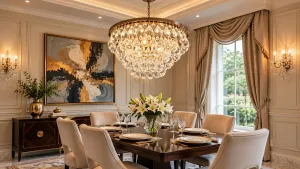
When Lighting Becomes Art: Luxury Chandelier Designs That Define Grand Interiors
October 05, 2026
-
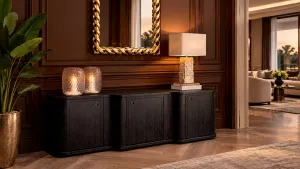
The Art of Entertaining: Luxury Bar Cabinets That Turn Home Lounges Into Statement Spaces
October 05, 2026
-
The Quiet Luxury Bathroom: Why Hidden Bathtubs Are Defining 2026
October 04, 2026
-
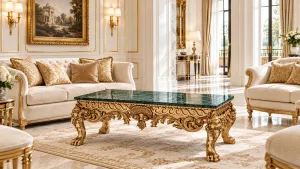
The Timeless Allure of Round Marble Coffee Tables in Luxury Interiors
October 04, 2026