





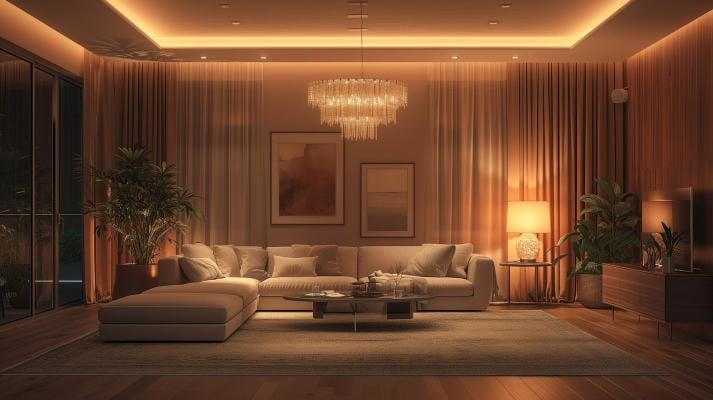
Ambient Lighting and Human Psychology: Why Light Changes How Spaces Feel
Posted by Luxury Group International Design Team / Decorative Lighting / January 22, 2026
Have you ever walked into a room and instantly felt calm—or strangely unsettled—without knowing why? More often than not, the answer lies in the light. Beyond decoration or visibility, ambient lighting plays a powerful psychological role in shaping how we perceive and emotionally respond to spaces. It influences comfort, mood, focus, and even how welcoming a room feels.
Understanding the psychology of ambient lighting helps explain why some interiors feel soothing while others feel cold or overwhelming, even when furnished beautifully. Light is not just something we see—it is something we feel.
How the Brain Responds to Light
Human brains are wired to respond to light as a signal. Long before artificial lighting existed, daylight patterns regulated our sleep cycles, alertness, and sense of safety. Even today, light intensity and warmth subtly influence our nervous system.
Soft, evenly distributed light signals relaxation and security. Harsh or uneven lighting can trigger alertness or mild stress. This is why a space with good ambient lighting often feels more comfortable than one relying solely on bright overhead fixtures.
The brain reads light as environmental information, shaping our emotional response before we consciously process design details.
Warm vs Cool Light: Emotional Temperature Matters
One of the most important aspects of modern lighting design is color temperature.
Warm ambient lighting—often associated with soft yellow or golden tones—creates feelings of comfort, intimacy, and relaxation. It is ideal for living rooms, bedrooms, and spaces where people unwind.
Cooler light tones, on the other hand, promote alertness and clarity. While useful in workspaces or kitchens, excessive cool lighting in living areas can feel sterile or emotionally distant.
The psychology of ambient lighting shows that warmth in light is often perceived as warmth in atmosphere. This explains why spaces with gentle, warm glow feel more inviting, even when minimal in décor.
Light Intensity and the Sense of Calm
Brightness levels are just as influential as color.
High-intensity lighting can energize a space, but when overused, it may create visual fatigue. Low-intensity ambient lighting encourages the body to relax, slowing the heart rate and reducing sensory overload.
Modern lighting strategies often focus on balance rather than extremes. Layered lighting—combining ambient, accent, and task lighting—allows the overall brightness to remain gentle while still meeting functional needs.
This layered approach gives occupants control, which is psychologically comforting in itself.
Evenness and Shadows: Subtle Signals of Safety
Our perception of safety is closely tied to visibility. Uneven lighting, sharp contrasts, or dark corners can create subconscious unease, even in familiar spaces.
Well-designed luxury lighting reduces harsh shadows and distributes light evenly. This creates a sense of openness and stability. The room feels predictable and calm, which allows the mind to rest.
This principle is especially important in bedrooms and relaxation zones, where the goal is to signal rest rather than stimulation.
Ambient Lighting and Perceived Space
Light doesn’t just affect mood—it alters how we perceive space itself.
Soft ambient lighting can make a room feel larger, more open, and more fluid. Harsh direct lighting often flattens surfaces, making spaces feel rigid or confined.
In modern lighting design, ambient light is used to:
- Highlight architectural flow
- Soften boundaries between walls and ceilings
- Enhance textures without overwhelming them
As a result, rooms feel more balanced and visually comfortable.
Emotional Memory and Lighting
Lighting also plays a role in emotional memory. Spaces lit with gentle ambient light are often associated with rest, conversation, and connection. Over time, the brain links these lighting conditions with positive feelings.
This is why people often prefer dimmer, warmer lighting in the evening—it reinforces a sense of closure to the day and prepares the mind for rest.
The psychology of ambient lighting shows that light is not just functional—it becomes part of how we emotionally experience a space over time.
Conclusion: Light as an Emotional Design Tool
Ambient lighting is one of the most powerful yet underestimated elements in interior design. It shapes how spaces feel long before furniture or color palettes are consciously noticed. By understanding how light warmth and intensity affect perception, designers and homeowners can create environments that feel calmer, warmer, and more human.
In the end, good modern lighting is not about brightness—it’s about balance. When ambient lighting is thoughtfully designed, spaces don’t just look better. They feel better, too.
RECENT POSTS
-

The Art of Hospitality on Wheels: How Luxury Trolleys Elevate Boutique Hotel Experiences
September 25, 2026
-

The Art of Grandeur: How Baroque Coffee Tables Transform Luxury Living Spaces
September 25, 2026
-

The Art of Entertaining: How Luxury Bar Furniture Transforms Sophisticated Interiors
September 24, 2026
-

The New Art of Rest: Curating a Wellness-Focused Luxury Bedroom
September 24, 2026
-
Framed Prints That Bring Effortless European Elegance to Apartment Interiors
September 23, 2026
-

How Crystal Chandelier Lighting Transforms Light, Height and Luxury Interiors
September 23, 2026
-
Sculptural Illumination: How Contemporary Floor Lamps Are Becoming Modern Art Statements
September 22, 2026
-

The Art of Choosing a Luxury Table Clock: A Guide to Size, Style & Placement
September 21, 2026
-
Elegant Wall Lamps: The Secret to Warmer, More Characterful Luxury Interiors
September 21, 2026
-
Pairing Luxury TV Units with Living Room Furniture: Create Cohesive Elegance in Modern Homes & Hotel
September 20, 2026