





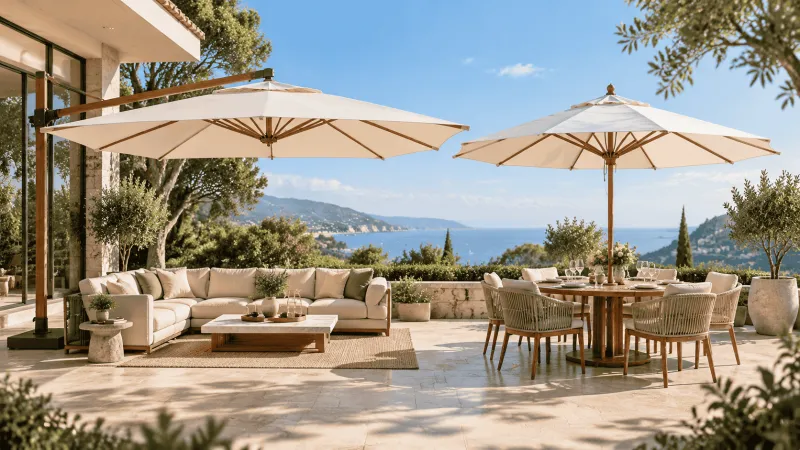
Cantilever or Centre-Pole Parasol: Which Design Is Right for Your Space?
Posted by Luxury Group International Design Team / Garden Decoration / September 17, 2026
Choosing the right parasol often comes down to one clear decision: cantilever or centre-pole. Both designs deliver shade, yet they serve different layouts and lifestyles. Understanding the strengths of each helps you invest with confidence and avoid a canopy that looks impressive but never quite works with your furniture or daily routine.
A large outdoor parasol or large garden parasol should feel like a natural part of the space rather than an awkward addition. The right structure supports how you actually use the terrace, patio or garden.
Understanding the Two Designs
Centre-pole parasols place the support mast directly under the canopy. The pole usually passes through a table or sits in a base at the centre of the shaded area. This classic arrangement has been the standard for outdoor dining for decades. It is straightforward, balanced and often more compact.
Cantilever parasols, sometimes called side-pole or offset models, move the mast to one side. An arm extends outward so the canopy floats above the seating area with nothing in the middle. The result is a completely clear floor beneath the shade.
Both styles appear in high-quality ranges of large outdoor parasols. The difference lies less in quality and more in how the structure interacts with furniture and movement.
How Centre-Pole Parasols Perform
Centre-pole designs excel when the layout centres on a dining table. If the table already has a hole for a parasol, the mast drops through cleanly and the base sits out of the way underneath. Stability is naturally strong because the weight transfers straight down the pole. In windier spots this balanced load path often proves more forgiving.
These parasols suit traditional and compact settings. A large garden parasol with a centre pole works well over a rectangular or round dining set, on smaller terraces, or in any space where a large side base would feel intrusive. Operation is usually simple. Tilt mechanisms allow some adjustment for angled sun, though the overall position remains fixed once the base is placed.
The aesthetic tends toward the classic. The vertical mast creates a familiar silhouette that pairs easily with both traditional and contemporary furniture.
How Cantilever Parasols Change the Layout
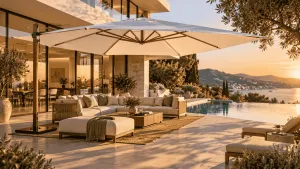
Cantilever designs free the space beneath the canopy. Lounge sofas, daybeds, sun loungers and open seating arrangements become far easier to style. Guests and staff move freely without navigating a central mast. This open feel makes cantilever parasols especially popular around pools, on expansive terraces and in modern outdoor living zones.
Many models rotate a full 360 degrees and tilt in multiple directions. Once the heavy base is positioned, the canopy can track the sun throughout the day without moving furniture or the base itself. A well-engineered large outdoor parasol in the cantilever style therefore offers greater flexibility for all-day use.
The visual effect is cleaner and more contemporary. The offset arm creates a floating canopy that reads as architectural rather than purely functional. For properties seeking a premium outdoor atmosphere, this unobstructed look often feels more luxurious.
Matching Design to Everyday Use
The simplest way to decide begins with the furniture. If the main focus is a dining table, especially one with a parasol hole, a centre-pole model is usually the practical and elegant solution. The mast becomes part of the table rather than an obstacle.
If the space centres on a lounge set, corner sofa, sunbeds or a pool edge, a cantilever parasol removes the problem of a pole in the middle. The same applies to flexible multi-use areas that change arrangement for different occasions.
Consider the available floor space. Centre-pole bases are generally more compact. Cantilever bases need greater weight and footprint to counter the offset load, so they require room at the side of the seating zone.
Wind exposure also influences the choice. Both designs can perform well when properly specified, yet centre-pole models often feel more inherently stable in very exposed locations because of their balanced structure. Quality cantilever parasols overcome this with substantial bases and robust engineering, but the installation demands more attention.
Example Layouts That Clarify the Choice
Picture a classic outdoor dining terrace with a six-seater table. A centre-pole large garden parasol drops through the table and provides even shade over every seat. The arrangement looks intentional and the floor remains clear around the table edges.
Now picture a modern lounge zone with a large corner sofa and low tables facing a view or pool. A cantilever parasol stands to one side, its canopy stretching over the entire seating group. No pole interrupts conversation or circulation. The space feels open and considered.
A third scenario mixes both needs. Some properties place a centre-pole parasol over the dining table and a cantilever model over the lounge area. The two designs work together when chosen in complementary finishes and scales.
Making the Final Decision with Confidence
Ask three practical questions. First, what sits under the canopy most of the time? A table with a hole points strongly toward centre-pole. An open seating arrangement points toward cantilever. Second, how important is the ability to rotate and tilt the canopy through the day? Greater flexibility favours cantilever. Third, how much floor space can you dedicate to the base? Limited room often favours the more compact centre-pole solution.
Budget plays a role as well. Centre-pole models generally cost less for comparable canopy size and fabric quality. Cantilever designs carry a premium that reflects the more complex engineering and the unobstructed experience they deliver.
Neither design is universally superior. The right large outdoor parasol is the one that disappears into the daily rhythm of the space while providing reliable shade exactly where it is needed.
Creating Shade That Serves the Space
A well-chosen parasol improves both comfort and appearance. When the structure matches the layout, furniture placement becomes easier, movement feels natural and the outdoor area works harder for longer hours. Guests notice the difference even if they cannot name the design.
Whether you settle on cantilever parasols for their open flexibility or centre-pole parasols for their classic stability, the goal remains the same: shade that supports the way the space is actually used. Take the time to match form to function and the result will feel effortless for years to come.
RECENT POSTS
-
Is Your Luxury Outdoor Furniture Fading? UV, Covers and Placement
September 18, 2026
-

The Roman Centurion Statue: History, Symbolism and Where to Place One
September 18, 2026
-
Cantilever or Centre-Pole Parasol: Which Design Is Right for Your Space?
September 17, 2026
-
French Luxury Interiors: How to Mix Baroque Furniture With Restraint
September 17, 2026
-
Freestanding vs. Built-In Bathtubs: Which Is Right for Your Luxury Home?
September 16, 2026
-
Why Vintage Table Clocks Are Returning to Luxury European Interiors
September 16, 2026
-
Why Large Outdoor Parasols Are Becoming Architectural Features in Luxury Design
September 15, 2026
-
Sydney to Melbourne: How Australian Luxury Homes Are Embracing European Design in 2026
September 15, 2026
-
How to Style a Vintage Table Clock for Consoles, Dressers & Mantels
September 14, 2026
-
Styling a Console with Trays, Bowls and Bronze Objets: The Layering Formula
September 14, 2026