





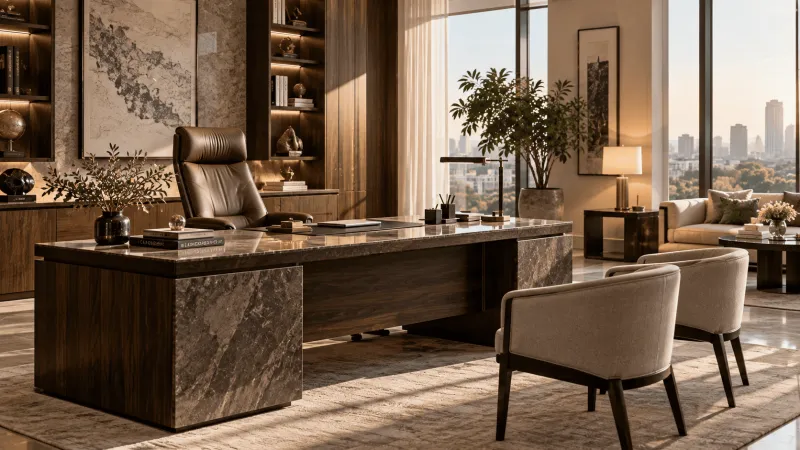
CEO Office Design: Desk and Executive Chair Ideas for a High-End Corporate Interior
Posted by Lukas Berger / Luxury Office & Study Furniture / September 20, 2026
A CEO office communicates before a single word is spoken. The desk, the chair and the surrounding composition set expectations of competence, calm and long-term thinking. In high-end corporate interiors the goal is not spectacle. It is clarity, proportion and materials that age with dignity.
Successful executive spaces rely on a small number of decisive pieces. The luxury office desk forms the primary focal point. The CEO office chair anchors the working position. Visitor seating and the backdrop complete a setting that feels considered rather than staged. When these elements are chosen with restraint, the room supports both focused work and formal conversation without visual noise.
The Desk as Focal Point
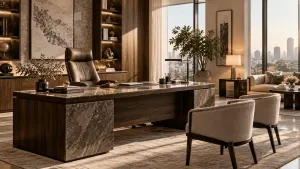
The desk remains the single most important object in the room. Its scale, surface and presence establish hierarchy and order. A luxury office desk should offer generous working area while maintaining clean proportions. Excessive bulk can feel dated; insufficient presence can undermine the authority the space is meant to convey.
Preferred materials currently favour natural wood veneers with depth and grain, stone surfaces that read as solid, or refined combinations of both. Thickness of the top contributes to visual weight. Integrated cable management and discreet storage keep the surface calm. Technology should disappear into the structure rather than sit on top of it.
Positioning matters as much as the object itself. Placing the desk to command a view of the entrance while allowing natural light from the side creates balanced sightlines. The desk becomes the centre of gravity without turning the room into a stage set.
The Role of the CEO Office Chair
The chair is the counterpart to the desk. It must deliver all-day ergonomic performance while holding visual weight equal to the surface it faces. A well-designed CEO office chair supports posture through adjustable lumbar, seat depth and recline mechanisms, yet its silhouette remains composed and intentional.
Upholstery choices lean toward full-grain leather or high-performance textiles in restrained tones. Bases in polished or matte metal provide stability without distraction. The best executive chairs avoid both overt luxury signalling and purely technical appearance. They simply look as though they belong in a room of serious decisions.
Proportions between chair and desk require attention. A high-back form can balance a substantial desk; a lower profile may suit cleaner, more horizontal compositions. The goal is visual harmony rather than matching sets.
Visitor Seating and Conversation Zones
Formal visitor chairs placed opposite the desk create a clear hierarchy for structured meetings. These pieces should offer comfort without inviting prolonged lounge behaviour. Upholstery and finish should relate to the CEO chair without identical replication, preserving a subtle distinction of role.
Many high-end offices now include a secondary conversation area away from the desk. Two or three armchairs arranged with a low table allow more equal dialogue. This zone softens the formality of the primary desk arrangement and supports relationship-building conversations. Materials here can introduce slightly warmer textures while remaining within the overall palette.
The transition between zones should feel natural. Circulation paths remain clear, and the two seating areas do not compete for dominance.
Backdrop and Spatial Calm
The wall behind the desk functions as a quiet stage. Built-in cabinetry, a restrained art wall or a simple architectural panel can provide presence without clutter. Open shelving rarely serves executive offices well; closed storage maintains visual order.
Lighting should be layered. Ambient illumination keeps the room evenly lit, while a focused task light supports concentrated work. Accent lighting can highlight texture or a single object without creating drama. Natural light remains the most valuable asset when controlled against glare.
Colour and material palettes favour longevity. Warm neutrals, deep woods, soft greys and muted accents create environments that do not date quickly. Brand colours, if used at all, appear sparingly so the space remains adaptable across leadership changes.
Brand-Neutral Elegance as Strategy
The most enduring CEO offices avoid strong corporate branding inside the private suite. Logos and campaign imagery belong in public areas. The executive room benefits from a quieter language of quality materials and precise proportions. This approach supports multiple leadership styles and protects the investment against shifts in brand identity.
Luxury office furniture selected with this principle in mind tends to retain relevance longer. A well-proportioned desk and a carefully engineered pair of executive chairs will continue to serve the organisation even as other elements of the interior evolve.
Practical Considerations for Longevity
Durability of finish and mechanism matters as much as initial appearance. Surfaces must resist daily use while accepting periodic maintenance. Mechanisms in chairs and height-adjustable elements should operate quietly and reliably over years.
Scale relative to the room prevents both overcrowding and emptiness. A desk that is too large for the volume of the space creates imbalance; one that is too small fails to hold the room. Professional measurement and visualisation remain the most reliable path to correct proportions.
Acoustic comfort also contributes to the overall quality of the environment. Soft surfaces, thoughtful door seals and controlled reverberation support concentrated work and confidential conversation.
Assembling a Coherent Whole
The strongest executive interiors treat furniture as architecture rather than decoration. Each piece earns its place through function and contribution to the larger composition. The luxury office desk establishes the primary axis. The CEO office chair completes the working position. Visitor seating and secondary zones support the range of interactions required. The backdrop provides calm enclosure.
When these elements align in material, proportion and finish, the room acquires a quiet authority that does not need explanation. It simply feels correct for the work that occurs there.
High-end corporate interiors succeed when they prioritise substance over statement. A carefully chosen desk and a precisely engineered chair remain the foundation of that success. Everything else supports their presence.
RECENT POSTS
-
Framed Prints That Bring Effortless European Elegance to Apartment Interiors
September 23, 2026
-
How Crystal Chandelier Lighting Transforms Light, Height and Luxury Interiors
September 23, 2026
-
The Art of Choosing a Luxury Table Clock: A Guide to Size, Style & Placement
September 21, 2026
-
Elegant Wall Lamps: The Secret to Warmer, More Characterful Luxury Interiors
September 21, 2026
-
Pairing Luxury TV Units with Living Room Furniture: Create Cohesive Elegance in Modern Homes & Hotel
September 20, 2026
-
CEO Office Design: Desk and Executive Chair Ideas for a High-End Corporate Interior
September 20, 2026
-
How to Choose a Living Room Side Table: 5 Design Rules | The Golden Ratio Guide
September 19, 2026
-
Why Boutique Hotels Are Investing in Classic Marble Statues for Lobbies and Gardens
September 19, 2026
-
Is Your Luxury Outdoor Furniture Fading? UV, Covers and Placement
September 18, 2026
-

The Roman Centurion Statue: History, Symbolism and Where to Place One
September 18, 2026