





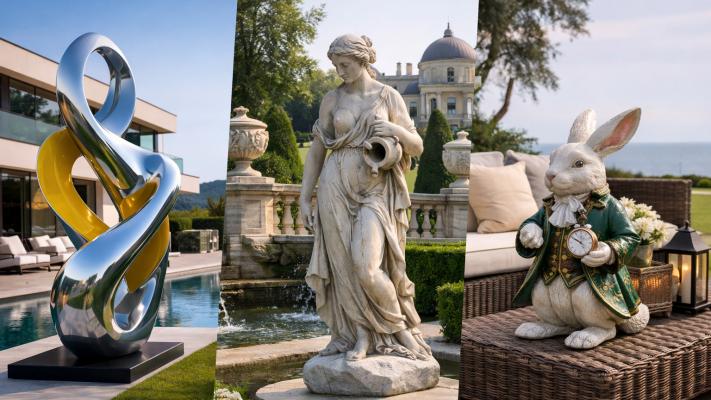
Fiberglass vs Resin vs Stone: Choosing the Right Sculpture for Outdoor Luxury
Posted by Luxury Group International Design Team / Luxury Sculptures / February 02, 2026
Outdoor sculptures are no longer secondary decorative elements. In today’s luxury villas, boutique hotels, and architect-designed gardens, sculpture has become a defining statement—an object that anchors space, expresses taste, and signals refinement. Yet while design often takes center stage, the material behind the sculpture quietly determines how that statement ages over time.From sleek modern gardens to classical European courtyards, buyers are increasingly faced with a crucial decision: fiberglass, resin, or stone? Each material offers a distinct balance of aesthetics, durability, and long-term value. Understanding these differences is essential for anyone seeking outdoor art that feels luxurious not just on day one, but for years to come.
This guide offers a refined, practical fiberglass vs resin garden sculptures comparison, helping you choose the right sculpture material based on environment, maintenance expectations, and design intent.
Why Material Choice Defines Outdoor Luxury
Luxury outdoor spaces are exposed spaces. Sunlight, rain, temperature shifts, wind, and salt air all interact with sculpture surfaces in ways that interiors never experience. A sculpture that looks impeccable in a showroom can quickly lose its presence if the material is poorly matched to its surroundings.
True outdoor luxury is not about excess—it is about longevity, harmony, and intelligent selection. The right material ensures that a sculpture remains visually commanding, structurally sound, and emotionally satisfying long after installation.
Fiberglass Sculptures: Modern Scale with Architectural Freedom
Among contemporary outdoor artworks, fiberglass sculptures have emerged as a favorite for designers and collectors seeking scale, creativity, and modern impact.
What Makes Fiberglass Unique
Fiberglass sculptures are typically crafted using glass fiber reinforcement combined with a resin matrix. This composite structure offers exceptional strength while remaining surprisingly lightweight, allowing artists and manufacturers to create large, complex forms without the structural challenges associated with heavy materials.
Advantages of Fiberglass Sculptures
Fiberglass excels in modern outdoor luxury settings for several reasons:
- Impressive scale without excessive weight, making it ideal for oversized statement pieces
- High design flexibility, enabling abstract forms, dynamic animal figures, and sculptural silhouettes
- Ease of installation, especially on terraces, rooftops, and landscaped podiums
- Consistent finishes, from high-gloss contemporary surfaces to textured matte effects
Considerations for Long-Term Performance
While fiberglass offers remarkable design freedom, it is not maintenance-free. Prolonged exposure to sunlight can affect surface coatings over time, particularly if protective finishes are not properly applied or maintained. High-quality fiberglass sculptures use advanced gel coats and UV-stable finishes to mitigate this, but periodic inspection remains part of responsible ownership.
Ideal Applications
Fiberglass sculptures are best suited for:
- Contemporary gardens and minimalist landscapes
- Large decorative sculptures requiring visual impact
- Luxury hotels, resorts, and commercial outdoor spaces
- Statement animal figures and abstract forms
Synthetic Resin Sculptures: Decorative Detail with Styling Flexibility
Often grouped under a single term, synthetic resin sculptures encompass a wide range of molded materials designed primarily for visual detail rather than monumental scale.
Understanding Resin as a Material
Resin sculptures are prized for their ability to capture intricate textures and fine detailing. This makes them especially popular for decorative sculptures, figurative pieces, and ornamental garden accents.
Strengths of Synthetic Resin Sculptures
Resin performs well in curated outdoor settings:
- Exceptional surface detail, ideal for expressive decorative figures
- Lightweight and portable, allowing repositioning and seasonal styling
- Cost-effective, offering a luxury look without the investment required for stone or large fiberglass pieces
Limitations in Outdoor Environments
Resin’s primary vulnerability lies in long-term exposure. Continuous sunlight can cause fading or surface degradation, while temperature fluctuations may lead to micro-cracking over time. As a result, resin sculptures are better suited to protected placements rather than fully exposed gardens.
Best Use Cases
Synthetic resin sculptures work best in:
- Covered patios and loggias
- Decorative garden corners with partial shade
- Seasonal or rotating outdoor displays
- Smaller decorative sculptures and accent pieces
Stone Sculptures: Classical Permanence and Natural Gravitas
Stone has defined luxury sculpture for centuries. From Italian marble statues to French limestone garden figures, stone carries an inherent sense of history and permanence.
The Appeal of Stone in Outdoor Luxury
Stone sculptures offer:
- Natural weight and visual authority
- Timeless elegance, especially in formal gardens
- Aging with character, developing patina rather than appearing worn
Environmental Challenges
Despite its reputation for durability, stone is not immune to environmental stress. Freeze–thaw cycles in colder climates, salt exposure in coastal areas, and water absorption in porous stones can gradually affect surface integrity. Proper drainage, thoughtful placement, and climate suitability are essential considerations.
Ideal Settings
Stone sculptures are best suited for:
- Formal European gardens
- Courtyards and symmetrical landscapes
- Classical villas and heritage-inspired properties
- Locations where natural aging is embraced rather than resisted
Fiberglass vs Resin Garden Sculptures Comparison
When comparing materials, the choice ultimately depends on lifestyle, environment, and aesthetic intent.
Fiberglass sculptures offer the greatest design freedom and scale with relatively low structural demand, making them ideal for modern luxury landscapes. Synthetic resin sculptures excel in decorative detail and flexibility but require protection from harsh exposure. Stone sculptures provide unmatched gravitas and tradition but demand environmental compatibility and acceptance of natural aging.
There is no universal “best” material—only the most appropriate one for a given space.
Choosing the Right Sculpture Based on Climate
Climate plays a decisive role in material selection:
- Hot, sunny regions favor high-quality fiberglass with UV-protective finishes
- Cold climates require careful stone selection and proper installation to avoid freeze damage
- Coastal environments demand materials resistant to salt exposure, often favoring fiberglass or protected resin
- Urban terraces and rooftops benefit from lightweight fiberglass sculptures that minimize load stress
Maintenance Expectations in Luxury Outdoor Art
Luxury does not mean maintenance-free—it means predictable and manageable care. Fiberglass may require periodic surface inspection, resin benefits from shaded placement and gentle cleaning, and stone demands thoughtful drainage and occasional conservation.
Understanding these needs upfront transforms maintenance from an inconvenience into a conscious part of ownership.
Final Verdict: Making an Informed Luxury Choice
Choose fiberglass sculptures if you value modern expression, large scale, and architectural presence.
Choose synthetic resin sculptures if decorative detail and styling flexibility are your priority.
Choose stone if you seek tradition, permanence, and the quiet authority of natural material.
The most refined outdoor spaces are not defined by trend-driven choices, but by informed decisions that respect both design and environment.
Conclusion: Outdoor Sculpture as a Long-Term Luxury Investment
An outdoor sculpture should not merely decorate a space—it should belong to it. By understanding material performance as deeply as aesthetic appeal, luxury buyers can invest in outdoor art that retains its presence, integrity, and emotional impact over time.
In the world of outdoor luxury, true sophistication lies not in choosing what looks impressive today, but in selecting what will remain compelling tomorrow.
RECENT POSTS
-
The Art of Hospitality on Wheels: How Luxury Trolleys Elevate Boutique Hotel Experiences
September 25, 2026
-

The Art of Grandeur: How Baroque Coffee Tables Transform Luxury Living Spaces
September 25, 2026
-
The Art of Entertaining: How Luxury Bar Furniture Transforms Sophisticated Interiors
September 24, 2026
-
The New Art of Rest: Curating a Wellness-Focused Luxury Bedroom
September 24, 2026
-

Framed Prints That Bring Effortless European Elegance to Apartment Interiors
September 23, 2026
-

How Crystal Chandelier Lighting Transforms Light, Height and Luxury Interiors
September 23, 2026
-

Sculptural Illumination: How Contemporary Floor Lamps Are Becoming Modern Art Statements
September 22, 2026
-

The Art of Choosing a Luxury Table Clock: A Guide to Size, Style & Placement
September 21, 2026
-
Elegant Wall Lamps: The Secret to Warmer, More Characterful Luxury Interiors
September 21, 2026
-

Pairing Luxury TV Units with Living Room Furniture: Create Cohesive Elegance in Modern Homes & Hotel
September 20, 2026