





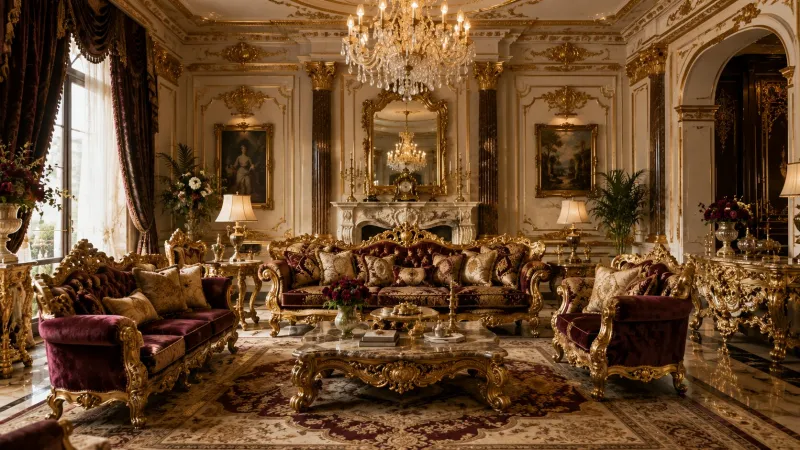
From Plain to Palatial: Designing a Baroque Living Room with Modern Luxury
Posted by Luxury Group International Design Team / Living Room Furniture / July 10, 2026
A truly memorable living room does more than look beautiful—it creates a sense of theatre. That is the enduring appeal of a Baroque living room. Rich curves, sculptural furniture, dramatic mirrors, layered lighting, and luxurious fabrics work together to turn an ordinary space into something expressive and unforgettable.
For European luxury homes, boutique hotels, and private residences, Baroque style offers more than decoration. It brings history, craftsmanship, and visual impact into contemporary home interiors. The secret is not to fill the room with ornament, but to curate each element with purpose.
Step 1: Begin with a Strong Focal Point
Every successful Baroque living room needs one dominant feature. This could be a carved fireplace, an oversized gilded mirror, a statement chandelier, or an elaborately upholstered sofa.
Choose one piece to lead the room, then allow the rest of the luxury living room furniture to support it. This creates grandeur without making the space feel overcrowded.
Step 2: Select Ornate Furniture with Presence
The heart of Baroque style lies in beautifully detailed ornate furniture. Look for curved silhouettes, carved wood, cabriole legs, buttoned upholstery, and metallic accents.
A sculptural sofa, a pair of high-back armchairs, and an elegant coffee table can immediately transform the room. For a more balanced result, combine these decorative pieces with cleaner walls or restrained flooring.
In modern luxury interior design, contrast is important. Ornate furniture looks even more impressive when it has space to breathe.
Step 3: Build a Rich but Controlled Colour Palette
Deep jewel tones work beautifully in Baroque interiors. Burgundy, emerald, sapphire, plum, ivory, and charcoal can be paired with gold or antique brass finishes.
For a lighter European interpretation, use warm cream walls, soft taupe upholstery, gilded mirrors, and dark wood accents. This keeps the room sophisticated while preserving its royal character.
Step 4: Layer Fabrics and Textures
Baroque interiors should feel tactile. Velvet curtains, silk cushions, patterned rugs, embroidered upholstery, and polished wood introduce richness through texture.
Use these materials in layers rather than all at once. A velvet sofa paired with silk cushions and a patterned rug can deliver enough visual depth without overwhelming the room.
Step 5: Add Mirrors, Lighting, and Decorative Details
Large mirrors are essential to Baroque-style interior decors. They reflect light, enlarge the space, and introduce architectural drama.
Pair a gilded mirror with a chandelier, sculptural wall lights, or decorative table lamps. Complete the look with candleholders, artistic bowls, ornate clocks, or classical sculptures.
Every accessory should feel connected to the room’s overall story.
Mood Board: The Baroque Formula
Create your design mood board using five key elements:
Colour: Burgundy, ivory, emerald, gold
Materials: Velvet, marble, carved wood, brass
Furniture: Curved sofas, carved tables, statement chairs
Lighting: Chandeliers, wall sconces, warm lamps
Accessories: Gilded mirrors, sculptures, patterned rugs
Use this mood board to compare finishes before selecting your final luxury living room furniture.
Create a Room That Feels Collected, Not Decorated
The most successful Baroque spaces do not look newly assembled. They feel layered, personal, and gradually collected over time.
Explore Baroque mirrors, luxury sofas, carved coffee tables, statement chairs, and decorative lighting from your preferred furniture collection. By combining these pieces carefully, your Baroque living room can feel dramatic yet comfortable, historic yet relevant, and luxurious without losing warmth.
That is what makes Baroque-inspired luxury interior design so captivating: it transforms everyday living into an experience.
RECENT POSTS
-
The Art of Hospitality on Wheels: How Luxury Trolleys Elevate Boutique Hotel Experiences
September 25, 2026
-
The Art of Grandeur: How Baroque Coffee Tables Transform Luxury Living Spaces
September 25, 2026
-
The Art of Entertaining: How Luxury Bar Furniture Transforms Sophisticated Interiors
September 24, 2026
-
The New Art of Rest: Curating a Wellness-Focused Luxury Bedroom
September 24, 2026
-
Framed Prints That Bring Effortless European Elegance to Apartment Interiors
September 23, 2026
-
How Crystal Chandelier Lighting Transforms Light, Height and Luxury Interiors
September 23, 2026
-
Sculptural Illumination: How Contemporary Floor Lamps Are Becoming Modern Art Statements
September 22, 2026
-
The Art of Choosing a Luxury Table Clock: A Guide to Size, Style & Placement
September 21, 2026
-
Elegant Wall Lamps: The Secret to Warmer, More Characterful Luxury Interiors
September 21, 2026
-
Pairing Luxury TV Units with Living Room Furniture: Create Cohesive Elegance in Modern Homes & Hotel
September 20, 2026