





How to Choose a Living Room Side Table: 5 Design Rules | The Golden Ratio Guide
Posted by Elena Voss / Living Room Furniture / September 19, 2026
Finding the right living room side table often feels like a minor detail in the grand scheme of interior design. You spend months sampling couch fabrics, measuring wall space for the television, and hunting down the perfect area rug. Then, you toss in a couple of end tables for living room spaces almost as an afterthought.
However, ask any seasoned interior designer and they will tell you: side tables are the unsung heroes of living room furniture. They bridge the gap between form and function, holding your evening tea, housing your favorite lamp, and anchoring the aesthetic of your seating area.
To help you curate a space that feels balanced, intentional, and effortlessly stylish, we have broken down the process using the Golden Ratio of interior design—the perfect balance of scale, function, and visual harmony.
Here are the 5 Commandments of choosing a living room side table that will instantly elevate your space.
Commandment 1: Honor the Height Rule (The Golden Ratio of Proportion)
Nothing disrupts the visual flow or functionality of a living room faster than a side table that is severely mismatched in height to the sofa or armchair next to it.
When figuring out how to choose a living room side table, your absolute baseline metric is the height of your sofa's armrest.
- The Golden Rule: The standard living room table height should ideally match the height of the adjacent sofa or chair armrest, give or take 1 to 2 inches.
- Too Tall: A table that towers over your sofa arm creates an awkward visual barrier, making the room feel choppy.
- Too Short: A table that sits significantly lower forces you to awkwardly reach down to set down a glass or pick up a book, increasing the risk of spills.
If your sofa features an armless design or ultra-low profile arms, pair it with accent tables that sit level with the seat cushion itself. Aligning these sightlines keeps the room looking cohesive and grounded.
Commandment 2: Master the Scale and Distance
A common mistake homeowners make is selecting end tables based solely on appearance without factoring in spatial proportions and clearances. Scale is everything when maintaining a comfortable layout.
Surface Area Scale
Your side table should complement—not overpower or get lost beside—your primary seating. A bulky, deep-seated sectional calls for a side table with enough visual weight and surface area to balance it. Conversely, a mid-century modern sofa with tapered legs and a slender silhouette pairs best with a lighter, airier accent table.
The Proximity Zone
Functionality dictates how close your table should sit to your seating.
- Ideal Clearance: Position your side table roughly 2 to 3 inches away from the arm of your couch or chair.
- Why It Matters: This gap allows enough room for upholstery to breathe without creating an unnatural reach when you set down a drink.
Commandment 3: Diversify Shapes and Materials
When shopping for living room furniture, the temptation to buy a matching "furniture suite"—where the coffee table, console, and end tables all share the exact same wood stain and leg style—is strong. Resist it. Matching sets often flatten a room, making it look more like a showroom catalog than a lived-in home.
To create depth and contrast, lean into the Golden Ratio strategy of balancing shapes and textures:
- Balance the Geometry: If your coffee table and sofa are blocky, rectangular, or low-slung, introduce round or oval accent tables to soften the harsh linear edges. If your sofa is curved or plush, a structured square table brings welcome discipline.
- Mix Materials: Pair a fabric-heavy sectional with a marble, metal, or glass side table. The contrast in textures reflects light differently and creates a layered, professional finish.
- Play with Legs: If your sofa sits flat on the floor with no visible legs, choose a side table with slender metal or wooden legs to lift the eye and create an illusion of floor space.
Commandment 4: Prioritize Functionality Over Pure Aesthetics
A living room side table shouldn't just look pretty; it needs to work for your lifestyle. Before committing to a design, evaluate how your household actually uses the living area.
Ask yourself these practical questions:
- Do you need storage? If your living room tends to accumulate clutter—remote controls, reading glasses, charging cables, or magazines—opt for an end table with a drawer or lower shelving.
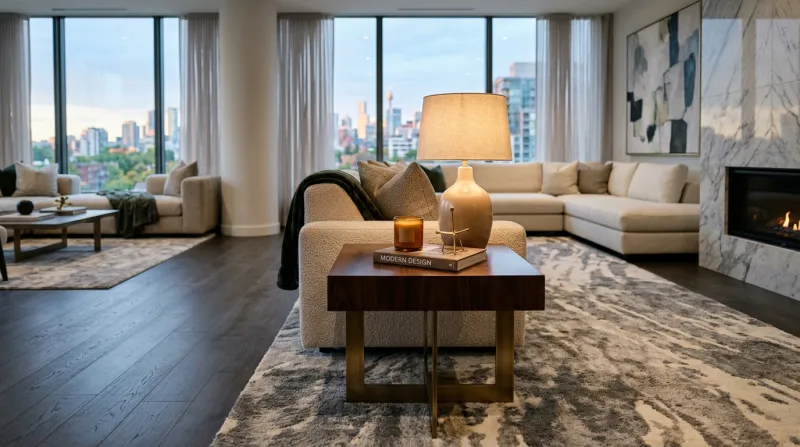
- Will it hold lighting? If you plan to place a table lamp on your side table, ensure the table surface is wide enough to support the lamp's base without crowding out space for a drink or book.
- Is it a high-traffic area? Homes with toddlers or lively pets benefit from round or oval side tables to avoid sharp corners in main walkways.
If you love entertaining, consider nesting tables or C-tables. C-tables feature an open frame designed to slide effortlessly over the arm of a sofa, providing an instant surface for laptops or appetizers without taking up floor space.
Commandment 5: Curate, Don't Clutter (The 3-Item Styling Rule)
Once you’ve found the perfect living room side table, how you style it determines whether it enhances your room or looks like a dumping ground for everyday mail.
To maintain visual harmony without overwhelming a small surface, apply the interior design Rule of Threes:
- Item 1: Vertical Height. A table lamp, a tall vase with dried stems, or a slender sculpture to draw the eye upward.
- Item 2: Horizontal Base. A small stack of two coffee table books or a decorative tray to anchor the space.
- Item 3: Organic/Personal Touch. A small ceramic bowl, a scented candle, or a small potted succulent placed on top of the book stack.
Vary the heights, textures, and scales of these three items. Leaving at least 30% to 40% of the table's surface clear ensures it remains a functional spot for your daily use.
Finding Your Perfect Match
Choosing the right end tables for your living room doesn't have to feel like a guessing game. By honoring the Golden Ratio—aligning the standard living room table height with your sofa, balancing scale and materials, ensuring proper functionality, and styling with restraint—you convert a basic piece of furniture into a functional design statement.
Before you start browsing, take out your tape measure. Measure your sofa arm height, note your existing room materials, and keep these five commandments in mind. The right side table will tie your entire living room together seamlessly.
RECENT POSTS
-

How to Choose a Living Room Side Table: 5 Design Rules | The Golden Ratio Guide
September 19, 2026
-

Why Boutique Hotels Are Investing in Classic Marble Statues for Lobbies and Gardens
September 19, 2026
-

Is Your Luxury Outdoor Furniture Fading? UV, Covers and Placement
September 18, 2026
-

The Roman Centurion Statue: History, Symbolism and Where to Place One
September 18, 2026
-

Cantilever or Centre-Pole Parasol: Which Design Is Right for Your Space?
September 17, 2026
-
French Luxury Interiors: How to Mix Baroque Furniture With Restraint
September 17, 2026
-

Freestanding vs. Built-In Bathtubs: Which Is Right for Your Luxury Home?
September 16, 2026
-

Why Vintage Table Clocks Are Returning to Luxury European Interiors
September 16, 2026
-

Why Large Outdoor Parasols Are Becoming Architectural Features in Luxury Design
September 15, 2026
-

Sydney to Melbourne: How Australian Luxury Homes Are Embracing European Design in 2026
September 15, 2026