





How to Style a Vintage Table Clock for Consoles, Dressers & Mantels
Posted by Luxury Group International Design Team / Luxury Clocks / September 14, 2026
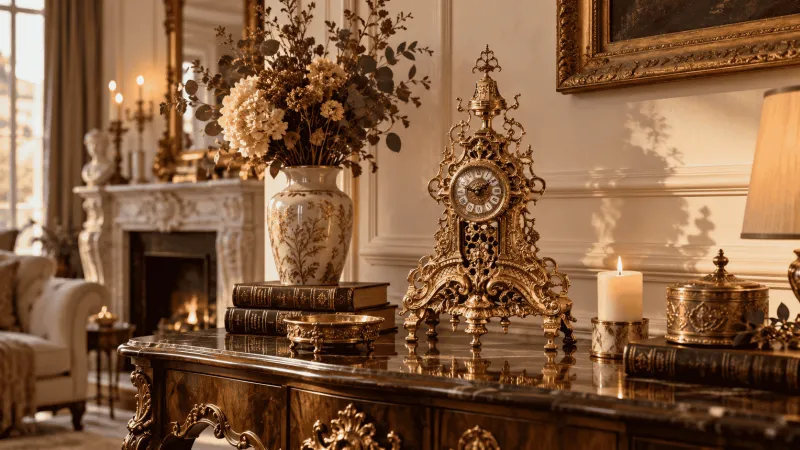
A well-chosen vintage table clock does more than tell time. It anchors a surface, adds history, and softens modern rooms with quiet character. Whether the piece is a classic vintage clock or a more ornate baroque table clock, the secret lies in thoughtful placement and restrained pairing. This guide shows how to style a vintage table clock on console tables, dressers, mantels, sideboards, bedside tables, and even hotel-lobby-style furniture so the piece feels intentional rather than random.
Why Placement Matters for a Vintage Table Clock
Scale and balance decide success. A small vintage clock can look lost on a long console, while an oversized baroque table clock may overwhelm a narrow dresser. Aim for the clock to occupy roughly one-third of the surface width when it shares space with other objects. Height variation creates visual interest: treat the vintage table clock as the tall anchor, then add one medium piece and one lower element. Leave breathing room so the eye can rest. Direct sunlight fades dials and cases over time, so prefer ambient or directed warm light that highlights wood grain, brass, or ormolu details without glare.
Styling a Vintage Table Clock on Console Tables
Console tables in entryways or living rooms set the first impression. Place the vintage table clock toward one end rather than dead center. This corner-anchor approach feels purposeful and leaves space for function. Pair it with a low tray for keys or mail and a medium-height vase or framed photo leaning against the wall behind. The resulting triangle—clock high, tray low, secondary object medium—keeps the surface lively yet uncluttered.
For a more formal look, center a baroque table clock and flank it with matching candlesticks or slender lamps. Keep finishes related: brass clock with brass accents, dark wood case with walnut or mahogany nearby. A stack of two or three hardcover books under a smaller accessory adds height without competing. Avoid crowding the front edge; guests should be able to set down a bag or coat without rearranging the display.
Best Placement Ideas for Dressers and Sideboards
Dressers and sideboards offer broader stages. On a bedroom dresser, position the vintage clock slightly off-center so it does not compete with a mirror above. Surround it sparingly: a small jewelry dish, a ceramic vessel, and perhaps a single stem in a bud vase. The goal is calm morning ritual rather than visual noise. A baroque table clock with carved details pairs especially well with soft textiles—folded linen or a small tray of perfume bottles—because the ornate form benefits from quiet neighbors.
Sideboards in dining rooms or living areas can handle slightly richer arrangements. Use the vintage table clock as the central or off-center focal point. Balance it with a pair of candlesticks of differing heights or a low bowl of seasonal fruit. Books stacked horizontally under a smaller sculpture create layered interest. When the sideboard sits against a wall, lean a piece of art or a mirror behind the clock to extend the vignette upward. Keep the total number of objects to five or fewer so the vintage clock remains the star.
Mantel Styling with a Vintage Clock
Mantels reward asymmetry more often than strict symmetry. Place the vintage table clock slightly left or right of center, then balance the opposite side with a medium vase or sculptural object and a low bowl or candle in front. This creates a dynamic yet stable composition. If the mantel is long, the clock can sit at one end with a tall branch arrangement or framed artwork on the other, connected by a low continuous element such as a runner or tray.
Symmetrical styling works when the room itself is formal. Center the baroque table clock and mirror the accessories on both sides—identical candlesticks, matching book stacks, or paired urns. Ensure the clock’s height relates to the mantel surround; roughly two-thirds of the available vertical space above the shelf keeps proportions pleasing. Avoid placing the clock directly above a working fireplace where heat and soot can damage the mechanism and finish.
Expanding the Look: Bedside Tables and Hotel Lobby Furniture
Bedside tables call for restraint and function. A compact vintage clock works best here. Position it on the side farthest from the bed so the face remains readable without glare from a lamp. Pair it with a single book and a small dish for earrings or a watch. The arrangement should feel personal and uncluttered so the surface stays practical for nighttime use.
Hotel lobby furniture—long consoles, grand sideboards, or statement entry pieces—benefits from confident scale. A substantial baroque table clock can hold its own on a large surface. Anchor one end or create a central vignette with the clock as the tallest element, then add a substantial tray, a pair of tall vases, and a low sculptural object. The result feels collected and welcoming, the same polished quality found in well-designed public spaces. Lighting matters: soft uplights or nearby lamps make the dial and case glow in the evening.
Practical Pairing Principles That Always Work
Vary height, texture, and material. A smooth brass dial next to matte ceramics or aged paper books creates contrast. Keep the color story limited—warm metals with earth tones, or silvered finishes with cool neutrals. Edit ruthlessly. If an object does not support the vintage table clock, remove it. Seasonal swaps keep the display fresh: dried branches in autumn, simple greenery in spring, without changing the clock itself.
Protect the piece. Level the surface so the mechanism stays in beat. Dust gently and avoid chemical cleaners on antique finishes. When the clock needs winding or service, choose a specialist familiar with vintage movements.
Final Thoughts on Creating Lasting Style
Styling a vintage table clock succeeds when the piece feels both functional and decorative. Console tables gain presence, dressers gain calm elegance, mantels gain focal interest, and larger hotel-lobby-style furniture gains polished character. Start with one strong placement, build a simple triangle of heights, and allow the clock’s own history and form to lead. Over time the arrangement becomes part of the room’s quiet rhythm—measured, refined, and personal.
A thoughtfully placed vintage clock or baroque table clock turns ordinary surfaces into moments of considered beauty that invite return visits and easy conversation.
Note:- Download the luxury furniture app to browse handcrafted Baroque and luxury living room pieces featuring complementary vintage table clocks and console styling options on the go.
RECENT POSTS
-

How to Choose a Living Room Side Table: 5 Design Rules | The Golden Ratio Guide
September 19, 2026
-
Why Boutique Hotels Are Investing in Classic Marble Statues for Lobbies and Gardens
September 19, 2026
-
Is Your Luxury Outdoor Furniture Fading? UV, Covers and Placement
September 18, 2026
-

The Roman Centurion Statue: History, Symbolism and Where to Place One
September 18, 2026
-

Cantilever or Centre-Pole Parasol: Which Design Is Right for Your Space?
September 17, 2026
-
French Luxury Interiors: How to Mix Baroque Furniture With Restraint
September 17, 2026
-
Freestanding vs. Built-In Bathtubs: Which Is Right for Your Luxury Home?
September 16, 2026
-
Why Vintage Table Clocks Are Returning to Luxury European Interiors
September 16, 2026
-

Why Large Outdoor Parasols Are Becoming Architectural Features in Luxury Design
September 15, 2026
-

Sydney to Melbourne: How Australian Luxury Homes Are Embracing European Design in 2026
September 15, 2026