





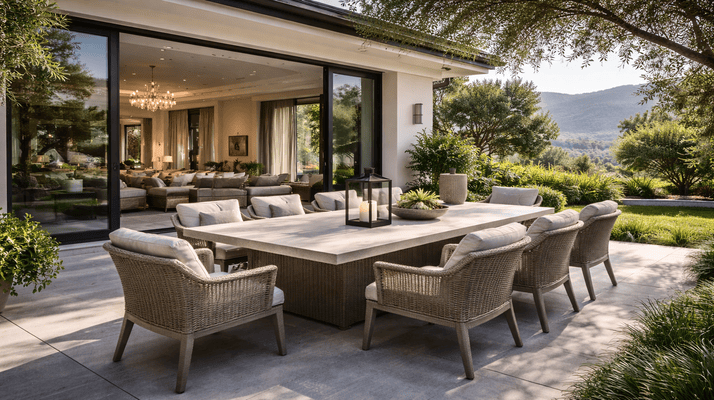
How Top Architects Specify Outdoor Dining Tables to Connect Their Interiors with Nature
Posted by Luxury Group International Design Team / Luxury Outdoor Furniture / March 07, 2026
Architects are continually pushing the boundaries of indoor-outdoor living, integrating the natural world into their designs. Outdoor dining areas have evolved from simple patio setups into carefully curated spaces that serve as a seamless extension of the interior. One of the key elements driving this trend is the luxury dining table. Top architects are specifying tables that not only complement the natural environment but also enhance the experience of dining outdoors, bringing nature closer to the home.In this blog post, we will explore how architects use modern dining tables to create an organic flow between the indoors and outdoors. We will also examine the importance of choosing the right materials, designs, and proportions to ensure harmony between both spaces.
The Rise of Indoor-Outdoor Living
In the past, outdoor furniture was often an afterthought, placed far from the living room or kitchen. But today, homeowners and architects are recognizing the value of creating spaces that blur the lines between interior and exterior living. This shift has led to the use of high-quality, luxury dining tables that bring elegance, function, and style to outdoor spaces.
Top architects are now tasked with selecting pieces that allow for continuous flow from the interior to the exterior. This design approach aims to maintain aesthetic consistency and create a feeling of openness. A modern dining table can serve as the key element in bridging the two spaces, offering a natural focal point where families and guests can dine while feeling connected to the environment.
Key Design Elements in Choosing Outdoor Dining Tables
When architects specify outdoor dining tables, they consider several design elements to ensure that the furniture complements both the interior and the surrounding nature. These elements include:
Materials that Reflect the Environment
Architects tend to choose materials that reflect the surrounding environment, enhancing the overall aesthetic. A modern dining table crafted from natural materials like teak, marble, or stone seamlessly integrates into garden spaces. These materials not only look beautiful but are durable enough to withstand outdoor conditions.
For example, a luxury dining table made from sustainably sourced teak provides a warm, earthy tone that pairs beautifully with lush greenery. Similarly, stone tables can mirror the ruggedness of natural surroundings, blending effortlessly with the landscape while providing a contemporary touch.
Proportions and Scale for Harmonious Flow
Another critical factor in selecting the right outdoor dining table is its scale and proportion. The table must not only suit the outdoor space in terms of size but also create a connection to the indoor environment. Architects carefully consider the dimensions to ensure that the luxury dining table doesn’t overwhelm or underwhelm the space.
In many cases, the table is placed strategically on a large deck or terrace, where its proportions mirror the scale of the room just inside the doors. By selecting a modern dining table that is neither too large nor too small, architects can ensure that both the interior and exterior spaces work in harmony.
Durability and Weather Resistance
While aesthetics are essential, durability is just as crucial when selecting outdoor dining tables. Architects often work with tables designed to withstand outdoor elements, such as moisture, UV exposure, and temperature fluctuations. A luxury dining table must combine beauty with resilience.
The use of weather-resistant materials like powder-coated metal, treated wood, and synthetic rattan ensures that the table will remain in top condition throughout the seasons. This not only helps maintain the table's appearance but also guarantees that the dining area can be enjoyed year-round, regardless of the weather.
Creating a Seamless Flow from Interior to Exterior
The goal of many architects is to create an effortless transition between the interior and the exterior of a home. An essential aspect of this is choosing furniture pieces, such as a modern dining table, that complement the overall design language of the home.
Architectural Flow and Transparency
Incorporating large glass doors or bi-folding doors can connect an indoor dining room to the outdoors, making the transition almost imperceptible. Architects often use these features to establish transparency, allowing the view of nature to be integrated into the dining experience.
A luxury dining table placed just in front of these glass doors, for example, would act as a visual bridge. The design of the table can also follow the lines and materials used inside the home, ensuring that the connection between the two areas feels cohesive and natural.
Highlighting Nature as the Focal Point
A significant advantage of outdoor dining areas is the ability to focus on the surrounding landscape. Architects often position outdoor dining tables in such a way that they highlight a specific outdoor feature, whether it's a scenic view, a water feature, or lush plantings. By carefully placing a modern dining table near such focal points, the dining experience becomes part of the landscape.
Additionally, selecting a luxury dining table with a refined, minimal design can help keep the focus on the natural elements around the table rather than on the furniture itself.
Expert Insights: How Architects Approach Outdoor Dining Furniture
To gain further insight into how architects approach outdoor dining areas, we spoke with renowned architect and interior designer, Marianne Keller, based in Europe. She emphasizes the importance of design continuity across the indoor and outdoor spaces. According to Keller, “When we design outdoor dining areas, we aim for fluidity. A well-chosen luxury dining table doesn’t just serve as a dining surface; it is the anchor that connects the room with nature.”
Her projects often feature luxury dining furniture that seamlessly integrates the home’s interior design, creating a unified flow between spaces. By carefully choosing the right materials and design, Keller and other architects create dining areas that allow residents to experience nature while maintaining the comfort and elegance of their homes.
Conclusion: Elevating the Dining Experience with Luxury Outdoor Furniture
The future of outdoor dining furniture is all about blending style, functionality, and a deep connection to nature. As more homeowners embrace the beauty of luxury dining tables that bridge the interior and exterior, the dining room has evolved into a space that harmonizes with its natural surroundings.
Whether it’s choosing a modern dining table made from sustainable materials or strategically placing it to highlight a breathtaking view, architects are redefining how we think about outdoor dining. These thoughtful designs create spaces that are not just about dining—they are about living in harmony with nature.
Would you place your luxury dining table in the center of your garden? Share your thoughts with us, and let’s start a conversation about how your outdoor dining area can reflect your personal style and connection to nature.
RECENT POSTS
-
The Art of Hospitality on Wheels: How Luxury Trolleys Elevate Boutique Hotel Experiences
September 25, 2026
-
The Art of Grandeur: How Baroque Coffee Tables Transform Luxury Living Spaces
September 25, 2026
-
The Art of Entertaining: How Luxury Bar Furniture Transforms Sophisticated Interiors
September 24, 2026
-
The New Art of Rest: Curating a Wellness-Focused Luxury Bedroom
September 24, 2026
-
Framed Prints That Bring Effortless European Elegance to Apartment Interiors
September 23, 2026
-
How Crystal Chandelier Lighting Transforms Light, Height and Luxury Interiors
September 23, 2026
-
Sculptural Illumination: How Contemporary Floor Lamps Are Becoming Modern Art Statements
September 22, 2026
-

The Art of Choosing a Luxury Table Clock: A Guide to Size, Style & Placement
September 21, 2026
-
Elegant Wall Lamps: The Secret to Warmer, More Characterful Luxury Interiors
September 21, 2026
-
Pairing Luxury TV Units with Living Room Furniture: Create Cohesive Elegance in Modern Homes & Hotel
September 20, 2026