





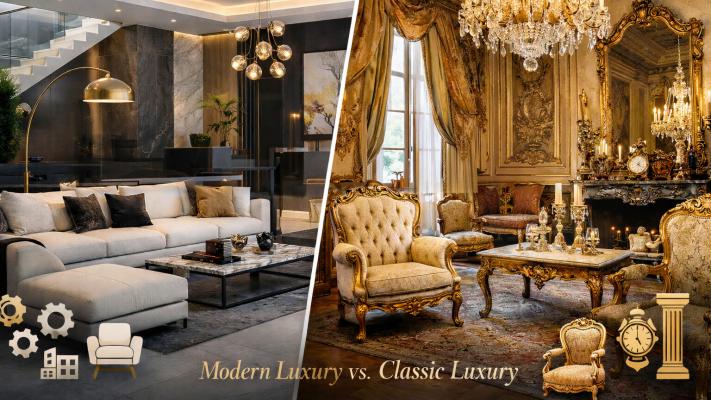
Modern Luxury Furniture vs. Classic Luxury: Which Style Truly Lasts Longer?
Posted by Luxury Group International Design Team / Living Room Furniture / February 05, 2026
Luxury furniture has always reflected more than taste—it mirrors history, power, technology, and the way societies define comfort and status. For luxury buyers across Europe, whether designing a luxury hotel, a private estate, or a modern luxury home, the question is not simply about style. It is about longevity, relevance, and legacy.So when comparing modern luxury furniture with classic luxury furniture, we are really asking a deeper question: Does luxury last longer through tradition or through evolution? This expanded, opinion-driven comparison explores both styles through historical context, material durability, design relevance, and cultural value—helping you decide which truly stands the test of time.
The Origins of Classic Luxury Furniture: Designed to Last Centuries
Classic luxury furniture is inseparable from European history. Its foundations were shaped in royal courts, aristocratic residences, and grand estates—where furniture was not replaced every decade, but designed to endure generations.
During the reign of Louis XIV, furniture became a political and cultural symbol. Lavish armchairs, carved tables, and gilded consoles were crafted not only for comfort but to express permanence, hierarchy, and wealth. Baroque and later Rococo styles emphasized solid hardwood construction, hand-carved ornamentation, and symmetry—elements still visible in classic luxury furniture today.
What makes classic luxury furniture enduring is not nostalgia alone. Traditional construction techniques—mortise-and-tenon joints, solid wood frames, hand-upholstered seating—create pieces that can be restored repeatedly without losing integrity. A classic dining table or sofa can survive centuries, evolving gracefully with age.
Opinion: Classic luxury furniture was never designed for trends. It was designed for dynasties—and that intention still defines its longevity.
Modern Luxury Furniture: Born from Innovation, Not Ornament
In contrast, modern luxury furniture emerged from a radical shift in philosophy during the late 19th and early 20th centuries. Movements like Bauhaus rejected ornamentation in favor of clarity, functionality, and honest materials. Visionaries such as Le Corbusier redefined luxury—not as decoration, but as precision, proportion, and purpose.
Modern luxury furniture celebrates:
- Clean lines and balanced geometry
- Advanced materials such as steel, glass, engineered wood, and performance fabrics
- Functionality without visual excess
Opinion: Modern luxury furniture lasts not because it imitates the past, but because it evolves with how people live today.
Material Longevity: Old-World Craft vs. New-Age Engineering
When discussing durability, materials matter as much as design.
Classic luxury furniture relies heavily on:
- Solid hardwoods (oak, walnut, mahogany)
- Natural leather and woven textiles
- Hand-applied finishes
Modern luxury furniture, on the other hand, uses:
- Engineered woods with superior stability
- Powder-coated metals resistant to corrosion
- High-performance fabrics designed for heavy use
Opinion: Classic luxury furniture wins in generational durability, while modern luxury furniture excels in performance-driven longevity.
Design Relevance: Timeless Form or Adaptable Style?
Classic luxury furniture rarely feels obsolete because it belongs to a known visual language. Its proportions are rooted in architectural harmony, making it eternally compatible with European heritage spaces—palaces, townhouses, and historic villas.
However, modern luxury furniture has proven surprisingly resilient. While certain modern trends fade quickly, truly refined modern pieces—those focused on proportion rather than novelty—remain relevant for decades. Minimalism, when executed with quality, has become a modern classic in its own right.
In contemporary European luxury homes, modern luxury furniture often feels more aligned with open-plan living, natural light, and flexible spaces.
Opinion: Classic luxury furniture guarantees timelessness; modern luxury furniture earns it—when done right.
Maintenance, Restoration, and Long-Term Ownership
One of the strongest arguments for classic luxury furniture is restorability. Scratches can be refinished, upholstery replaced, and joints repaired—extending life indefinitely.
Modern luxury furniture prioritizes low maintenance. Surfaces are easier to clean, fabrics resist staining, and finishes are designed for consistency. However, some modern materials are harder to restore once damaged.
For luxury homeowners who value heritage, restoration becomes part of the ownership experience. For luxury hotels, efficiency and uniformity often favor modern luxury furniture.
Emotional and Cultural Longevity
Luxury is emotional. Classic luxury furniture carries a sense of lineage—it feels inherited, even when newly purchased. It resonates deeply with European buyers who value cultural continuity and craftsmanship.
Modern luxury furniture creates a different emotional response: clarity, confidence, and relevance. It signals alignment with contemporary values—sustainability, innovation, and forward-thinking design.
Neither emotion is superior. They simply reflect different definitions of luxury.
Sustainability and Value Over Time
From a sustainability perspective, classic luxury furniture benefits from its long lifecycle and repairability. Modern luxury furniture contributes through responsible sourcing, recyclable materials, and reduced waste during production.
In terms of long-term value:
- Classic luxury furniture often retains heirloom and resale appeal
- Iconic modern luxury furniture is increasingly collectible
The gap between the two is narrowing.
Final Verdict: Which Style Truly Lasts Longer?
Here’s the honest conclusion: classic luxury furniture lasts longer in memory and heritage, while modern luxury furniture lasts longer in lifestyle relevance.
- ► Choose classic luxury furniture for heritage homes, private estates, and spaces where history matters
- ► Choose modern luxury furniture for luxury hotels, contemporary residences, and evolving interiors
- ► Or combine both to create a layered, future-proof luxury space
Poll Time: Your Luxury Philosophy
Now it’s your turn ---
Which style do you believe truly lasts longer?
- ► Modern luxury furniture – innovative, adaptable, and contemporary
- ► Classic luxury furniture – timeless, crafted, and heritage-driven
Share your choice and tell us why. Your perspective defines the future of luxury.
RECENT POSTS
-
The Art of Hospitality on Wheels: How Luxury Trolleys Elevate Boutique Hotel Experiences
September 25, 2026
-
The Art of Grandeur: How Baroque Coffee Tables Transform Luxury Living Spaces
September 25, 2026
-
The Art of Entertaining: How Luxury Bar Furniture Transforms Sophisticated Interiors
September 24, 2026
-
The New Art of Rest: Curating a Wellness-Focused Luxury Bedroom
September 24, 2026
-
Framed Prints That Bring Effortless European Elegance to Apartment Interiors
September 23, 2026
-
How Crystal Chandelier Lighting Transforms Light, Height and Luxury Interiors
September 23, 2026
-
Sculptural Illumination: How Contemporary Floor Lamps Are Becoming Modern Art Statements
September 22, 2026
-
The Art of Choosing a Luxury Table Clock: A Guide to Size, Style & Placement
September 21, 2026
-
Elegant Wall Lamps: The Secret to Warmer, More Characterful Luxury Interiors
September 21, 2026
-
Pairing Luxury TV Units with Living Room Furniture: Create Cohesive Elegance in Modern Homes & Hotel
September 20, 2026