





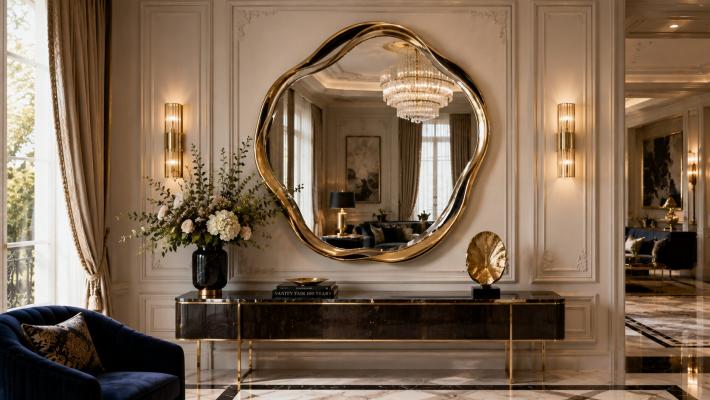
Modern Mirrors That Elevate Refined European Living Spaces
Posted by Luxury Group International Design Team / Luxury Bedroom Furniture / June 04, 2026
In luxury European interiors, mirrors are no longer just functional objects—they are focal points, storytellers, and silent curators of space. Modern mirrors transcend reflection, becoming design statements that enhance light, depth, and atmosphere. When thoughtfully selected, designer mirrors transform living spaces, bedrooms, and boutique hotel interiors, creating environments that feel elevated, curated, and profoundly engaging.
Mirrors as Modern Focal Décor
Modern mirrors are defined by their sculptural forms, minimalist lines, and innovative materials. Unlike traditional mirrors, which merely serve a functional purpose, contemporary designs become visual anchors. A modern mirror for luxury interiors can define a wall, accentuate a room’s architecture, or act as a statement piece that draws the eye and sparks curiosity.
In European luxury homes, a mirror positioned strategically can manipulate perception, making compact spaces feel expansive and grand salons appear even more dramatic. Its reflective surface interacts with natural and artificial light, creating dynamic visual experiences that evolve throughout the day.
Craftsmanship That Engages the Senses
Designer mirrors combine aesthetic innovation with meticulous craftsmanship. Premium glass, beveled edges, and frames made from polished metal, exotic wood, or lacquered surfaces turn each mirror into an object of art. Modern mirrors often feature asymmetrical designs, layered panels, or integrated lighting, offering subtle surprises that invite closer inspection.
The appeal of a luxury mirror lies not just in its reflection, but in its ability to harmonize with other design elements. European interiors emphasize material dialogue—metallic accents, textiles, and curated furnishings interact with mirrors to create a cohesive, tactile experience.
Placement and Psychological Impact
Strategic placement is essential to maximize both aesthetic and functional impact. In living rooms, a large mirror can anchor a seating area, complementing sofas, side tables, and lighting. In bedrooms, mirrors above dressers or headboards enhance spatial perception while adding elegance. Boutique hotels leverage mirrors to create a sense of intrigue and intimacy, guiding guests’ visual journey through corridors, lobbies, and lounges.
Beyond their spatial effect, mirrors influence mood. The right modern mirror can amplify daylight, soften shadows, and create reflective focal points that engage occupants’ curiosity, encouraging them to interact with the environment in subtle ways.
Styling With Modern Minimalism
Luxury mirrors thrive when paired with restraint. Minimalist accessories, curated décor, and subtle ambient lighting allow the mirror to command attention without overwhelming the space. European design aesthetics favor proportion, scale, and harmony—mirrors are chosen to complement, not compete.
Layering textures and reflective surfaces enhances depth, while integrating the mirror with architectural details or sculptural furniture creates a dialogue between form and function. A designer mirror becomes more than décor; it is an interactive element that adds narrative, intrigue, and refinement.
Elevating Interiors and Sparking Curiosity
Investing in a modern mirror transforms interiors by introducing light, depth, and elegance. Its reflective surfaces amplify design intent, while sculptural frames and innovative forms intrigue and inspire. In luxury European homes and boutique hotels, mirrors elevate living spaces, encouraging occupants to pause, observe, and appreciate the artistry of their surroundings.
Ultimately, modern mirrors for luxury interiors are not just decorative—they are experiential. They anchor rooms, enhance ambiance, and subtly shape perception, offering both functional utility and a continuous invitation to explore, reflect, and engage with the curated space.
RECENT POSTS
-

The Art of Hospitality on Wheels: How Luxury Trolleys Elevate Boutique Hotel Experiences
September 25, 2026
-
The Art of Grandeur: How Baroque Coffee Tables Transform Luxury Living Spaces
September 25, 2026
-
The Art of Entertaining: How Luxury Bar Furniture Transforms Sophisticated Interiors
September 24, 2026
-
The New Art of Rest: Curating a Wellness-Focused Luxury Bedroom
September 24, 2026
-
Framed Prints That Bring Effortless European Elegance to Apartment Interiors
September 23, 2026
-
How Crystal Chandelier Lighting Transforms Light, Height and Luxury Interiors
September 23, 2026
-
Sculptural Illumination: How Contemporary Floor Lamps Are Becoming Modern Art Statements
September 22, 2026
-
The Art of Choosing a Luxury Table Clock: A Guide to Size, Style & Placement
September 21, 2026
-
Elegant Wall Lamps: The Secret to Warmer, More Characterful Luxury Interiors
September 21, 2026
-
Pairing Luxury TV Units with Living Room Furniture: Create Cohesive Elegance in Modern Homes & Hotel
September 20, 2026