






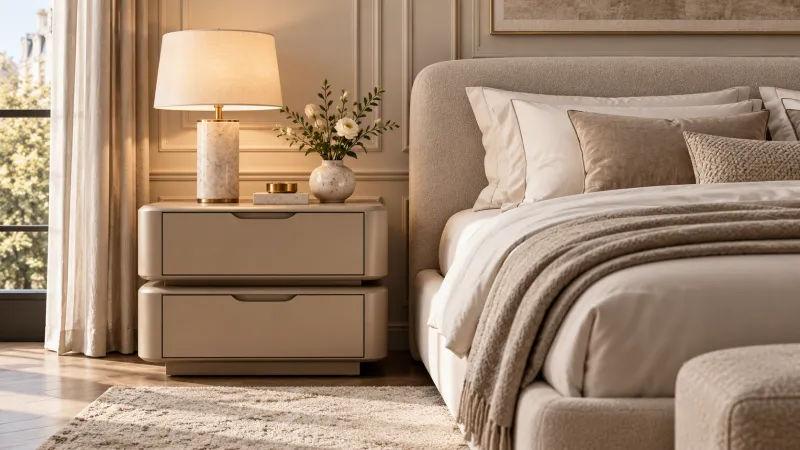
Nightstand Height Guide: Match the Bed, Mattress and Lamp Correctly
Posted by Luxury Group International Design Team / Luxury Bedroom Furniture / October 25, 2026
A beautifully designed bedroom can lose its sense of balance because of one overlooked detail: the height of the bedside table. Imagine a sophisticated upholstered bed paired with an exquisite marble nightstand, only to discover that reaching for a glass of water requires an uncomfortable stretch. Alternatively, a bedside table positioned too high can interrupt the elegant proportions of the bed and surrounding furniture.
In luxury bedroom design, even small measurements influence comfort, convenience and visual harmony. The relationship between mattress height, nightstand surface and bedside lighting is particularly important.
This comprehensive nightstand height guide explains how to select the correct bedside table dimensions, coordinate lamps and create beautifully proportioned bedrooms for luxury homes, private residences and prestigious European hotels.
1. Understanding the Ideal Nightstand Height Next to Bed
The most important consideration when selecting a bedside table is its relationship with the mattress.
As a general guideline, the nightstand surface should sit approximately level with the top of the mattress or within 5 cm above or below it.
This positioning allows comfortable access to everyday essentials, including reading glasses, mobile phones, books and water glasses.
For example, if the mattress surface measures 60 cm above the floor, a nightstand between 55 and 65 cm high may provide a practical arrangement.
However, personal comfort and the bed's construction should influence the final selection.
A higher bedside table may suit a substantial upholstered bed, while a lower design can complement a contemporary platform bed.
The ideal nightstand height next to bed ultimately depends on combining comfortable reach with balanced furniture proportions.
2. How to Measure Your Bed and Mattress Correctly
Before purchasing a luxury nightstand, measure the total height of the bed rather than focusing only on the frame.
Start by measuring vertically from the finished floor to the upper surface of the mattress.
This measurement should include the bed frame, base and mattress.
For example, consider a bed with a 30 cm high supporting base and a 28 cm thick mattress.
The combined height is approximately 58 cm, assuming the mattress rests directly on that base.
In this case, a bedside table measuring around 55–63 cm high would provide a suitable starting point.
Remember that mattress toppers can slightly increase the final sleeping surface height.
Taking measurements after the bed is fully assembled ensures that the selected furniture coordinates with its actual dimensions.
For bespoke European bedrooms featuring unusually high beds or thick luxury mattresses, accurate measurements become particularly important.
3. Bedside Table Height for Different Bed Styles
Different bed designs require different bedside table proportions. Understanding these variations helps create a cohesive bedroom arrangement.
Platform Beds
Modern platform beds typically feature lower profiles, often placing the mattress approximately 40–55 cm above the floor.
For these interiors, bedside tables around 40–55 cm high may provide comfortable access while preserving the bed's clean horizontal lines.
Low-profile nightstands are particularly effective in minimalist bedrooms where understated furniture proportions are preferred.
Upholstered Luxury Beds
Upholstered beds with substantial frames and thick mattresses often have sleeping surfaces approximately 55–70 cm above the floor.
Nightstands measuring around 55–70 cm high can complement these elevated designs.
In luxury hotel suites, matching the bedside surface closely to the mattress level helps create a comfortable and coordinated arrangement.
Traditional and Baroque Beds
Traditional European beds may feature ornate frames, elaborate headboards and substantial mattress foundations.
For these designs, slightly taller nightstands can complement the visual weight of the furniture.
However, decorative carvings and raised edges should not interfere with practical access to the tabletop.
4. How to Coordinate Nightstand Height with Bedside Lamps
A bedside table is rarely displayed without lighting. The proportions of the lamp and nightstand should therefore be considered together.
The correct combination improves visual balance while supporting comfortable reading and ambient illumination.
When seated upright in bed, the lower edge of the lampshade should generally sit around shoulder level, while the light source should remain shielded from direct eye contact.
For example, a 60 cm high nightstand paired with a 45–60 cm tall lamp may provide an attractive starting combination.
However, the correct lamp height depends on the bed, seated position, shade dimensions and light distribution.
A particularly tall lamp can dominate a compact nightstand, while a small decorative lamp may appear insignificant beside an oversized upholstered headboard.
For luxury bedroom interiors, consider lamps with elegant proportions, stable bases and shades that distribute warm, comfortable light.
5. Choosing the Correct Bedside Table Width and Depth
Although height is essential, the width and depth of a nightstand also influence bedroom comfort.
A beautifully proportioned table should provide enough surface space for everyday essentials without crowding the bed.
For smaller European bedrooms, nightstands measuring approximately 35–45 cm wide can offer practical functionality.
Medium-sized bedrooms may accommodate bedside tables around 45–60 cm wide, while expansive luxury suites can feature larger designs measuring 60–75 cm or more.
Depth is equally important.
A bedside table approximately 35–45 cm deep typically provides sufficient space for a lamp, books and decorative accessories.
In narrow bedrooms, shallow designs or wall-mounted bedside units can preserve circulation space without compromising convenience.
Always consider the distance between the bed, nearby wardrobes and surrounding furniture before selecting the final dimensions.
6. Nightstand Height Guide for Luxury Hotel Bedrooms
In luxury hospitality interiors, bedside furniture must balance elegant presentation with practical guest convenience.
Unlike private bedrooms, hotel suites accommodate guests with different heights, sleeping preferences and mobility requirements.
A bedside table positioned close to mattress level generally offers comfortable access for a wide range of users.
For a hotel bed with a 65 cm high mattress surface, a nightstand measuring approximately 60–70 cm high may provide a suitable starting point.
However, guest accessibility requirements and the room's intended use should guide the final design.
Hotels should also consider integrated lighting controls, electrical sockets, charging facilities and sufficient surface space for personal belongings.
In premium European hospitality interiors, symmetrical bedside furniture can enhance visual harmony, particularly when paired with coordinated table lamps.
For accessible guest rooms, verify the applicable accessibility standards rather than relying solely on conventional furniture measurements.
7. Creating Visual Balance Between the Bed and Nightstands
Correct bedside table height contributes significantly to the overall composition of a bedroom.
A low nightstand placed beside a tall, heavily upholstered bed may appear visually disconnected.
Similarly, an excessively tall bedside cabinet can compete with the bed's headboard and interrupt the room's proportions.
For balanced styling, consider the relationship between furniture height, width, materials and decorative detailing.
In contemporary bedrooms, streamlined nightstands with simple silhouettes often complement low upholstered beds.
Traditional European interiors may benefit from decorative bedside cabinets featuring carved detailing, elegant hardware and polished surfaces.
Matching bedside tables can create symmetry, while carefully selected contrasting pieces can introduce individuality.
Regardless of style, the nightstand should feel intentionally connected to the bed rather than appearing as an unrelated furniture addition.
8. Common Nightstand Sizing Mistakes to Avoid
Even carefully furnished bedrooms can feel uncomfortable when bedside table proportions are overlooked.
Some common mistakes include:
- Measuring only the bed frame: Always measure the complete height from the floor to the mattress surface.
- Choosing a nightstand too low: Excessively low surfaces may require uncomfortable bending or reaching.
- Ignoring lamp proportions: Oversized lamps can overwhelm smaller tables and create poor lighting placement.
- Selecting excessive width: Large bedside cabinets may obstruct movement in compact bedrooms.
- Overlooking storage requirements: Beautiful designs should still accommodate everyday bedroom essentials.
- Prioritising symmetry over comfort: Matching furniture should not compromise practical usability.
Following a reliable nightstand height guide helps avoid these issues while ensuring that bedside furniture complements the room's architecture and layout.
9. Final Tips for Selecting the Perfect Nightstand
Before choosing a nightstand, begin by measuring the finished mattress height and identifying a comfortable bedside surface level.
Next, assess the available floor space to determine an appropriate width and depth.
Consider whether the nightstand needs drawers, open shelving or additional storage compartments.
Lighting should also influence the final selection. If a table lamp will sit on the surface, verify its height and shade position relative to someone seated in bed.
In luxury bedrooms, material coordination can further enhance the overall appearance. Marble surfaces, polished wood, decorative metalwork and upholstered finishes can create a cohesive relationship between the bed and bedside furniture.
Finally, test whether essential objects can be reached comfortably from a natural sleeping position.
The ideal nightstand height next to bed should support everyday convenience while contributing to the bedroom's visual harmony.
Conclusion
Choosing the right bedside table involves much more than matching colours and decorative styles. Mattress height, nightstand dimensions, lamp proportions and available floor space all influence the final result.
By following this nightstand height guide, homeowners, interior designers and hospitality professionals can create bedrooms that combine comfort with elegant furniture arrangements. Explore our luxury nightstand collection to discover elegant bedside designs that combine practical storage, refined finishes and balanced proportions for sophisticated bedrooms and luxury hotel suites.
Whether furnishing a contemporary European apartment, an opulent private residence or a prestigious luxury hotel suite, correctly proportioned bedside furniture enhances both functionality and visual appeal.
The perfect nightstand should feel naturally connected to the bed, provide easy access to everyday essentials and complement the surrounding interior without sacrificing comfort.
RECENT POSTS
-

Beyond the Ordinary: Luxury Bar Cabinet Designs That Transform Private Entertaining into an Art
November 09, 2026
-

More Than a Dining Table: The Art of Creating a Luxury Dining Room That Commands Attention
November 07, 2026
-

Beyond the Canvas: How Designer Wall Art Transforms Luxury Furniture into a Beautiful Interior Story
November 06, 2026
-

Echoes of Royalty: How Antique-Inspired Furniture Brings Timeless Grandeur into Modern Luxury Homes
November 05, 2026
-
The Luxury Bedroom Secret: How Elegant Bedside Benches Bring Comfort, Balance & Timeless Sophisticat
November 04, 2026
-

Beyond Five-Star Luxury: The Art of Creating Hotel Interiors That Feel Like Architectural Masterpiec
November 03, 2026
-

Reflections of Grandeur: How Statement Ornate Mirrors Are Redefining Luxury Hotel Spaces in 2026
November 03, 2026
-

Beyond the Garden: Luxury Furniture Arrangements That Transform Outdoor Spaces into Elegant Lounges
November 02, 2026
-
The Quiet Art of Luxury: How Bedroom Furniture Becomes a Reflection of Your Personality
November 02, 2026
-

Halloween in Style: Transform Your Home into a Hauntingly Elegant Luxury Retreat
November 01, 2026


