





Sydney to Melbourne: How Australian Luxury Homes Are Embracing European Design in 2026
Posted by Luxury Group International Design Team / Luxury Apartment Interior / September 15, 2026
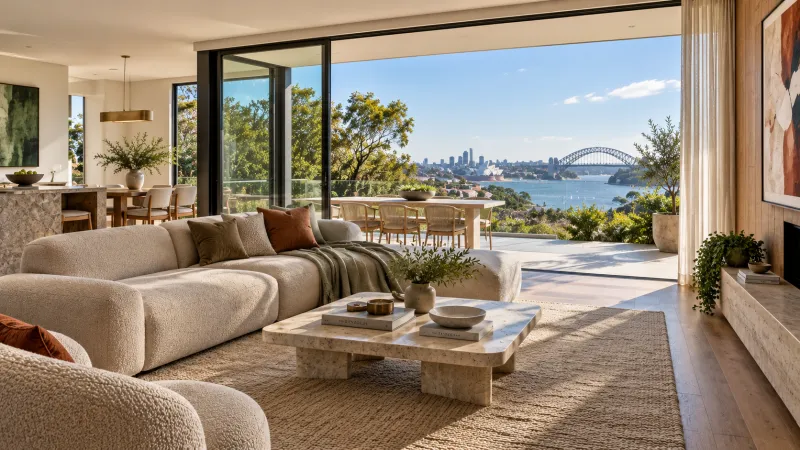
From the harbourside terraces of Sydney to the leafy avenues of Melbourne’s Toorak and Albert Park, Australian luxury homes are undergoing a quiet but unmistakable transformation. In 2026, the prevailing language of high-end residential design is no longer purely coastal minimalism or stark modernism. Instead, homeowners and designers are looking across the ocean — specifically to Europe — for inspiration that feels both timeless and deeply liveable under Australian skies.
This shift is not about importing a rigid historical replica. It is about selectively adapting European luxury furniture Australia has long admired: the refined proportions of Italian craftsmanship, the relaxed grandeur of French provincial and Provençal styles, the warm materiality of Mediterranean courtyards, and the quiet sophistication of contemporary European ateliers. The result is interiors that feel elevated yet welcoming, sophisticated yet suited to the Australian climate and lifestyle.
Why European Design Resonates in Australian Luxury Homes in 2026
Australian luxury homes in 2026 are prioritising longevity, tactility and emotional comfort over fleeting trends. After years of cool greys, high-gloss surfaces and rigid minimalism, the market has moved toward warmer, more grounded spaces. European design delivers exactly that.
Key drivers include:
- A growing preference for natural materials that age gracefully — European oak, travertine, limestone, marble with soft veining, and hand-finished metals.
- Demand for pieces that combine sculptural presence with everyday usability.
- A desire for indoor-outdoor continuity that echoes Mediterranean living while responding to Australia’s strong outdoor culture.
- An appetite for “quiet luxury” — fewer, better things that tell a story of craftsmanship rather than brand logos.
These preferences appear consistently in Sydney’s eastern suburbs and Melbourne’s inner and south-eastern luxury pockets. Display homes, renovations and new builds increasingly feature arched openings, textured plaster or limestone facades, parquet or wide-plank European timber floors, and furniture with softer, more architectural silhouettes.
Sydney’s Take: Light, Harbour and Refined European Restraint
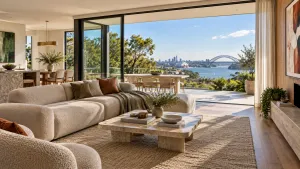
In Sydney, European influence often arrives filtered through light and water. Harbour-facing homes and elevated eastern suburbs properties favour airy interpretations of Parisian and southern French aesthetics. Think high ceilings, generous glazing, soft white or warm neutral walls, and carefully curated European luxury furniture that does not compete with the view.
Designers are layering:
- Herringbone or chevron European oak flooring that adds quiet pattern underfoot.
- Statement marble or travertine islands and vanities with organic edges.
- Slim-profile sofas and armchairs with tailored upholstery in linen, bouclé or soft leather — pieces that feel European in proportion yet comfortable for Australian family living.
- Subtle wrought-iron or bronze detailing in staircases, lighting and outdoor furniture that references French provincial and Italian villa traditions without heaviness.
The overall effect is one of restrained elegance. Homes feel collected rather than decorated, with European design Australia embraces most successfully when it respects the local light and the need for spaces that open seamlessly to terraces and pools.
Melbourne’s Expression: Grandeur Meets Lived-In Warmth
Melbourne’s luxury market has long shown affinity for European architectural languages, from Victorian grandeur to more recent French-inspired and Mediterranean-style residences. In 2026 this continues, but with a clearer focus on comfort and texture.
Recent projects and market listings reveal homes that blend high ceilings, formal living rooms and generous entertaining spaces with warmer, more tactile interiors. French provincial influences appear in façades and detailing, while interiors lean into St Tropez-inspired lightness or Italianate material richness. Limestone, polished plaster, Versailles-style parquetry and carefully chosen European furniture create rooms that feel both ceremonial and inviting.
Melbourne designers frequently mix antique or vintage European pieces with contemporary Italian and French designs. A sculptural marble dining table might sit alongside mid-century inspired seating or a custom European sofa in a rich, textured fabric. The result is layered rather than matchy-matchy — exactly the kind of personalised European design Australia’s most discerning homeowners now seek.
Core Elements Defining How Australian Homes Use European Luxury Design in 2026
Across both cities, several consistent themes emerge when examining how Australian luxury homes are using European luxury design in 2026:
1. Warm, earthy and nuanced colour palettes
Cool greys have largely given way to sandy beiges, soft terracotta, olive, warm cream and muted stone tones. These colours echo Mediterranean plaster, Tuscan stone and French limestone, and they work beautifully with Australia’s natural light.
2. Material honesty and tactile surfaces
Timber is used more expressively — not only as flooring but as joinery, feature walls and furniture frames. Stone appears in larger formats and more organic forms. Metals favour brushed, aged or textured finishes over high polish. These choices align with the broader 2026 emphasis on hyper-tactility and surfaces that invite touch.
3. Softer, more sculptural furniture forms
Sharp angles are softening. Sofas, chairs and tables feature gentle curves, architectural legs and considered proportions drawn from contemporary European design houses. This neo-organic or neo-Deco sensibility feels luxurious without formality.
4. Indoor-outdoor European living
Outdoor spaces are being treated as true extensions of the interior. Mediterranean courtyard thinking, Italian rooftop-bar elegance and Spanish-inspired courtyards influence furniture selection: slender, tailored outdoor pieces in refined neutrals, powder-coated frames and weather-resistant textiles that still feel sophisticated.
5. Craftsmanship and longevity over trend
Homeowners are investing in pieces with clear European heritage or European-inspired making. Whether original mid-century Italian, contemporary Italian or French atelier work, or high-quality interpretations available locally, the emphasis is on quality that endures.
Integrating European Luxury Furniture into Australian Living
The practical question for many homeowners is how to bring this aesthetic home without creating a museum or a pastiche. Successful 2026 interiors typically follow a few principles:
- Start with architecture and material palette first. European furniture sits best against warm neutrals, natural stone and timber.
- Choose statement pieces with intention — a sculptural dining table, a refined sofa, or a pair of elegant armchairs — rather than filling every room with matching sets.
- Balance European refinement with Australian practicality: performance fabrics, easy-clean surfaces where needed, and furniture scaled for real family life and entertaining.
- Layer in personal and local elements — Australian art, indigenous textiles or native plantings outdoors — so the home feels rooted in place.
For those seeking authentic European luxury furniture Australia, specialist retailers and design houses now offer curated collections that bridge the two worlds. Many focus on Italian and broader European makers known for craftsmanship, natural materials and designs that adapt well to Australian light and lifestyle. These collections often include modular seating, dining tables in solid timber or stone, bedroom suites, outdoor ranges and statement lighting that can transform a Sydney terrace or Melbourne villa.
(When exploring options, look for pieces that prioritise solid construction, natural finishes and proportions suited to open-plan Australian homes. Certain collections excel in bridging European elegance with the relaxed yet refined atmosphere local luxury homes demand.)
Looking Ahead: A Lasting Shift, Not a Passing Trend
The embrace of European design in Australian luxury homes in 2026 is more than aesthetic preference. It reflects a broader cultural moment: a desire for homes that feel permanent, sensory and personally meaningful. Whether expressed through a French-inspired façade in Canberra or Melbourne, Mediterranean-style new builds across the eastern seaboard, or carefully chosen European furniture in a contemporary Sydney apartment, the direction is consistent.
Homeowners are no longer content with interiors that merely photograph well. They want spaces that feel good to live in — warm underfoot, inviting to the touch, and quietly sophisticated. European design, adapted with Australian intelligence, delivers precisely that.
As the year progresses, expect to see this influence deepen: more textured stone, more expressive timber, softer furniture silhouettes, and a continued dialogue between European craftsmanship and Australian indoor-outdoor living. The homes that succeed will be those that treat European luxury not as a costume, but as a considered language of quality, proportion and comfort.
For anyone planning a renovation, new build or furniture refresh in Sydney, Melbourne or beyond, the message from 2026 is clear. Look to Europe for inspiration, then make it unmistakably your own — and unmistakably Australian.
Note:- Download the luxury furniture app to explore handcrafted Baroque and luxury living room furniture on the go.
RECENT POSTS
-
Is Your Luxury Outdoor Furniture Fading? UV, Covers and Placement
September 18, 2026
-

The Roman Centurion Statue: History, Symbolism and Where to Place One
September 18, 2026
-
Cantilever or Centre-Pole Parasol: Which Design Is Right for Your Space?
September 17, 2026
-
French Luxury Interiors: How to Mix Baroque Furniture With Restraint
September 17, 2026
-
Freestanding vs. Built-In Bathtubs: Which Is Right for Your Luxury Home?
September 16, 2026
-
Why Vintage Table Clocks Are Returning to Luxury European Interiors
September 16, 2026
-
Why Large Outdoor Parasols Are Becoming Architectural Features in Luxury Design
September 15, 2026
-
Sydney to Melbourne: How Australian Luxury Homes Are Embracing European Design in 2026
September 15, 2026
-
How to Style a Vintage Table Clock for Consoles, Dressers & Mantels
September 14, 2026
-
Styling a Console with Trays, Bowls and Bronze Objets: The Layering Formula
September 14, 2026