





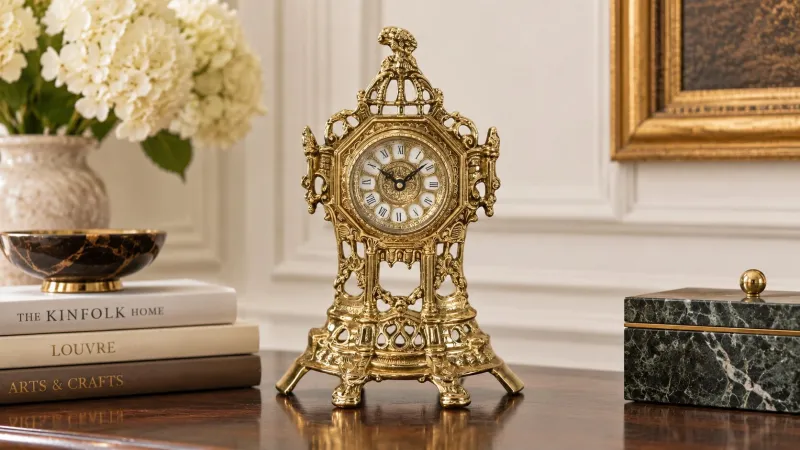
The Art of Choosing a Luxury Table Clock: A Guide to Size, Style & Placement
Posted by Elena Voss / Living Room Decoration / September 21, 2026
A beautiful room does not always need another large statement piece. Sometimes, elegance arrives in a much smaller form—a finely crafted luxury table clock placed exactly where the eye naturally rests. With its sculptural silhouette, refined materials and quiet sense of purpose, a table clock can transform an ordinary console, desk or bedside arrangement into something remarkably considered.
But how do you choose the right one? From proportions and dial design to movement and placement, every detail matters. This guide explores how to choose a luxury table clock that complements your interiors while becoming a timeless decorative accent.
Start With the Right Size
The first rule of selecting a luxury table clock is proportion. A clock that is too small can disappear among accessories, while an oversized design may dominate a carefully balanced arrangement.
For a console or sideboard, consider a clock with enough visual presence to sit comfortably alongside lamps, books, vases or sculptures. On a desk or bedside table, a more compact silhouette is generally preferable.
Think about the furniture beneath it. A substantial console can support a sculptural clock, while a narrow table may benefit from a slimmer, more delicate design.
Choose a Style That Matches Your Interior
A decorative table clock should feel connected to the room rather than look like an unrelated accessory.
For classic European interiors, consider ornate frames, Roman numerals, polished brass or antique-inspired finishes. These details can complement carved furniture, rich woods and traditional decorative pieces.
For contemporary interiors, look for clean geometric forms, understated dials and combinations of metal, glass or stone. Minimal detailing allows the clock's shape and material to become the focus.
If your home blends traditional and modern elements, transitional designs can bridge both aesthetics beautifully.
The Dial Makes a Difference
When considering how to choose a luxury table clock, pay particular attention to the dial.
Roman numerals can introduce a sense of heritage and classical sophistication, while simple markers create a cleaner contemporary appearance. A visible dial may emphasise functionality, whereas an artistic or partially concealed face can make the clock feel more like a sculpture.
The colour of the dial also matters. Black, ivory, champagne and deep metallic tones can each create a different visual effect.
Movement: Beauty With Precision
The movement is the heart of a clock. While quartz movements offer convenience and accuracy, mechanical movements can provide an additional sense of craftsmanship and tradition.
For luxury buyers, the movement can be part of the appeal. A clock with visible mechanical details or an elegant sweeping mechanism can become a conversation piece.
However, the best choice ultimately depends on whether your priority is everyday convenience, traditional craftsmanship or a combination of both.
Materials That Create Luxury
Materials determine much of a clock's character.
Brass and bronze can introduce warmth and a heritage-inspired feel. Marble and stone create an architectural quality, while crystal or glass can bring lightness and visual sophistication. Fine wood finishes work particularly well with classic furniture and natural interiors.
When selecting a luxury table clock, consider the finishes already present in your room. Matching every material is unnecessary; instead, look for subtle connections. A brass clock can echo the hardware of a cabinet, while a marble clock can complement a stone tabletop
Where Should a Table Clock Go?
Placement can completely change how a clock is perceived.
A decorative table clock works beautifully on:
- Entrance consoles
- Living room sideboards
- Home office desks
- Bedroom nightstands
- Library shelves
- Display cabinets
- Dining room consoles
For a console, position the clock as part of a balanced composition rather than leaving it isolated. Pair it with books, a small sculpture or a vase, keeping enough empty space around each object. On a desk, keep the dial easily visible without allowing the clock to interfere with your working area.
Create a Curated Display
One of the secrets to styling a luxury table clock is restraint. Luxury interiors rarely depend on filling every available surface.
Try creating a three-part arrangement: a clock, a stack of elegant books and one sculptural accessory. Vary their heights to create visual rhythm.
For a more dramatic look, place the clock beside a decorative lamp or artwork. The contrast between illumination, texture and metallic detailing can make the arrangement feel intentionally designed.
How to Choose a Luxury Table Clock That Lasts
A luxury purchase should remain relevant beyond a single decorating season. Instead of choosing a clock simply because it matches today's trend, consider its craftsmanship, proportions and versatility.
Ask yourself:
Will the design still look beautiful if I change my furniture?
Does its size suit the surface where it will live?
Do the materials complement my existing interiors?
Is the movement appropriate for how I intend to use it?
These simple questions can make the buying process much easier.
The Final Touch of Timeless Luxury
A luxury table clock may be smaller than a sofa, chandelier or dining table, but its impact can be surprisingly significant. It introduces craftsmanship, personality and a sense of history into the spaces where everyday life unfolds.
The right decorative table clock does more than tell time. It completes a composition, adds character to furniture and creates a small moment of visual discovery.
So, when considering how to choose a luxury table clock, look beyond the numbers on the dial. Consider its scale, movement, materials, craftsmanship and relationship with the room.
Because sometimes, the most memorable detail in a sophisticated interior is the one quietly keeping time.
RECENT POSTS
-
Framed Prints That Bring Effortless European Elegance to Apartment Interiors
September 23, 2026
-

How Crystal Chandelier Lighting Transforms Light, Height and Luxury Interiors
September 23, 2026
-
The Art of Choosing a Luxury Table Clock: A Guide to Size, Style & Placement
September 21, 2026
-
Elegant Wall Lamps: The Secret to Warmer, More Characterful Luxury Interiors
September 21, 2026
-
Pairing Luxury TV Units with Living Room Furniture: Create Cohesive Elegance in Modern Homes & Hotel
September 20, 2026
-
CEO Office Design: Desk and Executive Chair Ideas for a High-End Corporate Interior
September 20, 2026
-
How to Choose a Living Room Side Table: 5 Design Rules | The Golden Ratio Guide
September 19, 2026
-
Why Boutique Hotels Are Investing in Classic Marble Statues for Lobbies and Gardens
September 19, 2026
-
Is Your Luxury Outdoor Furniture Fading? UV, Covers and Placement
September 18, 2026
-

The Roman Centurion Statue: History, Symbolism and Where to Place One
September 18, 2026