





The Coffee Table as a Symbol of Hospitality: Cross-Cultural Traditions of the Central Surface
Posted by Luxury Group International Design Team / Luxury Coffee Tables / March 27, 2026
A surface placed at the heart of a gathering space. It holds no walls, offers no shelter, yet it possesses an extraordinary ability to shape human connection. Across civilizations and centuries, the central table has served as an unspoken invitation—a gesture that says, “Come, sit, stay.”In the realm of Luxury hospitality furniture, this tradition finds its most refined expression. But long before contemporary designers reimagined the coffee table for modern living rooms and hotel lobbies, cultures around the world had already recognized the profound power of the central surface. These traditions continue to influence how we perceive and select a luxury coffee table today.
Japan: The Low Table as a Ritual of Presence
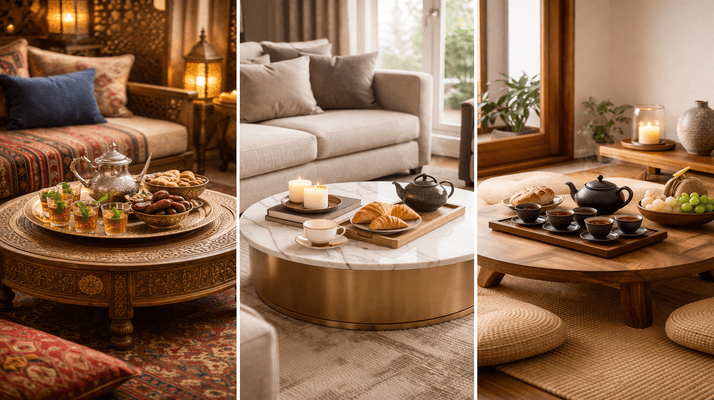
In Japan, hospitality is elevated to an art form known as omotenashi—a philosophy of wholehearted, selfless welcome. Central to this tradition is the chabudai, a low wooden table that brings people literally closer to the ground and to one another.
The tea ceremony, perhaps Japan’s most refined hospitality ritual, centers around a surface so low that participants must kneel. This is not mere practicality. The lowered posture encourages mindfulness, humility, and a sense of equality among guests. Conversation flows not across a barrier but over an intimate stage where every gesture—the placement of a cup, the unfolding of a cloth—becomes meaningful.
Modern luxury modern coffee tables that embrace low profiles and clean, unadorned surfaces owe a quiet debt to this Japanese tradition. They understand that sometimes the most generous surface is one that does not demand attention but instead creates space for presence.
Morocco: The Table as a Gathering of Abundance
Travel across the world to Morocco, and hospitality takes on a different but equally powerful form. The Moroccan tabla—often a round, inlaid table of modest height—is rarely empty. It arrives laden with mint tea, pastries, and the warmth of shared ritual.
In Moroccan culture, the act of placing food and drink upon the central surface is itself an expression of generosity. The table becomes a stage for baraka—a sense of blessed abundance. Ornate patterns, intricate tile inlays, and hand-carved details reflect the belief that beauty honors the guest. Nothing is too fine for those invited to share a space.
This philosophy resonates deeply in contemporary Luxury hospitality furniture. The Moroccan tradition reminds us that a luxury coffee table need not be minimalist to be elegant. It can be richly adorned, layered with meaning, and still function as a welcoming anchor. When a coffee table carries craftsmanship and cultural memory, it transforms from a surface into a storyteller.
The Middle East: Gathering Close Around Shared Spaces
Across the Middle East, the tradition of the majlis—a dedicated space for receiving guests—places the central surface at the heart of social life. Here, low seating arranged around a broad table encourages proximity and intimate conversation. The surface itself often holds coffee, dates, and the promise of unhurried connection.
In this tradition, hospitality is measured not by the formality of the setting but by the quality of attention given to guests. The central table facilitates this by creating a defined yet open space where everyone belongs. There is no hierarchy in seating; all are drawn together around what is placed before them.
This influence appears in luxury modern coffee tables designed for modular living spaces—pieces that can be expanded, rearranged, or adapted to accommodate gatherings of varying sizes. They carry forward the Middle Eastern understanding that true hospitality is flexible, responsive, and deeply human.
Scandinavia: The Table as Democratic Space
Scandinavian design, while often associated with minimalism, carries its own deep hospitality tradition rooted in hygge—the art of cozy togetherness. The central table in Nordic homes serves as the anchor for evenings spent in conversation, candlelight, and shared meals.
What distinguishes the Scandinavian approach is its democratic spirit. Tables are designed not to dominate but to include. Clean lines, natural materials, and accessible proportions ensure that no one feels excluded. The surface becomes a quiet collaborator in the warmth of the room rather than a declaration of status.
This philosophy informs many luxury modern coffee tables that prioritize understated elegance and functional simplicity. They understand that the most welcoming surface is one that invites interaction without imposing its own presence.
How Ancient Traditions Shape Modern Luxury
The luxury coffee table of today is not merely a product of contemporary aesthetics. It carries echoes of these global traditions—the intimacy of the Japanese chabudai, the abundance of the Moroccan tabla, the inclusivity of the Middle Eastern majlis, and the democratic warmth of Scandinavian hygge.
When selecting a luxury modern coffee table for a home or a hospitality space, discerning buyers increasingly look beyond form to feel. They seek pieces that embody the spirit of welcome—surfaces that honor the rituals of gathering that have connected humans for centuries.
This is where Luxury hospitality furniture finds its true purpose. A well-chosen coffee table becomes more than a place to set a drink. It becomes a bridge between cultures, a nod to traditions that understood long before us that hospitality begins with a surface shared.
The Coffee Table as a Global Citizen
Perhaps the most beautiful evolution of the coffee table in contemporary design is its ability to synthesize these traditions. A single piece can reflect the clean restraint of Japanese design, the warmth of Moroccan craftsmanship, and the inclusive proportions of Scandinavian philosophy.
Such a table does not belong to one culture alone. It belongs to anyone who values the art of welcome. It speaks a universal language—one that says, regardless of where you come from, here you are invited to rest, connect, and belong.
A Surface That Welcomes the World
The next time you place a luxury coffee table in a living room, a hotel lobby, or a private lounge, consider the traditions it carries. That low profile may echo centuries of Japanese ritual. Those hand-finished details may honor Moroccan artistry. That generous scale may reflect Middle Eastern inclusivity.
Hospitality, after all, is one of humanity’s oldest arts. And the central surface remains one of its most powerful tools—a quiet, steadfast invitation to gather.
What hospitality traditions from your heritage involve a central gathering surface? Share your stories in the comments below. Let us build a cultural map of welcome together.
RECENT POSTS
-
The Art of Hospitality on Wheels: How Luxury Trolleys Elevate Boutique Hotel Experiences
September 25, 2026
-
The Art of Grandeur: How Baroque Coffee Tables Transform Luxury Living Spaces
September 25, 2026
-
The Art of Entertaining: How Luxury Bar Furniture Transforms Sophisticated Interiors
September 24, 2026
-
The New Art of Rest: Curating a Wellness-Focused Luxury Bedroom
September 24, 2026
-
Framed Prints That Bring Effortless European Elegance to Apartment Interiors
September 23, 2026
-
How Crystal Chandelier Lighting Transforms Light, Height and Luxury Interiors
September 23, 2026
-
Sculptural Illumination: How Contemporary Floor Lamps Are Becoming Modern Art Statements
September 22, 2026
-
The Art of Choosing a Luxury Table Clock: A Guide to Size, Style & Placement
September 21, 2026
-
Elegant Wall Lamps: The Secret to Warmer, More Characterful Luxury Interiors
September 21, 2026
-
Pairing Luxury TV Units with Living Room Furniture: Create Cohesive Elegance in Modern Homes & Hotel
September 20, 2026