






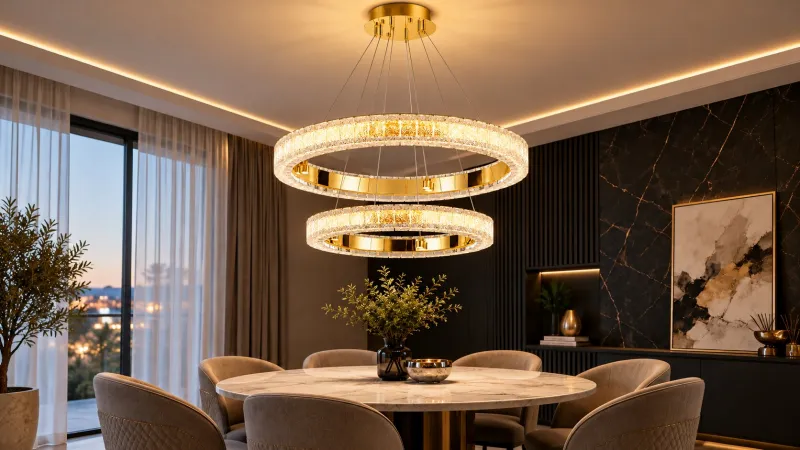
The Enduring Grandeur of Baroque Chandeliers: Why This Iconic Style Still Signals Luxury
Posted by Luxury Group International Design Team / Luxury Chandelier / October 14, 2026
Luxury has a curious way of surviving trends.
Colours change. Furniture silhouettes become more streamlined. Interior styles move from maximalism to minimalism and back again. Yet some pieces continue to command attention regardless of the decade. The baroque chandelier is one of them.
With dramatic curves, intricate detailing, luminous crystals and an unmistakable sense of theatre, the baroque chandelier does more than illuminate a room. It creates an atmosphere. It suggests heritage, craftsmanship and confidence before a guest has even taken their first step inside.
But what makes this centuries-old design language feel relevant in contemporary luxury interiors?
The answer lies somewhere between history and emotion.
When Lighting Became a Statement of Power
The story of the chandelier has always been connected with status. In grand European residences, palaces and historic estates, elaborate lighting fixtures were never merely practical objects. They were designed to demonstrate wealth, artistry and social importance.
The Baroque period took this philosophy even further.
Interiors became theatrical, layered and expressive. Architectural details, carved furniture, gilded surfaces and elaborate ornamentation worked together to create spaces that felt almost cinematic. Chandeliers naturally became part of this visual language.
Rather than disappearing with changing architectural styles, the chandelier evolved.
Today, a luxury chandelier can sit comfortably inside a contemporary residence, boutique hotel or sophisticated dining room while still carrying echoes of that historic grandeur. The design may be refined, the proportions carefully controlled and the materials updated, but the underlying idea remains remarkably powerful: lighting can define the identity of an entire room.
The Secret Is Not More Ornament—It Is Presence
A common misconception is that luxury requires excess.
It doesn't.
The most successful contemporary interiors understand the value of visual hierarchy. A beautifully designed baroque chandelier does not need every surface around it to compete for attention. In fact, its impact becomes stronger when the surrounding environment gives it room to breathe.
Imagine a restrained living room with sculptural furniture, warm neutral walls and polished stone flooring. Suspended above the centre is an ornate chandelier with curved arms and delicate crystal details.
Suddenly, the room has a focal point.
The chandelier introduces history without making the interior feel like a museum. It creates contrast between traditional craftsmanship and modern restraint—a combination that can make a luxury interior feel considerably more sophisticated.
This is where classical chandeliers continue to find their place in modern design.
Why Baroque Still Feels So Luxurious
There is something psychologically compelling about symmetry, craftsmanship and intricate detail.
A baroque-inspired fixture often draws the eye through layers of visual information: sweeping arms, sculptural forms, metallic finishes and sparkling elements that interact with light from different angles.
During the day, the chandelier can function almost like a piece of sculpture.
In the evening, it changes character.
As the lights are switched on, reflective surfaces begin to shimmer, shadows become softer and the architectural details of the room appear more dimensional. The fixture effectively becomes part of the room's experience rather than simply another furnishing.
That transformation is one reason antique chandeliers and their contemporary interpretations remain so desirable among luxury homeowners.
They offer something mass-produced lighting often struggles to provide: character.
A Chandelier Can Tell the Room What It Wants to Be
Consider a grand entrance hall.
A restrained pendant might illuminate it efficiently, but a substantial chandelier immediately communicates something different. It tells visitors that the space is intended to be memorable.
In a dining room, a chandelier can establish an intimate sense of occasion. Above a long dining table, a carefully proportioned fixture creates a visual centre while enhancing the warmth of evening gatherings.
In a living room, it can bring together furniture, architectural mouldings and decorative accessories into one cohesive composition.
And in a bedroom, a smaller interpretation can introduce elegance without overwhelming the quieter character of the space.
This versatility explains why chandeliers for home interiors have moved beyond traditional formal rooms. Designers increasingly use statement lighting to create moments of contrast, drama and personality throughout the home.
The Modern Baroque: Heritage Without Heaviness
Perhaps the most interesting development is the emergence of a more edited Baroque aesthetic.
Instead of reproducing historical interiors exactly, contemporary designers borrow selected elements—the graceful curves, sculptural arms, metallic accents and sense of symmetry—and combine them with cleaner surroundings.
The result is neither strictly traditional nor completely modern.
It is transitional luxury.
A gold-finished chandelier against a deep-toned ceiling can create a dramatic European-inspired atmosphere. A crystal design against pale architectural walls can feel lighter and more contemporary. Meanwhile, a darker metal finish can introduce a sophisticated edge to an otherwise classic setting.
The key is proportion.
A spectacular chandelier should feel intentional rather than oversized simply for the sake of drama. Its diameter, height and visual weight should relate to the room, ceiling and furniture beneath it.
That balance is what separates an impressive interior from an overcrowded one.
Craftsmanship Is the Detail You Notice Without Realising
True luxury is rarely about a single obvious feature.
It is often found in the details.
The precision of the metalwork. The quality of the finish. The arrangement of decorative elements. The way each arm balances visually with the next. The way crystals catch and distribute light.
These details may not always be consciously analysed by a visitor, but they influence how the entire fixture feels.
That is why luxury premium chandeliers can become long-term design investments rather than seasonal décor choices. A thoughtfully crafted chandelier has the potential to remain relevant even when surrounding furniture and colours are eventually changed.
The room evolves.
The chandelier remains.
The European Luxury Perspective
Across European interiors, there is a particular appreciation for objects that combine beauty with a sense of history. From Parisian apartments and Italian villas to grand English residences and contemporary Mediterranean homes, classical references continue to influence premium interior design.
The appeal is not necessarily about recreating the past.
It is about bringing a sense of permanence into the present.
A carefully selected chandelier can connect contemporary interiors with centuries of decorative craftsmanship. It gives a newly designed room a feeling of depth—as though its story began long before the furniture arrived.
And perhaps that is the real secret behind its enduring appeal.
More Than Lighting—A Legacy in the Making
A beautifully designed baroque chandelier does something few decorative objects can accomplish. It changes the way a room is perceived without changing its architecture.
It can make a ceiling feel higher, a dining experience feel more intimate and an entrance feel more ceremonial. It can introduce sparkle into a restrained palette or create a sophisticated contrast within a contemporary setting.
Most importantly, it carries an idea that modern luxury increasingly values: timelessness.
Trends are exciting, but they are temporary. Heritage has a different kind of power.
When chosen thoughtfully, a chandelier becomes more than a source of illumination. It becomes a signature—a sculptural expression of craftsmanship that can define the mood of an interior for years to come.
And that may be why, after centuries of changing tastes, baroque chandeliers still have the remarkable ability to make a room feel unmistakably luxurious.
Note:- Download the luxury furniture app to explore handcrafted Baroque and luxury living room furniture on the go.
RECENT POSTS
-
Beyond the Ordinary: Luxury Bar Cabinet Designs That Transform Private Entertaining into an Art
November 09, 2026
-
More Than a Dining Table: The Art of Creating a Luxury Dining Room That Commands Attention
November 07, 2026
-
Beyond the Canvas: How Designer Wall Art Transforms Luxury Furniture into a Beautiful Interior Story
November 06, 2026
-
Echoes of Royalty: How Antique-Inspired Furniture Brings Timeless Grandeur into Modern Luxury Homes
November 05, 2026
-
The Luxury Bedroom Secret: How Elegant Bedside Benches Bring Comfort, Balance & Timeless Sophisticat
November 04, 2026
-
Beyond Five-Star Luxury: The Art of Creating Hotel Interiors That Feel Like Architectural Masterpiec
November 03, 2026
-
Reflections of Grandeur: How Statement Ornate Mirrors Are Redefining Luxury Hotel Spaces in 2026
November 03, 2026
-

Beyond the Garden: Luxury Furniture Arrangements That Transform Outdoor Spaces into Elegant Lounges
November 02, 2026
-
The Quiet Art of Luxury: How Bedroom Furniture Becomes a Reflection of Your Personality
November 02, 2026
-
Halloween in Style: Transform Your Home into a Hauntingly Elegant Luxury Retreat
November 01, 2026


