





The Quietest Luxury: How Acoustic Design Creates Five-Star Hotel Comfort
Posted by Luxury Group International Design Team / Luxury Hotel Interior / August 26, 2026
Luxury is usually photographed, but some of its most important qualities are almost invisible. A marble lobby may impress on arrival, yet at 2 a.m., guests care far more about whether they can hear the lift, footsteps in the corridor, traffic outside, or conversations through the wall. Guests notice noise more than most designers admit, which is why sophisticated acoustic design is becoming an essential part of modern five-star hospitality.
Research into hotel guest experience supports the point. A study analysing accommodation reviews found acoustics among the indoor-environment factors with the strongest negative effect when expectations were not met. Another study of 609 frequent travellers found that noise from outside the hotel more than doubled the likelihood of poor sleep satisfaction.
The interesting question is: can furniture help solve it?
Upholstery That Does More Than Look Beautiful
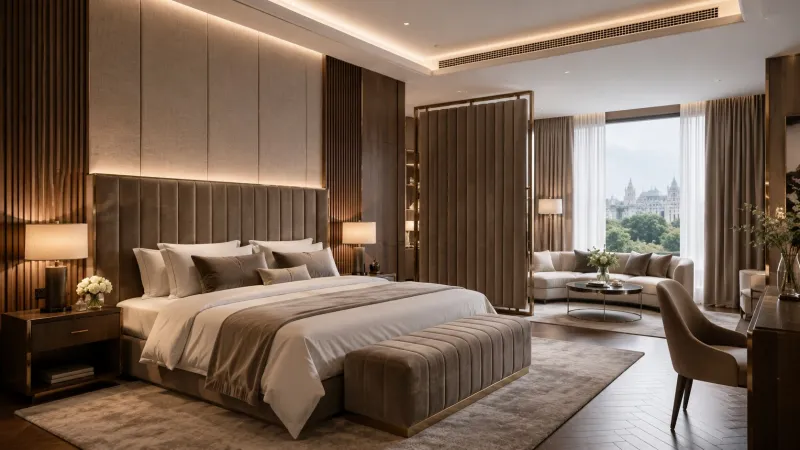
Luxury sofas, padded headboards, upholstered wall panels and fabric-covered seating are not merely decorative elements. Their porous, layered surfaces absorb sound energy that would otherwise reflect from hard floors, glass and stone.
This makes soft furnishing particularly valuable in suites, lounges and corridors where designers want visual richness without creating harsh acoustics.
Deep upholstered headboards can soften sound around the sleeping zone, while generously upholstered armchairs and sofas reduce reverberation within larger rooms. For luxury buyers, this creates an appealing design opportunity: velvet, bouclé, wool blends and textured fabrics can contribute simultaneously to tactile elegance and acoustic design.
Carpets: The Quiet Infrastructure Beneath Luxury
Few design elements work as discreetly as carpet systems. Broadloom carpets, luxury rugs and acoustic underlays reduce impact noise from footsteps while helping control reflections within the room.
For hotel soundproofing, this becomes particularly important in corridors and upper-floor guestrooms. A beautiful timber or marble floor may photograph exceptionally well, but strategic rugs and textile zones can make the same interior feel noticeably calmer.
Effective soft furnishing therefore becomes less about filling the room and more about placing absorption exactly where sound travels.
Room Dividers Can Create Acoustic Privacy
Open-plan suites are increasingly fashionable, but openness creates another challenge: sound travels freely.
Upholstered screens, fabric-lined room dividers and acoustic partitions allow designers to define sleeping, dressing and lounge zones without introducing solid architectural walls. In premium suites, these pieces can become sculptural focal points while improving perceived privacy.
The strongest acoustic design often hides technical performance inside something guests simply perceive as beautiful furniture.
Look Up: The Ceiling Matters Too
Ceilings are frequently overlooked in luxury interiors, yet acoustic ceiling panels, suspended clouds and micro-perforated treatments can dramatically reduce reverberation in large hospitality spaces. Acoustic ceiling products for hotel lobbies are commonly specified around NRC 0.65–0.80, meaning substantial portions of reflected sound can be absorbed rather than returned into the space.
Combined with carpets, curtains and upholstered furniture, ceiling treatments create layered hotel soundproofing rather than relying on one solution.
Quiet May Be the New Definition of Five-Star
Guest comments repeatedly reveal the same pattern: noise becomes memorable when it interrupts sleep. Research has even identified noise as one of the most common hotel complaints, while sleep satisfaction strongly influences overall hotel satisfaction.
That changes the meaning of luxury.
The next generation of five-star interiors will not simply ask whether furniture looks exclusive. Designers, developers and buyers should also ask what it absorbs, what it separates and how quietly it performs.
Because the most sophisticated acoustic design may be the luxury guests never consciously notice—until they wake after an uninterrupted night’s sleep.
RECENT POSTS
-
The Art of Entertaining: How Luxury Bar Furniture Transforms Sophisticated Interiors
September 24, 2026
-
The New Art of Rest: Curating a Wellness-Focused Luxury Bedroom
September 24, 2026
-
Framed Prints That Bring Effortless European Elegance to Apartment Interiors
September 23, 2026
-

How Crystal Chandelier Lighting Transforms Light, Height and Luxury Interiors
September 23, 2026
-

The Art of Choosing a Luxury Table Clock: A Guide to Size, Style & Placement
September 21, 2026
-
Elegant Wall Lamps: The Secret to Warmer, More Characterful Luxury Interiors
September 21, 2026
-
Pairing Luxury TV Units with Living Room Furniture: Create Cohesive Elegance in Modern Homes & Hotel
September 20, 2026
-
CEO Office Design: Desk and Executive Chair Ideas for a High-End Corporate Interior
September 20, 2026
-

How to Choose a Living Room Side Table: 5 Design Rules | The Golden Ratio Guide
September 19, 2026
-

Why Boutique Hotels Are Investing in Classic Marble Statues for Lobbies and Gardens
September 19, 2026