








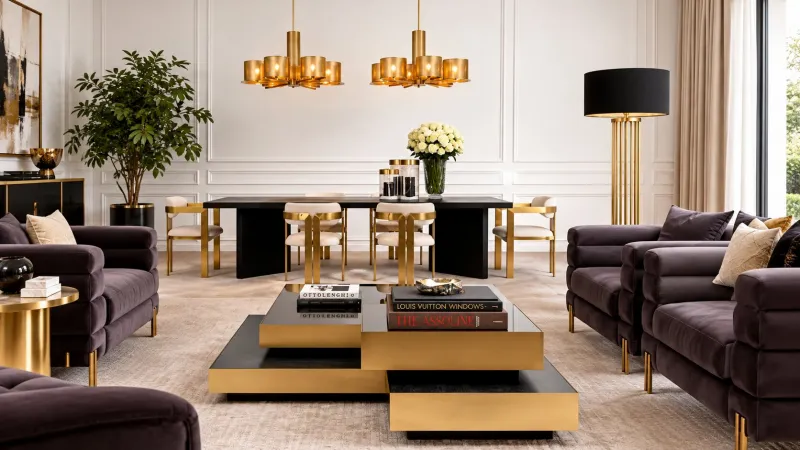
The Right Glow for Every Space: A Guide to Choosing the Perfect Floor Lamp
Posted by Elena Voss / Marble Dining Table / October 16, 2026
A room can have beautiful furniture, exquisite finishes and carefully chosen décor—and still feel as though something is missing.
Often, that missing element is not another piece of furniture.
It is light.
More specifically, it is the right light in the right place.
A beautifully selected floor lamp can change the mood of an interior almost instantly. It can make a reading corner feel intimate, add height beside a sofa, create warmth in a bedroom or bring sculptural character to an otherwise quiet hallway. In sophisticated European homes, where natural materials, refined furniture and architectural proportions often take centre stage, lighting becomes the finishing layer that brings everything together.
But choosing a floor lamp is not simply about finding a beautiful design. The ideal lamp needs to complement the room's purpose, proportions, furniture and atmosphere.
So, how do you know which one belongs where?
Before Choosing the Lamp, Understand the Room
The most effective approach to choosing a floor lamp begins with a simple question: What should the light accomplish?
A lamp beside an armchair may need to provide focused illumination for reading. A lamp behind a sofa may be intended to create a warm evening glow. In an entrance hall, its primary role could be decorative, helping to establish the character of the home from the moment someone walks through the door.
This distinction matters because different spaces require different types of lighting.
A room that already receives abundant natural daylight may benefit from a sculptural lamp designed primarily for evening ambience. A darker corner may require a shade and light source that provide more practical illumination.
The most beautiful result comes when function and aesthetics are considered together.
The Living Room: Where a Floor Lamp Becomes Part of the Furniture
The living room is often the natural home of a modern floor lamp.
Placed beside a sofa or lounge chair, it can create a dedicated pocket of light while adding vertical interest to the overall composition. This becomes especially valuable in rooms dominated by low-profile furniture.
Imagine a long, elegant sofa positioned beneath artwork. The furniture establishes a strong horizontal line, but the space may lack height. A tall floor lamp beside the sofa introduces a vertical counterpoint, guiding the eye upward.
For contemporary interiors, look for clean silhouettes, restrained metalwork and sophisticated shades. For more traditional spaces, a sculptural base, marble detailing or a fabric shade can create a softer connection with classic furniture.
The important consideration is scale.
A tiny lamp can disappear beside a large sectional. An excessively oversized lamp can dominate a smaller sitting area. The ideal design should feel substantial enough to belong in the room without competing with its main furniture.
The Bedroom: Softness Before Drama
Bedrooms require a different approach.
Here, the purpose of lighting is rarely to create maximum brightness. Instead, the goal is comfort.
A luxury floor lamp positioned beside a reading chair, near a dressing area or in an unused corner can introduce a gentle layer of illumination without disturbing the calm character of the room.
Fabric shades work particularly well because they diffuse light and create a softer atmosphere. Warm metallic finishes can complement bedside hardware, mirrors or decorative accessories, while timber or stone bases can bring natural texture into the space.
In a generously proportioned bedroom, a pair of floor lamps can also create visual symmetry.
But symmetry does not always need to be exact. A single statement lamp positioned near a lounge chair can give the room a more relaxed, editorial quality.
The bedroom should feel like a retreat—not a showroom.
The Dining Room: Supporting the Chandelier
Dining rooms often feature a statement chandelier, but that does not mean additional lighting has no place.
In fact, a carefully positioned floor lamp can make the dining experience feel more layered.
Rather than competing with the chandelier, it should provide secondary illumination around the edges of the room. This creates depth and prevents the centre of the space from becoming the only illuminated area.
A sculptural lamp placed beside a sideboard or in an architectural corner can also highlight artwork, decorative objects or textured walls.
The result is subtle but powerful.
When the main overhead lighting is dimmed, the floor lamp can become part of the evening atmosphere, turning an ordinary dinner into something much more intimate.
The Home Office: Where Elegance Meets Concentration
Home offices require more practical consideration.
A lamp positioned beside a desk or reading chair needs to provide useful illumination without producing distracting glare. Its height, shade orientation and position should therefore be considered carefully.
A contemporary arched floor lamp can be particularly useful where a desk has limited surface area. The extended arm allows the light to reach the working zone while keeping the desktop clear.
For premium interiors, the lamp should still feel connected to the room's design language.
A polished metal finish might echo cabinet handles. A dark base could complement a walnut desk. A neutral shade may repeat the colour of upholstery or curtains.
The result feels coordinated rather than purely functional.
The Entrance Hall: First Impressions Begin With Light
Entryways are often overlooked when selecting lighting.
Yet they are among the most important spaces in the home.
The entrance establishes an impression before guests see the living room, dining area or bedrooms. A beautifully designed floor lamp can immediately introduce warmth and personality.
In a large hallway, a tall sculptural lamp can emphasise ceiling height and architectural features. Positioned beside a console table, it can create a balanced composition of furniture, lighting and decorative objects.
For narrower corridors, a slimmer silhouette may be more appropriate.
The goal is not to illuminate every corner.
It is to create an inviting transition into the home.
Open-Plan Interiors Need Layers
Modern European homes increasingly combine living, dining and kitchen areas into one expansive space.
This creates a wonderful sense of openness—but it also presents a lighting challenge.
One central light source rarely provides enough visual definition.
This is where floor lamps become extremely useful.
A lamp beside the sofa can visually establish the living area. Another positioned near a reading chair can create a smaller intimate zone. In the dining area, softer secondary lighting can establish a completely different mood.
The lamps do not need to match.
Instead, they should share a visual relationship through materials, finishes or proportions.
This creates cohesion without making the room feel overly coordinated.
How Tall Should Your Floor Lamp Be?
Height is one of the easiest ways to get a floor lamp wrong.
The lamp should relate to the furniture surrounding it.
Beside a lounge chair, the shade should generally sit at a comfortable height for the person using the chair, particularly when the lamp is intended for reading. Beside a sofa, a taller silhouette can create a more dramatic vertical line.
In a large room with high ceilings, a substantial lamp can help prevent the upper portion of the space from feeling disconnected.
In smaller rooms, a slimmer design may create the impression of height without adding visual weight.
Think of the lamp as part of the room's architecture.
Its proportions should feel deliberate.
Materials Can Change the Entire Mood
Two lamps with identical proportions can create completely different interiors simply because their materials are different.
Brass introduces warmth and a subtle sense of glamour.
Black metal feels architectural and contemporary.
Wood adds natural softness.
Marble brings a sense of permanence and refinement.
Glass creates visual lightness.
Fabric shades soften the overall effect.
For a genuinely luxurious interior, material quality often matters more than ornamentation. A beautifully finished, restrained lamp can feel far more sophisticated than a heavily decorated design.
This is particularly true when the lamp is positioned near premium furniture, where inexpensive-looking finishes can become immediately noticeable.
The Secret Is Not One Lamp—It's Layers
The most successful lighting schemes rarely depend on a single source.
Instead, they combine ambient lighting, task lighting and accent lighting.
Your ceiling fixture provides general illumination.
A table or wall light can provide focused light.
A modern floor lamp introduces another layer, often at a lower and more intimate level.
Together, these sources create flexibility.
Bright during the day.
Soft in the evening.
Focused when reading.
Atmospheric when entertaining.
This flexibility is what makes thoughtful lighting feel luxurious.
Choosing a Floor Lamp That Will Last Beyond Trends
Trends can be tempting, but lighting is one area where timeless design often offers greater value.
Rather than choosing a lamp simply because its shape is currently fashionable, consider whether it will still complement your furniture several years from now.
Look for proportions you genuinely appreciate, finishes that work with your existing palette and construction that feels appropriate for a premium interior.
A well-chosen luxury floor lamp should not need to dominate the room to remain memorable.
Its presence should become familiar.
Almost effortless.
And that is perhaps the most important principle when learning how to choose a floor lamp for each room: don't choose the lamp first.
Choose the atmosphere you want.
Then choose the light that creates it.
Because when the right floor lamp enters the right room, it does much more than illuminate furniture. It changes how the space feels after sunset—and sometimes, that is when a beautiful interior truly comes alive.
Note:- Shop exclusive collections anytime with the luxury furniture app from Luxury Group International.
RECENT POSTS
-
Side Table Height Guide: What Should Sit Next to a Sofa or Armchair?
October 21, 2026
-
Formal Dining Room Case Study: Seating 10 Without Overcrowding
October 21, 2026
-
What Size Dresser Fits Your Bedroom? A Simple Measurement Guide
October 20, 2026
-
Swivel vs Fixed Bar Stools: Which Is Better for Everyday Use?
October 20, 2026
-

How to Protect Luxury Outdoor Furniture Through Winter: A Complete Care Guide
October 19, 2026
-
How Luxury Furniture Delivery Works Across Europe: A Complete Shipping Guide
October 19, 2026
-
How to Clean and Protect a Marble-Top Table: A Complete Care Guide
October 18, 2026
-
How to Clean a Crystal Chandelier Without Damaging the Finish
October 18, 2026
-

Dining Table Size Guide: How Many Chairs Fit Without Feeling Cramped?
October 17, 2026
-
Round vs Square Coffee Tables for Family Living Rooms: Which Shape Works Best?
October 17, 2026


