





The Roman Centurion Statue: History, Symbolism and Where to Place One
Posted by Sophie Laurent / Classic Sculptures / September 18, 2026
A Roman centurion statue carries more weight than most decorative figures. It represents discipline, leadership and the quiet authority that held an empire together. In today’s luxury interiors and gardens, these classic sculptures have found a renewed place among collectors who value history made visible.
The best examples do more than fill a corner. They introduce a story. One particularly compelling form is the kneeling centurion — a figure captured in a moment of readiness rather than triumph. This pose invites closer attention and rewards those who appreciate both classical form and narrative depth.
The Centurion in Roman History
A centurion commanded a century, typically around eighty to one hundred legionaries. These officers formed the professional backbone of the Roman army. They were usually promoted from the ranks for proven bravery, skill and the ability to maintain order under pressure.
Their responsibilities extended far beyond the battlefield. Centurions trained their men, assigned daily duties, enforced discipline and led from the front line. The vine staff, or vitis, served as both a practical tool and a visible mark of rank. Seniority mattered, and the most experienced centurions held positions of real influence within the legion.
This combination of physical courage and administrative authority made the centurion a powerful symbol. He stood between ordinary soldiers and higher command, embodying the practical strength that sustained Roman power across centuries.
Symbolism That Still Resonates
In art and sculpture the centurion has long represented authority earned through experience. The crested helmet, the armour and the posture of readiness all speak of vigilance and command. Unlike images of emperors or gods, the centurion feels human-scaled — a figure of competence rather than divinity.
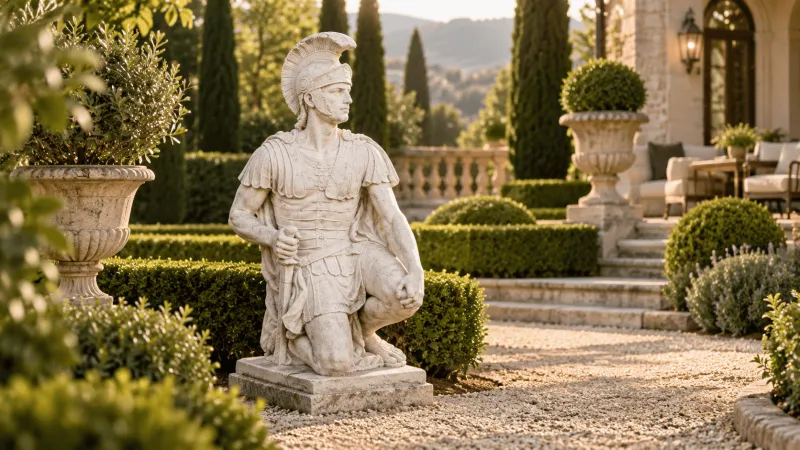
A kneeling Roman centurion statue adds a further layer. The lowered stance can suggest alertness, respect or a pause before action. It creates a sense of contained energy that static standing figures sometimes lack. For history-minded collectors this narrative quality makes the piece especially engaging. The sculpture does not simply declare power. It invites the viewer to imagine the moment.
Modern interpretations in high-quality materials — whether bronze-effect finishes or carefully detailed ceramic sculpture — keep these associations alive while suiting contemporary settings. The result is a classic sculpture that feels both timeless and personal.
Where a Roman Centurion Statue Belongs
Placement shapes how the figure is read. At an entrance or along a formal pathway a Roman soldier garden statue announces presence and order. The upright or kneeling form creates a natural focal point that guides the eye and sets a tone of considered strength for the property.
In a study or library the same statue works on a more intimate scale. Positioned on a pedestal or substantial console, it becomes a quiet companion to books and thought. The historical resonance suits rooms dedicated to reflection or work. The crested helmet and detailed armour reward close viewing without demanding constant attention.
Gallery spaces and formal living areas also benefit. A well-proportioned Roman centurion statue can anchor one end of a long room or balance architectural features such as fireplaces and tall windows. In outdoor settings the piece gains presence when given clear ground and complementary planting. Low box hedging or gravel paths allow the silhouette to read cleanly against greenery.
The kneeling form particularly suits these considered placements. Its lower centre of gravity feels grounded and stable, while the raised sword and shield maintain a sense of readiness. Collectors often find this pose more conversational than purely monumental standing figures.
Choosing and Living with the Sculpture
Quality of modelling and finish matters. Look for clear definition in the armour plates, helmet crest and facial features. Surfaces should hold detail without appearing overly polished or artificial. Whether the piece is finished in antique bronze tones or a more classical ceramic sculpture treatment, the goal is durability and visual depth.
Scale should relate to the surrounding architecture. A substantial figure suits generous entrances and open gardens. Smaller versions work well indoors or in more intimate outdoor niches. In every case the statue benefits from space around it so the silhouette remains distinct.
For those drawn to narrative pieces, the kneeling Roman centurion offers a distinctive option. One example is the Luxury Kneeling Roman Centurion Garden Sculpture with Crested Helmet, available at Luxury Group International. Its detailed armour, dynamic pose and weathered finish make it a strong candidate for both garden and interior display. Collectors seeking complementary classical pieces will also find related works within the broader Royal Furniture and classic sculptures collections.
A Lasting Presence in Modern Settings
The appeal of the Roman centurion statue lies in its combination of history and restraint. It does not rely on fashion. Instead it draws on a well-understood language of authority, discipline and human scale. In luxury homes and gardens these qualities continue to feel relevant.
Whether placed at an entrance, in a study or within a formal landscape, the figure brings a sense of continuity. It reminds the viewer that strength and order have long been valued — and that those values can still find elegant expression in the present.
A carefully chosen Roman centurion statue does more than decorate. It anchors a space with story and substance. For collectors who appreciate classical form and historical resonance, few subjects offer the same quiet power.
RECENT POSTS
-

How to Choose a Living Room Side Table: 5 Design Rules | The Golden Ratio Guide
September 19, 2026
-
Why Boutique Hotels Are Investing in Classic Marble Statues for Lobbies and Gardens
September 19, 2026
-
Is Your Luxury Outdoor Furniture Fading? UV, Covers and Placement
September 18, 2026
-
The Roman Centurion Statue: History, Symbolism and Where to Place One
September 18, 2026
-

Cantilever or Centre-Pole Parasol: Which Design Is Right for Your Space?
September 17, 2026
-
French Luxury Interiors: How to Mix Baroque Furniture With Restraint
September 17, 2026
-
Freestanding vs. Built-In Bathtubs: Which Is Right for Your Luxury Home?
September 16, 2026
-
Why Vintage Table Clocks Are Returning to Luxury European Interiors
September 16, 2026
-

Why Large Outdoor Parasols Are Becoming Architectural Features in Luxury Design
September 15, 2026
-

Sydney to Melbourne: How Australian Luxury Homes Are Embracing European Design in 2026
September 15, 2026