





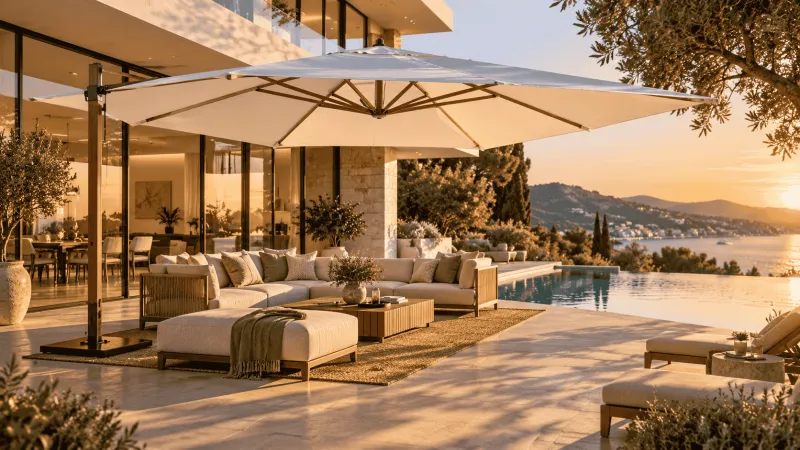
Why Large Outdoor Parasols Are Becoming Architectural Features in Luxury Design
Posted by Luxury Group International Design Team / Garden Decoration / September 15, 2026
Something has shifted in the way we treat outdoor shade. A large outdoor parasol no longer feels like an afterthought wheeled out for summer. In the best luxury projects, it arrives as a considered piece of architecture — a structure that organises space, frames views and gives a terrace or garden its own identity.
Walk through a carefully designed villa or resort terrace and you will notice it. The canopy sits at the right height. The mast or side pole holds its own against the building lines. The fabric has presence. What was once purely practical has become a design decision that shapes how people move, gather and experience the outdoors.
The Quiet Rise of the Large Outdoor Parasol
For years the average garden umbrella stayed modest in scale. It covered a table and little more. As outdoor living grew more ambitious, those proportions started to look inadequate. Expansive terraces, long dining arrangements and poolside lounges needed something larger and more intentional.
Today’s large garden parasol answers that need. Oversized canopies create true outdoor rooms. They cast broad, even shade over full seating groups rather than single chairs. The structure itself becomes part of the composition — a vertical element that balances architecture and landscape.
Designers now specify these pieces early, alongside flooring, planting and furniture. The result feels deliberate rather than temporary. A well-chosen large outdoor parasol does not simply protect from the sun. It defines the character of the space.
Form, Scale and the Architecture of Shade
Scale is the first and most important quality. A canopy that is too small disappears against a generous terrace. One that is properly proportioned becomes a focal point. Luxury collections now offer spans wide enough to cover long tables or clusters of daybeds without visual clutter.
Two structural approaches dominate. Centre-pole designs deliver classic presence and symmetry. They work especially well on open lawns or formal terraces where a strong central axis feels natural. Side-pole cantilever models free the floor entirely. The post sits to one side, leaving the area underneath clear for furniture and movement. These prove ideal around pools, sunken seating or any layout where a central mast would interrupt the flow.
Canopy shapes add further character. Round and octagonal forms soften hard architecture. Rectangular canopies align cleanly with long tables or rows of loungers. Scalloped edges, wave silhouettes and double-canopy constructions introduce refinement and visual interest without sacrificing function. Wooden poles bring warmth and a handcrafted quality. Aluminium frames offer a cleaner, more contemporary line that suits modern buildings and coastal settings.
Materials matter as much as form. Premium outdoor fabrics resist fading and water while remaining breathable. Frames are engineered for durability, whether in finished timber that ages gracefully or treated aluminium built for poolside and marine environments. The best examples feel closer to outdoor furniture than temporary shade.
How Large Parasols Shape Different Properties
On a private villa terrace the large outdoor parasol often becomes the heart of daily life. Positioned over a dining table or lounge grouping, it creates a shaded outdoor room that remains usable from late morning through evening. The right design respects the architecture — echoing clean lines on a modern house or complementing more classical proportions on a traditional property.
At resorts and boutique hotels the effect multiplies. Consistent large-format parasols organised in careful rows or grids turn expansive decks into recognisable outdoor destinations. Guests remember the quality of the shade and the sense of considered space. Hospitality projects especially value durability, uniform appearance across multiple units, and the ability to create distinct zones without permanent construction.
Even more intimate gardens benefit. A single well-scaled large garden parasol can transform a courtyard into a private retreat. The canopy softens hard surfaces, filters light and introduces a human scale that makes the outdoor area feel welcoming.
Imagine a sleek hillside villa with glass walls and a broad stone terrace. Would a rectangular cantilever model with a clean aluminium frame best complement its geometry? Or consider a formal country estate with mature planting and classical proportions — might a substantial wooden centre-pole design with a refined scalloped canopy feel more at home? These choices turn shade into architecture.
Comfort That Supports Luxury Living
Beyond appearance, large parasols deliver practical performance that matches high-end expectations. High-quality fabrics block significant UV while allowing air movement. Robust frames handle wind loads that would defeat lighter models. Many designs offer tilt and rotation so shade can track the sun through the day. The result is genuine outdoor comfort rather than a temporary escape from heat.
This combination of beauty and utility explains their growing status. Architects and designers treat them as climate-responsive tools that encourage longer hours spent outdoors — precisely the experience luxury clients seek. A large outdoor parasol reduces reliance on air-conditioned interiors and supports the seamless indoor-outdoor living that defines contemporary high-end homes and hospitality projects.
Choosing with Intention
Selecting a large outdoor parasol requires the same care given to any permanent design element. Consider the scale of the site, the character of the architecture, the intended furniture layout and the local climate. Wooden poles suit settings that value warmth and natural texture. Aluminium frames suit modern or coastal projects. Cantilever models free the floor. Centre-pole designs offer classic presence.
When the choice is right, the parasol does not feel added. It feels inevitable — as if the architecture always anticipated its presence. That is the mark of a true architectural feature.
In the finest outdoor spaces, shade has become design. The large outdoor parasol has earned its place not as an accessory but as a structure that shapes how we live outside. It organises space, softens light, and quietly elevates everything around it.
Note:- Download the luxury furniture app to browse handcrafted outdoor collections featuring large outdoor parasols and refined garden structures designed for architectural impact.
RECENT POSTS
-
Is Your Luxury Outdoor Furniture Fading? UV, Covers and Placement
September 18, 2026
-
The Roman Centurion Statue: History, Symbolism and Where to Place One
September 18, 2026
-
Cantilever or Centre-Pole Parasol: Which Design Is Right for Your Space?
September 17, 2026
-
French Luxury Interiors: How to Mix Baroque Furniture With Restraint
September 17, 2026
-
Freestanding vs. Built-In Bathtubs: Which Is Right for Your Luxury Home?
September 16, 2026
-
Why Vintage Table Clocks Are Returning to Luxury European Interiors
September 16, 2026
-
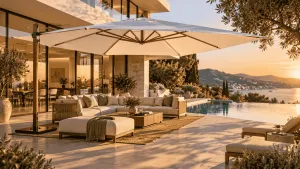
Why Large Outdoor Parasols Are Becoming Architectural Features in Luxury Design
September 15, 2026
-
Sydney to Melbourne: How Australian Luxury Homes Are Embracing European Design in 2026
September 15, 2026
-
How to Style a Vintage Table Clock for Consoles, Dressers & Mantels
September 14, 2026
-
Styling a Console with Trays, Bowls and Bronze Objets: The Layering Formula
September 14, 2026