





Why Vintage Bar Cart Wheels Are Essential for Heritage-Style Interiors
Posted by Luxury Group International Design Team / Luxury Home Bar Accessories / January 29, 2026
Heritage-style interiors are defined by nuance. In aristocratic European homes, luxury is rarely expressed through excess; instead, it is revealed through proportion, material choice, and historical accuracy. Among the many details that shape these spaces, vintage bar cart wheels play a surprisingly important role. Often overlooked, they are not merely functional components but design elements deeply rooted in tradition, etiquette, and aristocratic living.
For designers and homeowners curating refined interiors, understanding why wheels matter is essential. A vintage bar cart for heritage interiors is incomplete without wheels that reflect the era, craftsmanship, and intent behind the piece.
The Historical Purpose of Bar Cart Wheels
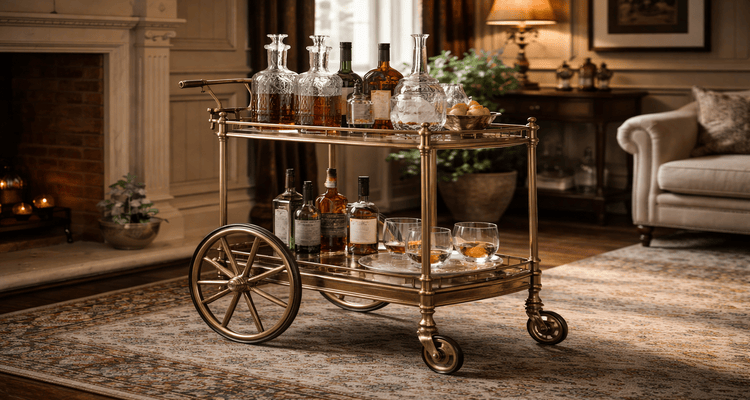
In European heritage homes, bar carts were designed for movement. Grand salons, libraries, and drawing rooms were spaces of social flow, and service furniture needed to move discreetly between them. Vintage bar cart wheels enabled this elegance, allowing drinks to be served without disrupting conversation or atmosphere.
Unlike modern castors designed purely for convenience, historic wheels were proportioned, finished, and positioned with visual balance in mind. This attention to detail is why authentic wheel design remains vital in heritage interiors today.
Wheels as a Marker of Authenticity
Authenticity is the foundation of heritage design. A beautifully crafted cart with incorrect wheels immediately breaks historical credibility. Vintage bar cart wheels signal that the piece respects its lineage.
In aristocratic interiors, every element—from flooring to furniture hardware—was chosen to align with architectural language. A vintage bar cart for heritage interiors relies on correct wheel detailing to maintain visual continuity with wood panelling, mouldings, and period furnishings.
Decorative Trolley Design in Aristocratic Homes
In heritage spaces, functionality and decoration were never separate. A decorative trolley was as much about visual presence as utility. Wheels contributed to this dual purpose.
Traditionally, wheels were designed to complement the cart’s frame, often echoing metal finishes or wood tones used elsewhere in the room. This integration ensured the trolley felt like a refined furnishing rather than a utilitarian object.
Today, designers restoring or recreating aristocratic interiors rely on vintage bar cart wheels to achieve that same level of cohesion.
Proportion and Balance in Heritage Furniture
One of the key principles of classical European design is proportion. Wheels that are too small feel insignificant; those too large overpower the cart. Vintage bar cart wheels were carefully sized to balance the visual weight of the trolley.
This proportional harmony is crucial in heritage interiors, where symmetry and rhythm guide the eye. A decorative trolley with correctly scaled wheels reinforces order, making the piece feel grounded and intentional.
Materials That Reflect Old-World Craftsmanship
Historically, wheel materials were chosen not just for durability but for their aesthetic compatibility with interior finishes. Vintage bar cart wheels were often crafted from metal or wood, finished to age gracefully alongside the cart itself.
In modern reproductions designed for heritage homes, these material choices remain relevant. A vintage bar cart for heritage interiors benefits from wheels that develop patina rather than wear, reinforcing the sense of time and permanence valued in luxury European homes.
Why Wheels Matter More Than Modern Alternatives
Modern trolleys often prioritise smooth rolling above all else, using concealed or industrial castors. While practical, these designs clash with heritage aesthetics.
In contrast, vintage bar cart wheels are visible by design. Their presence is intentional, contributing to the overall silhouette of the trolley. For heritage interiors, visibility is not a flaw—it is a feature that reinforces authenticity.
This is why designers consistently avoid modern wheel solutions when specifying a decorative trolley for classic spaces.
Movement Without Disruption
In aristocratic settings, service was meant to be seamless. Wheels allowed bar carts to move quietly and gracefully across rooms. This principle remains relevant in modern heritage-inspired living.
A vintage bar cart for heritage interiors fitted with appropriate wheels supports this philosophy. It allows the cart to be repositioned effortlessly while preserving the calm, composed atmosphere expected in luxury spaces.
The Role of Detail in Heritage Luxury
Heritage luxury is cumulative. It is built through layers of correct decisions rather than bold statements. Vintage bar cart wheels may seem minor, but they contribute significantly to the overall narrative.
In European heritage homes, guests subconsciously register these details. The wheel design reinforces the authenticity of the space, enhancing the perception of quality and thoughtfulness.
Decorative Trolleys as Lifestyle Pieces
In contemporary heritage-inspired interiors, bar carts are no longer reserved for formal entertaining. They serve as lifestyle pieces—styled with glassware, books, or decorative objects.
A decorative trolley anchored by authentic vintage bar cart wheels feels permanent rather than temporary. It integrates naturally into living rooms, libraries, and dining spaces, reinforcing the timeless character of the interior.
Why Designers Insist on Correct Wheel Design
Professional interior designers specialising in heritage projects consistently emphasise wheel detailing. They recognise that incorrect wheels undermine the integrity of the entire piece.
When specifying a vintage bar cart for heritage interiors, designers look closely at wheel shape, finish, and placement. These choices ensure the cart aligns with architectural history rather than appearing as a modern interpretation.
Conclusion
Vintage bar cart wheels are essential to heritage-style interiors because they preserve authenticity, proportion, and historical intent. Far from being minor components, they define how a bar cart is perceived within aristocratic and classic European spaces.
RECENT POSTS
-
The Art of Hospitality on Wheels: How Luxury Trolleys Elevate Boutique Hotel Experiences
September 25, 2026
-
The Art of Grandeur: How Baroque Coffee Tables Transform Luxury Living Spaces
September 25, 2026
-
The Art of Entertaining: How Luxury Bar Furniture Transforms Sophisticated Interiors
September 24, 2026
-
The New Art of Rest: Curating a Wellness-Focused Luxury Bedroom
September 24, 2026
-
Framed Prints That Bring Effortless European Elegance to Apartment Interiors
September 23, 2026
-

How Crystal Chandelier Lighting Transforms Light, Height and Luxury Interiors
September 23, 2026
-

Sculptural Illumination: How Contemporary Floor Lamps Are Becoming Modern Art Statements
September 22, 2026
-
The Art of Choosing a Luxury Table Clock: A Guide to Size, Style & Placement
September 21, 2026
-
Elegant Wall Lamps: The Secret to Warmer, More Characterful Luxury Interiors
September 21, 2026
-

Pairing Luxury TV Units with Living Room Furniture: Create Cohesive Elegance in Modern Homes & Hotel
September 20, 2026