





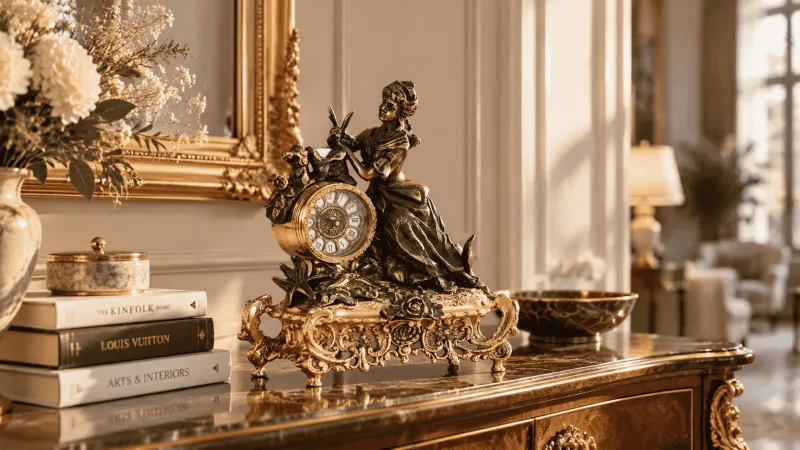
Why Vintage Table Clocks Are Returning to Luxury European Interiors
Posted by Luxury Group International Design Team / Luxury Clocks / September 16, 2026
Something is shifting in the most carefully composed European rooms. A vintage table clock now sits on a console or desk and feels entirely at home again. It is not a nostalgic gesture. It is a quiet declaration that character, craft and a slower rhythm still matter in luxury interiors.
Across modern villas, refined city apartments and thoughtfully designed hotel suites, the vintage clock has returned as a valued presence. Designers and homeowners reach for these pieces because they offer weight and story without shouting. In a world filled with silent screens, the measured movement of a mechanical dial feels both grounding and luxurious.
Why the Vintage Table Clock Feels Right Again
Luxury European interiors have grown warmer in recent years. Pure minimalism has softened. People want objects that carry history and reward attention. A vintage table clock answers that need with unusual grace. It is functional yet sculptural. It occupies space with intention rather than filling it.
The appeal runs deeper than decoration. These clocks were made to last and to be looked at. Their cases, dials and movements reflect a level of care that mass-produced objects rarely match. When placed well, a vintage clock becomes the calm centre of a room. It invites the eye to linger and the mind to slow down.
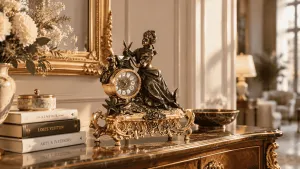
High-end collections today often draw directly from this heritage. Solid bronze pieces with baroque crests, figural details and hand-finished surfaces show how the tradition continues. Whether antique or newly crafted in the spirit of historic forms, the best examples share the same qualities: weight, depth of detail and a presence that earns its place.
The Distinct Character of Baroque and Vintage Forms
A baroque table clock brings particular richness. Bold crests, scrolling ornament, cherub finials or sculpted bases create a sense of drama that suits classical architecture and high-ceilinged rooms. These pieces were never meant to disappear into the background. They were designed to be noticed and admired.
Yet the same richness can work in more restrained settings when used with restraint. One strong baroque table clock on a clean console or library table creates effective contrast. The ornate form softens the coolness of modern materials without overwhelming them.
Simpler vintage clocks offer a different pleasure. Cleaner lines and quieter finishes sit easily beside contemporary furniture while still providing the warmth of age and craft. The common thread is authenticity. Whether the surface is gilded, antique bronze or a softer patina, the best pieces feel solid and considered in the hand.
Styling Vintage Clocks Across Different Spaces
In a modern villa the vintage table clock often works best as a counterpoint. Place it on a low console against glass or pale stone. The contrast between crafted metal or wood and clean architecture creates quiet tension. Keep the surrounding objects few so the clock remains the focus.
Hotel suites benefit from the same approach. A vintage clock on a writing desk or side table immediately softens the efficiency of a guest room. It suggests permanence and care. Guests notice the difference. The room feels less temporary and more considered.
City apartments, especially those with period details or high ceilings, welcome a baroque table clock on a mantel or sideboard. Its vertical presence draws the eye upward and helps the room feel complete. In smaller spaces a more compact vintage clock still delivers impact when given clear breathing room.
The most successful placements treat the clock as a focal point. Give it space. Let natural light fall across its surface. Allow the gentle motion of the hands or pendulum to become part of the room’s quiet life.
Classic, Baroque and Contemporary Luxury Settings
Classic European interiors accept the vintage clock almost instinctively. Dark wood, measured symmetry and soft textiles create a natural setting. The clock reinforces the sense of continuity these rooms already possess.
Highly decorative or baroque interiors call for stronger statements. An ornate baroque table clock with detailed crests or figural elements can hold its own against rich materials and elaborate furniture. Balance remains essential. One exceptional piece usually proves more effective than several competing objects.
Modern luxury spaces require a lighter touch. Here the vintage clock functions as carefully chosen contrast. Its age and materiality prevent the room from feeling sterile. A well-proportioned example with good surface quality sits comfortably beside contemporary art and clean-lined furniture.
In every case the principle is the same. The clock should feel intentional. Its scale, style and finish should relate thoughtfully to the architecture and the other objects around it.
The Deeper Reasons Behind the Revival
Several currents support the return of the vintage table clock. There is a clear preference for objects that reward close attention. There is growing interest in craftsmanship that machines cannot fully replicate. There is also a quiet reaction against the purely digital environment of daily life.
A mechanical clock offers something rare: a physical reminder of time that still feels beautiful. In luxury European interiors, where every element is chosen with care, that quality has become highly valued. The vintage table clock no longer feels like a relic. It feels like a considered choice for rooms designed to age well.
Solid bronze construction, hand-finished surfaces and working mechanisms continue this tradition in new pieces. Whether the finish is warm gold, deep antique bronze or a cooler tone, the best examples share the same seriousness of intent. They are made to sit on a desk, console or shelf for years, not seasons.
Living with Time Made Visible
The strongest interiors today balance the new with the enduring. A vintage table clock sits comfortably at that intersection. It brings history into the present without demanding nostalgia. It adds texture, weight and a gentle rhythm to spaces that might otherwise feel too quiet or too polished.
Whether placed in a sunlit villa, a refined city apartment or a thoughtfully designed hotel suite, the right vintage clock elevates the room. It invites the eye to linger. It rewards the owner with the quiet pleasure of a well-made object that continues to perform its original purpose with grace.
In the end, the return of the vintage table clock is less about fashion than about values. Craftsmanship, character and a more human sense of time have found their place again in the most refined European interiors. The dial turns, the hands move, and the room feels more complete.
Note:- Download the luxury furniture app to browse handcrafted collections featuring vintage table clocks, baroque table clocks and refined decorative pieces for European interiors.
RECENT POSTS
-
How to Choose a Living Room Side Table: 5 Design Rules | The Golden Ratio Guide
September 19, 2026
-
Why Boutique Hotels Are Investing in Classic Marble Statues for Lobbies and Gardens
September 19, 2026
-
Is Your Luxury Outdoor Furniture Fading? UV, Covers and Placement
September 18, 2026
-

The Roman Centurion Statue: History, Symbolism and Where to Place One
September 18, 2026
-

Cantilever or Centre-Pole Parasol: Which Design Is Right for Your Space?
September 17, 2026
-
French Luxury Interiors: How to Mix Baroque Furniture With Restraint
September 17, 2026
-
Freestanding vs. Built-In Bathtubs: Which Is Right for Your Luxury Home?
September 16, 2026
-
Why Vintage Table Clocks Are Returning to Luxury European Interiors
September 16, 2026
-

Why Large Outdoor Parasols Are Becoming Architectural Features in Luxury Design
September 15, 2026
-

Sydney to Melbourne: How Australian Luxury Homes Are Embracing European Design in 2026
September 15, 2026