






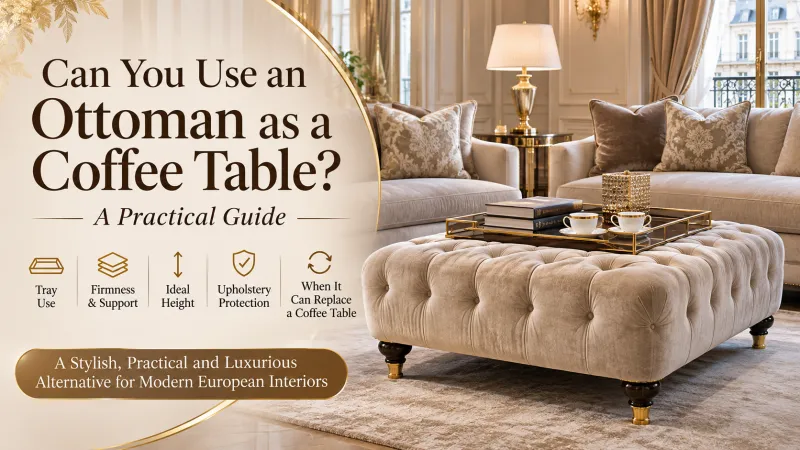
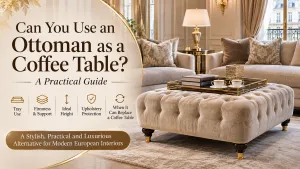
Can You Use an Ottoman as a Coffee Table? A Practical Guide
Posted by Luxury Group International Design Team / Living Room Furniture / November 01, 2026
A beautiful living room should offer more than visual elegance. Every piece of furniture should contribute to comfort, convenience and a welcoming atmosphere. While traditional coffee tables remain a popular choice, upholstered ottomans are becoming an attractive alternative for homeowners and luxury hotel designers seeking versatile furniture.
An ottoman coffee table combines the softness of upholstered seating with the practical function of a central living room table. It can hold decorative accessories, provide additional seating and create a comfortable place to rest your feet. The key is choosing the right design and arranging it correctly.
Understanding how to use an ottoman as a coffee table helps you balance functionality, furniture proportions and interior style. From selecting a suitable tray to protecting delicate upholstery, several practical considerations can transform an ordinary ottoman into an elegant centrepiece.
Can an Ottoman Really Replace a Coffee Table?
Yes, an ottoman can successfully replace a traditional coffee table when it offers sufficient stability, suitable dimensions and a practical surface arrangement.
Unlike wooden, glass or marble coffee tables, an ottoman features a padded upholstered surface. This creates a softer appearance while making the furniture suitable for multiple purposes.
Using an ottoman as coffee table furniture works particularly well in luxury living rooms, boutique hotel suites and private lounges where comfort is equally important as design.
A large rectangular ottoman can complement a spacious sofa arrangement, while a round upholstered design can soften the appearance of a contemporary seating area.
However, the ottoman should be firm enough to support a tray and positioned at a comfortable height for everyday use.
Choose a Firm Ottoman for Better Stability
Firmness is one of the most important considerations when selecting an ottoman for use as a coffee table.
An extremely soft ottoman may look inviting, but its surface can sink under the weight of decorative objects or serving accessories. This makes it less suitable for holding drinks, books or other items.
A practical ottoman coffee table should feature supportive padding and a well-constructed internal frame.
High-density foam upholstery generally provides better support than excessively soft cushioning. A tightly upholstered surface also helps maintain a balanced appearance.
For luxury hotel lounges and elegant residential interiors, structured ottomans with reinforced frames offer an attractive combination of durability and comfort.
Before choosing an ottoman, check whether its surface remains reasonably level when light pressure is applied.
A decorative tray is one of the simplest ways to make an upholstered ottoman function like a traditional coffee table.
Because ottomans have soft surfaces, placing drinks or accessories directly on the upholstery may cause instability. A sturdy tray provides a more reliable platform for everyday objects.
When learning how to use an ottoman as a coffee table, selecting the correct tray size is essential.
A rectangular tray works beautifully with long ottomans, while circular trays complement round or square designs.
Wooden trays introduce natural warmth, marble-effect trays create a refined appearance and metallic finishes add subtle decorative elegance.
Choose a tray with a rigid base and sufficient space for cups, books or small accessories. Raised edges can also help contain minor spills.
For additional safety, avoid placing unstable or very hot objects directly on upholstered surfaces.
Find the Ideal Ottoman Height for Your Sofa
Furniture height influences both comfort and visual balance.
An ottoman that is too low may be inconvenient when reaching for drinks, while an excessively tall design can interrupt the natural proportions of the seating arrangement.
For comfortable everyday use, an ottoman should generally sit close to the height of the surrounding sofa seats.
A height of approximately 40–45 cm works for many living room arrangements, although the ideal measurement depends on the sofa.
When using an ottoman as coffee table furniture, consider the combined height of the ottoman and its serving tray.
A slightly lower surface may feel comfortable for resting your feet, while a surface close to sofa-seat height is often more practical for placing everyday accessories.
Maintaining suitable proportions creates a harmonious arrangement in luxury homes and hotel suites.
Select the Right Ottoman Size and Shape
The size and shape of an ottoman should complement the surrounding furniture without restricting movement.
A rectangular ottoman is particularly suitable for larger sofas and spacious seating arrangements. Its elongated surface provides room for decorative trays while maintaining an organised appearance.
Square ottomans work beautifully with sectional sofas, especially when positioned at the centre of a conversational seating area.
Round designs introduce softer lines and can improve movement around compact furniture arrangements.
For a balanced ottoman coffee table arrangement, consider choosing a piece approximately one-half to two-thirds the length of the main sofa.
Leave around 40–45 cm between the ottoman and surrounding seating where practical, allowing comfortable access and circulation.
These proportions are useful starting points rather than strict design rules.
Protect Ottoman Upholstery from Stains and Damage
Upholstery protection is essential when an ottoman serves as a frequently used table.
Luxury ottomans may feature velvet, linen, leather or other premium upholstery materials. Each requires appropriate care to preserve its appearance.
Velvet offers a sophisticated texture but can show pressure marks and may require careful cleaning. Leather provides a refined finish and can be convenient to maintain when treated according to the manufacturer's instructions.
Performance fabrics are another practical option, particularly for family living rooms and luxury hotel environments.
When using an ottoman as coffee table furniture, avoid placing drinks directly on the upholstery. Use a stable tray and coasters to reduce the risk of spills.
Regular vacuuming with a suitable upholstery attachment helps remove dust. Any accidental spills should be treated promptly according to the fabric's care instructions.
Avoid harsh chemicals or excessive moisture, which may damage delicate materials.
Style Your Ottoman Coffee Table with Elegant Accessories
An ottoman can become an attractive focal point when styled with carefully selected accessories.
Begin with a decorative tray that complements the upholstery and surrounding furniture. Add a small selection of coffee table books, a sculptural ornament or an elegant decorative bowl.
Avoid overcrowding the surface, as the ottoman should remain practical and comfortable.
For classical European interiors, tufted velvet ottomans with carved wooden legs create a graceful appearance. Contemporary spaces may benefit from smooth upholstery, neutral colours and minimalist accessories.
An ottoman coffee table in cream, taupe, charcoal or muted grey can complement a wide variety of luxury furniture arrangements.
Coordinate the ottoman with surrounding sofas, armchairs and side tables to establish a cohesive interior.
When Should an Ottoman Replace a Traditional Coffee Table?
An ottoman is particularly useful when a living room requires flexible furniture.
For example, family living rooms benefit from padded surfaces that avoid the sharp corners found on some conventional tables. An ottoman can also provide occasional additional seating when required.
Luxury hotel suites may use upholstered ottomans to create relaxed lounge areas where guests can comfortably sit, rest their feet or enjoy light refreshments.
An ottoman as coffee table arrangement is also suitable for smaller interiors where multifunctional furniture helps reduce unnecessary pieces.
However, a traditional coffee table may be more practical when the surface is frequently used for dining, working or supporting multiple drinks.
Heavy decorative objects and substantial serving arrangements are generally better suited to rigid tabletops.
Create a Complete Luxury Living Room Arrangement
An ottoman should complement the wider furniture arrangement rather than appear as an isolated piece.
Pairing an upholstered ottoman with elegant sofas and armchairs establishes a comfortable seating environment. Coordinating materials and colours helps maintain visual harmony.
For additional functionality, combine the ottoman with luxury side tables that provide stable surfaces for lamps, drinks and decorative accessories.
Explore our luxury living room furniture collection to create refined seating arrangements that combine elegant upholstery, practical furniture and timeless European design.
Final Thoughts
Replacing a traditional coffee table with an ottoman is an effective way to introduce comfort, flexibility and elegance into a living room.
The most successful ottoman coffee table arrangements combine firm upholstery, suitable dimensions, a stable decorative tray and appropriate fabric protection.
Whether furnishing a private residence, luxury hotel suite or sophisticated lounge, an upholstered ottoman can provide an inviting centrepiece without compromising functionality.
Choosing the right design ensures that your living space remains both beautifully styled and practical for everyday living.
RECENT POSTS
-
Beyond the Canvas: How Designer Wall Art Transforms Luxury Furniture into a Beautiful Interior Story
November 06, 2026
-
Echoes of Royalty: How Antique-Inspired Furniture Brings Timeless Grandeur into Modern Luxury Homes
November 05, 2026
-
The Luxury Bedroom Secret: How Elegant Bedside Benches Bring Comfort, Balance & Timeless Sophisticat
November 04, 2026
-
Beyond Five-Star Luxury: The Art of Creating Hotel Interiors That Feel Like Architectural Masterpiec
November 03, 2026
-
Reflections of Grandeur: How Statement Ornate Mirrors Are Redefining Luxury Hotel Spaces in 2026
November 03, 2026
-
Beyond the Garden: Luxury Furniture Arrangements That Transform Outdoor Spaces into Elegant Lounges
November 02, 2026
-
The Quiet Art of Luxury: How Bedroom Furniture Becomes a Reflection of Your Personality
November 02, 2026
-
Halloween in Style: Transform Your Home into a Hauntingly Elegant Luxury Retreat
November 01, 2026
-
Can You Use an Ottoman as a Coffee Table? A Practical Guide
November 01, 2026
-

Midnight Elegance: How to Create a Luxurious Gothic Halloween Interior
October 31, 2026


