





How Ornate Lion and Cherub Fountains Create a Dramatic Sensory Symphony in Modern Gardens
Posted by Luxury Group International Design Team / Garden Decoration / April 24, 2026
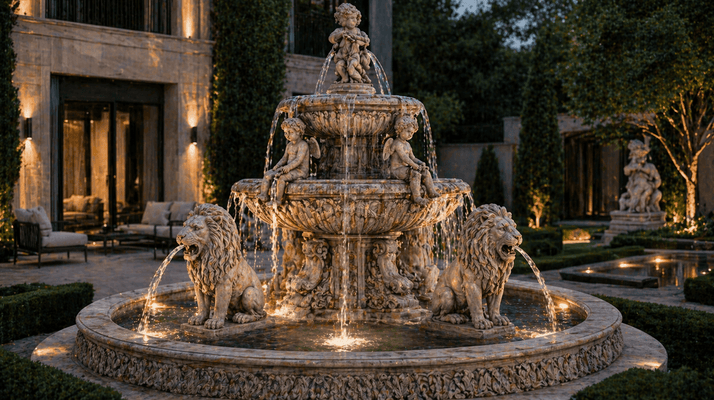
The hushed sanctuary of a luxury garden finds its most powerful element in something you hear rather than see. Including a garden fountain transforms a static landscape into a living, breathing performance. While modern design often leans toward minimalist glass and steel, there is a growing renaissance of the baroque fountain. Specifically, the dramatic motifs of lion spouts and cherub sculptures are finding their way back into contemporary estates, acting as the primary conductors of a garden’s sensory symphony.Water has a primal ability to settle the mind, but the vessel through which that liquid flows dictates the emotional "pitch" of the space. An ornate stone fountain does not merely drop water; it choreographs it. By merging classical drama with modern wellness, these water features provide an acoustic and visual richness that pulls a visitor away from the digital world and back into a state of rhythmic presence.
The Acoustic Architecture of Water
Not all water sounds are created equal. The acoustic profile of a garden fountain is determined by the height of the fall and the texture of the landing surface. A lion-head spout provides a powerful, consistent stream that creates a deep, resonant splash—ideal for masking the distant hum of urban traffic. This "white noise" effect is a cornerstone of garden sound design, allowing for private conversations in an outdoor setting.
A tiered stone fountain featuring playful cherubs often produces a lighter, cascading "tinkle." This higher frequency mimics the sound of a mountain stream, which the human brain associates with freshness and vitality. When selecting your feature, consider the existing ambient noise of your neighborhood. You must decide if you need the authoritative roar of a lion or the delicate laughter of a cherub to complete your garden’s soundscape.
Visual Drama: The Baroque Fountain as a Focal Point
A baroque fountain serves as the architectural heart of the garden. The intricate carvings of a lion’s mane or the soft curves of a cherub's wing provide a level of detail that draws the eye and encourages slow, mindful observation. Unlike modern, flat-surface features, an ornate stone fountain catches the light in a multitude of ways. As water dances over carved stone, it creates a play of shadows and highlights that changes with the sun's position.
Visual complexity acts as a key component of a "slow garden." It invites you to pause and appreciate the craftsmanship, much like a piece of gallery art. By choosing a garden fountain with classical motifs, you are anchoring your modern space in history, providing a sense of permanence and grandeur that minimalist alternatives often lack.
Creating a Sensory Symphony Through Sound Design
Designing a garden for the ears is a sophisticated art. Experts in soundscapes suggest that the "music of water" should be layered. Placing a baroque fountain near a stone wall can amplify its resonance, while surrounding it with soft foliage can dampen the echo for a more intimate feel. The interplay between the hard stone fountain and the soft landscape creates a balanced sensory experience.
The transition from a busy workday to your private patio becomes a ritual of relaxation. The first thing you encounter is the rhythmic splash of your garden fountain. This sound acts as a psychological "gatekeeper," signaling to your brain that it is time to shift from productivity to peace. It is an immersive experience that engages the ears, the eyes, and—through the cooling mist—even the skin.
Why Stone Remains the Ultimate Medium
The material of your garden fountain significantly impacts both its sound and its longevity. A high-quality stone fountain possesses a density that gives water a rich, full-bodied tone upon impact. Over time, natural stone develops a unique patina, allowing the ornate lion and cherub details to blend seamlessly with the surrounding flora.
This aging process is part of the charm of a baroque fountain. It suggests that the garden has been there for generations, offering a timeless quality that transcends modern fads. Whether you prefer the raw, textured look of aged limestone or the polished elegance of marble, stone ensures that your sensory symphony continues to play for decades to come.
Conclusion: Orchestrating Your Outdoor Escape
The modern garden is no longer just a patch of green; it is a meticulously designed wellness retreat. Incorporating a garden fountain with ornate lion or cherub motifs is a strategic move to master your environment’s atmosphere. By choosing the right acoustic profile and architectural style, you create a space that nourishes the senses and provides a true escape from the mundane.
From the dramatic roar of a lion spout to the delicate cascades of a cherub tier, these features offer more than just decoration—they offer a soundtrack for a life well-lived. Orchestrating the music of water transforms your modern garden into a classical masterpiece of relaxation and beauty.
RECENT POSTS
-
The Art of Hospitality on Wheels: How Luxury Trolleys Elevate Boutique Hotel Experiences
September 25, 2026
-

The Art of Grandeur: How Baroque Coffee Tables Transform Luxury Living Spaces
September 25, 2026
-
The Art of Entertaining: How Luxury Bar Furniture Transforms Sophisticated Interiors
September 24, 2026
-
The New Art of Rest: Curating a Wellness-Focused Luxury Bedroom
September 24, 2026
-
Framed Prints That Bring Effortless European Elegance to Apartment Interiors
September 23, 2026
-

How Crystal Chandelier Lighting Transforms Light, Height and Luxury Interiors
September 23, 2026
-
Sculptural Illumination: How Contemporary Floor Lamps Are Becoming Modern Art Statements
September 22, 2026
-
The Art of Choosing a Luxury Table Clock: A Guide to Size, Style & Placement
September 21, 2026
-
Elegant Wall Lamps: The Secret to Warmer, More Characterful Luxury Interiors
September 21, 2026
-

Pairing Luxury TV Units with Living Room Furniture: Create Cohesive Elegance in Modern Homes & Hotel
September 20, 2026