





Modern Sculptures vs Classic Sculptures: Which Style Fits Today’s Architecture?
Posted by Luxury Group International Design Team / Luxury Sculptures / April 24, 2026
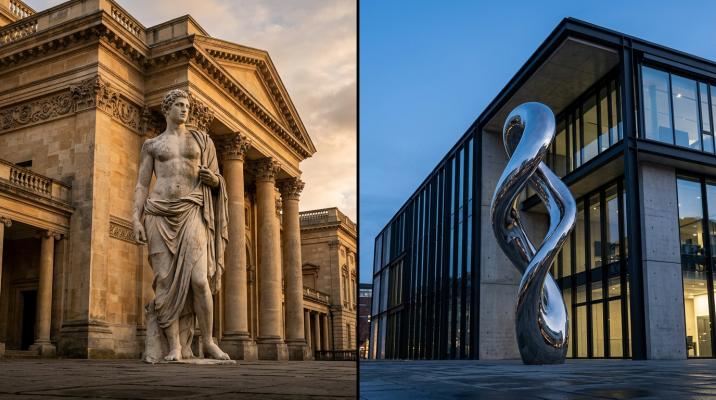
Walk through any major city today and you'll witness an architectural identity crisis playing out in three dimensions. On one corner, a weathered marble figure reaches toward the sky in timeless poise. Three blocks away, a twisted ribbon of polished steel defies gravity and explanation. This isn't merely aesthetic preference—it's a fundamental question about what our built environment says about who we are, right now.The debate between modern sculptures and classic sculptures isn't new, but it has reached a fever pitch as contemporary architecture embraces minimalism, sustainability, and experiential design. The modern statue has evolved from a niche artistic statement into a mainstream architectural necessity. Meanwhile, classical forms refuse to fade into obscurity, finding surprising relevance in our nostalgia-hungry culture.
So which style actually fits today's architecture? Let's dismantle the assumptions.
The Case for Classic Sculptures: Anchors in a Chaotic World
There's a reason Renaissance-era garden sculptures still command prime real estate in European palaces and, increasingly, in luxury developments from Dubai to Manhattan. Classical sculpture offers something modern design often struggles to provide: instant gravitas.Consider the psychological impact. A marble Venus or bronze athlete carries centuries of cultural coding. Viewers don't need an art history degree to feel the weight of human achievement embedded in every draped fold and muscled contour. In an era of disposable digital content, these physical monuments to patience and permanence feel almost rebellious.
Classic sculptures also solve a practical architectural problem: they create human scale. A 60-story glass tower can feel alienating and cold. Place a figurative bronze at its base, and suddenly the space breathes. The proportions reference the human body, grounding the viewer before they ever enter the building.
But here's the uncomfortable truth: classical works often function as architectural nostalgia. They signal wealth, tradition, and institutional power. In democratic, forward-facing spaces—tech campuses, innovation hubs, community centers—this messaging can feel tone-deaf, even oppressive. The classical statue whispers, "We've always done it this way." And increasingly, "always" isn't the selling point it used to be.
The Case for Modern Sculptures: Architecture's Active Partner
Modern sculptures don't merely occupy space—they negotiate with it. Where classical works stand apart from their surroundings (a pedestal, a plinth, a deliberate separation), contemporary pieces often emerge from the architecture itself. Think of Anish Kapoor's reflective clouds distorting a skyline, or Jaume Plensa's mesh figures that let light pass straight through them.This integration matters because today's architecture is no longer a static backdrop. Buildings twist, cantilever, and breathe. They feature kinetic facades and green roofs. A rigid figurative sculpture beside a morphing Zaha Hadid structure looks like a historical accident, not a design choice. The modern statue has evolved to match this kinetic energy.
Material innovation drives this compatibility. Classic bronze and marble demand specific climates and maintenance regimens. Modern works employ weathering steel, LED integration, recycled plastics, and interactive sensors. A sculpture that changes color with air quality data? That's not gimmickry—it's a building's conscience made visible.
The engagement factor is undeniable. Modern vs classic sculptures for architecture often boils down to this: one invites you to look, the other demands you participate. In an Instagram-driven culture where public art must earn its keep through social sharing and foot traffic, modern works deliver measurable ROI that classical pieces struggle to match.
Yet modern sculpture carries its own baggage. The abstract form that thrills an architect often baffles the general public. "My kid could make that" remains the knee-jerk critique, and it's not entirely unfair. Without the narrative anchor of human figuration, modern works risk becoming decorative noise—expensive, self-indulgent, and ultimately forgettable.
The Hybrid Revolution: Why Choose?
The most compelling contemporary spaces are increasingly refusing the binary. They're staging dialogues between eras.Imagine a minimalist concrete courtyard where a fragmented classical bust—deliberately incomplete, scarred by time—rests beside a sleek geometric monolith. The tension is the point. This isn't compromise; it's curation. Architecture becomes a time machine, collapsing centuries into a single moment of confrontation.
Some of the most successful garden sculptures installations now blend both languages. A traditional fountain structure might channel water through laser-cut contemporary panels. A figurative base might support an abstract explosion of fiber optics. These hybrids acknowledge that today's architecture serves multiple masters: heritage and innovation, permanence and adaptability, local identity and global conversation.
The "fit," it turns out, isn't about style at all. It's about intention. What question is this space asking? A courthouse demanding respect for law and order might still benefit from classical authority. A startup incubator celebrating disruption? The modern sculpture isn't just fitting—it's essential.
The Verdict: Context Is King
If forced to choose a default for today's architecture, the edge goes to modern sculptures—but with caveats. Contemporary building design, with its emphasis on transparency, sustainability, and user experience, simply provides more entry points for abstract and conceptual work. The modern statue doesn't compete with architecture; it extends it.However, classic sculptures retain irreplaceable power in specific contexts: memorials, institutions of learning, spaces designed for contemplation rather than production. Their value isn't diminished by modernity; it's targeted.
The real mistake is treating this as a zero-sum game. The most sophisticated architectural minds of our era aren't picking sides. They're orchestrating conversations.
What Do You Think?
Architecture belongs to everyone who moves through it. So we want to hear from you:????️ Team Classic: Do traditional sculptures provide the soul and permanence that modern spaces desperately need?
???? Team Modern: Are abstract, contemporary works the only honest companions to today's innovative architecture?
⚖️ Team Both: Is the future a curated collision of eras?
Drop your vote in the comments and tell us about the most powerful sculpture you've encountered in a built space. The best responses will be featured in our follow-up piece on how public art shapes community identity.
The buildings are already speaking. The only question is: are we listening?
RECENT POSTS
-

The Art of Hospitality on Wheels: How Luxury Trolleys Elevate Boutique Hotel Experiences
September 25, 2026
-
The Art of Grandeur: How Baroque Coffee Tables Transform Luxury Living Spaces
September 25, 2026
-
The Art of Entertaining: How Luxury Bar Furniture Transforms Sophisticated Interiors
September 24, 2026
-
The New Art of Rest: Curating a Wellness-Focused Luxury Bedroom
September 24, 2026
-
Framed Prints That Bring Effortless European Elegance to Apartment Interiors
September 23, 2026
-

How Crystal Chandelier Lighting Transforms Light, Height and Luxury Interiors
September 23, 2026
-
Sculptural Illumination: How Contemporary Floor Lamps Are Becoming Modern Art Statements
September 22, 2026
-
The Art of Choosing a Luxury Table Clock: A Guide to Size, Style & Placement
September 21, 2026
-
Elegant Wall Lamps: The Secret to Warmer, More Characterful Luxury Interiors
September 21, 2026
-

Pairing Luxury TV Units with Living Room Furniture: Create Cohesive Elegance in Modern Homes & Hotel
September 20, 2026