





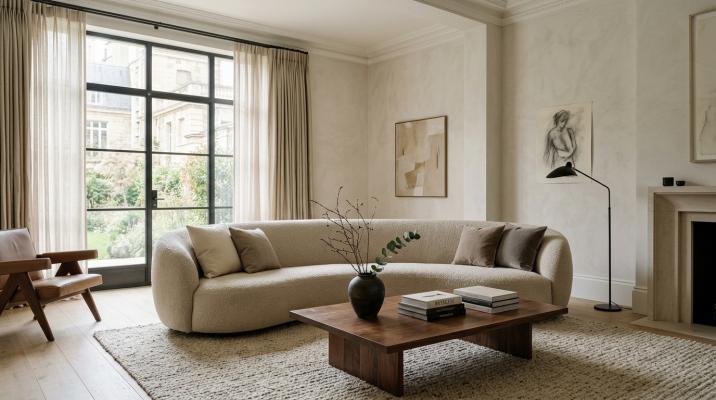
The Psychology Behind High-End Furniture: Why Luxury Feels Different
Posted by Luxury Group International Design Team / Living Room Furniture / April 10, 2026
Have you ever walked into a room and felt an immediate, inexplicable sense of calm, or perhaps a sudden surge of confidence? You haven’t touched the walls, and no one has spoken a word, yet the atmosphere feels "expensive."In the world of interior design, we often talk about "investment pieces" and "craftsmanship," but rarely do we peel back the velvet curtain to look at the cognitive science of why high-end furniture triggers such a profound shift in our internal state. From the sleek showrooms of Milan to the historic design houses of Paris, the European approach to luxury isn't just about price tags—it’s about a sophisticated understanding of human psychology.
1. The Power of Proportions: The Golden Ratio in Your Living Room
Our brains are hardwired to seek order. Since the time of the Renaissance, European architects and designers have leaned heavily into the Golden Ratio—a mathematical ratio of 1:1.618 found throughout nature.When you look at a piece of luxury interior furniture, your eyes aren't just seeing a chair; they are processing harmony. Mass-produced furniture often ignores these proportions to save on material costs or shipping space. However, high-end design prioritizes "visual weight."
- Symmetry and Safety: A perfectly balanced sideboard creates a sense of "perceptual fluency." When a room is easy for the brain to process, our cortisol levels drop.
- The Command Position: Psychology tells us that where we sit affects how we feel. High-end sofas are designed with depths and heights that allow the sitter to feel "grounded" and "protected," tapping into our primal need for a secure vantage point.
2. Haptic Perception: Why "The Touch" Matters
There is a specific branch of psychology called Haptic Perception—the process of recognizing objects through touch. In the world of high-end furniture, this is where the magic happens.When you run your hand over a hand-finished walnut table versus a laminate surface, your brain receives a complex set of data. Cold, synthetic surfaces feel "dishonest" to our tactile receptors. Conversely, natural materials like top-grain leather, solid marble, and raw silk trigger a "sensory pleasure" response in the somatosensory cortex.
The Comfort-Confidence Connection
There is a fascinating phenomenon known as enclothed cognition, which suggests that what we wear changes how we think. The same applies to what we sit on.- Soft Textures: Bouclé or velvet furniture encourages "affiliative behavior"—it makes us more likely to be open, warm, and conversational.
- Firm Structures: A structured, ergonomic leather desk chair communicates authority. It’s why executive boardrooms aren't filled with beanbags. The physical "support" of luxury furniture translates directly into emotional "confidence."
3. The "Legacy" Effect: The Psychology of Permanence
In a world defined by "fast fashion" and disposable goods, European luxury buyers are increasingly motivated by transgenerational psychology.Choosing luxury interior furniture is an act of rebellion against the ephemeral. Psychologically, we associate "old world" craftsmanship with stability. When we purchase a piece of furniture that we intend to pass down to our children, we are engaging in "symbolic immortality."
"We don’t just buy a table; we buy the future dinners, the late-night conversations, and the stability of a home that lasts longer than a lease."
This sense of permanence reduces the "buyer's remorse" often felt with cheaper purchases. The brain categorizes the high-end purchase not as a "cost," but as an "extension of self."
4. Color Psychology and the "Quiet Luxury" Palette
If you look at the most successful high-end furniture brands in Europe today, you’ll notice a move away from garish, loud colors. Instead, we see a dominance of "earthy neutrals"—taupes, charcoals, creams, and sage greens.Why? Because these colors require the least amount of "eye strain" to process.
- The Luxury of Space: Light-colored, high-end furniture creates the illusion of more space. In psychological terms, space is synonymous with freedom and status.
- Contrast and Focus: High-end design uses "low-arousal" colors to create a sanctuary. In a world of digital overstimulation, the psychology behind luxury furniture design is increasingly focused on neurological rest.
5. The Scarcity and Identity Heuristic
We cannot discuss the psychology of luxury without mentioning Social Identity Theory. Humans are social creatures who use "signaling" to find their tribe.Owning a piece of furniture that was handmade in a small workshop in the Black Forest or hand-carved in Tuscany provides a sense of uniqueness.
- Scarcity: When an object is rare, our brain perceives it as more valuable. This isn't just greed; it's a desire for a distinct identity.
- The Narrative: High-end furniture always comes with a story—the origin of the wood, the name of the artisan, the history of the brand. When we inhabit a room filled with these stories, we subconsciously adopt those narratives of excellence and heritage as our own.
6. Biophilia: Bringing the Outside In
A major pillar of the psychology behind luxury furniture design is Biophilic Design. This is the innate human tendency to seek connections with nature and other forms of life.High-end furniture excels here by using "living" materials.
- Wood Grain: The fractal patterns in wood grain have been shown to reduce stress levels in occupants.
- Natural Stone: The cooling effect of marble or the warmth of travertine connects us to the earth's geological history.
- Organic Shapes: Unlike the harsh, 90-degree angles of industrial manufacturing, luxury pieces often feature "organic" curves that mimic the natural world, which the human eye finds inherently more soothing.
7. The Science of "Total Comfort"
Finally, we must address Ergonomics vs. Aesthetics. In the low-end market, you often have to choose one. In the high-end market, the psychology of "Total Comfort" dictates that if a piece of furniture looks beautiful but feels awkward, it creates cognitive dissonance.Luxury furniture is engineered to eliminate this friction.
- Proprioception: This is your sense of self-movement and body position. High-end furniture is designed to accommodate the body’s natural posture so perfectly that you "forget" you are sitting.
- The "Ah" Moment: That physical sigh of relief when you sit in a perfectly engineered lounge chair is a neurological reset. It signals to the nervous system that the "hunt" is over and it is safe to rest.
Why European Design Sets the Standard
Europe remains the heart of the luxury furniture world because of a cultural ethos that values quality over quantity. From the Bauhaus movement’s focus on "form follows function" to the Italian obsession with La Dolce Vita, European design understands that our environment is a mirror of our internal state.When you invest in high-end furniture, you aren't just decorating a room. You are curateing a psychological ecosystem. You are choosing materials that soothe your skin, proportions that calm your mind, and a legacy that anchors your family.
Summary Table: The Psychological Impact of Furniture Elements
| Element | Psychological Trigger | Emotional Result |
| Natural Wood/Stone | Biophilia | Reduced stress, groundedness |
| Golden Ratio Proportions | Perceptual Fluency | Sense of order and harmony |
| Hand-stitched Leather | Haptic Pleasure | Feelings of quality and "truth" |
| Neutral Color Palettes | Low Neural Arousal | Mental clarity and rest |
| Artisanal Heritage | Narrative Identity | Sense of belonging and status |
Conclusion: The Investment in Your Well-being
The next time you find yourself admiring a piece of luxury interior furniture, remember that your admiration isn't superficial. It is your brain recognizing excellence, your nervous system responding to comfort, and your psyche yearning for permanence.Luxury isn't about showing off to the neighbors—it’s about how you feel when the door is closed, the lights are low, and you are finally home. In the end, the most important space you inhabit isn't your house; it's your mind. Why not give it a beautiful place to rest?
RECENT POSTS
-
The Art of Hospitality on Wheels: How Luxury Trolleys Elevate Boutique Hotel Experiences
September 25, 2026
-
The Art of Grandeur: How Baroque Coffee Tables Transform Luxury Living Spaces
September 25, 2026
-
The Art of Entertaining: How Luxury Bar Furniture Transforms Sophisticated Interiors
September 24, 2026
-
The New Art of Rest: Curating a Wellness-Focused Luxury Bedroom
September 24, 2026
-
Framed Prints That Bring Effortless European Elegance to Apartment Interiors
September 23, 2026
-
How Crystal Chandelier Lighting Transforms Light, Height and Luxury Interiors
September 23, 2026
-
Sculptural Illumination: How Contemporary Floor Lamps Are Becoming Modern Art Statements
September 22, 2026
-
The Art of Choosing a Luxury Table Clock: A Guide to Size, Style & Placement
September 21, 2026
-
Elegant Wall Lamps: The Secret to Warmer, More Characterful Luxury Interiors
September 21, 2026
-
Pairing Luxury TV Units with Living Room Furniture: Create Cohesive Elegance in Modern Homes & Hotel
September 20, 2026