








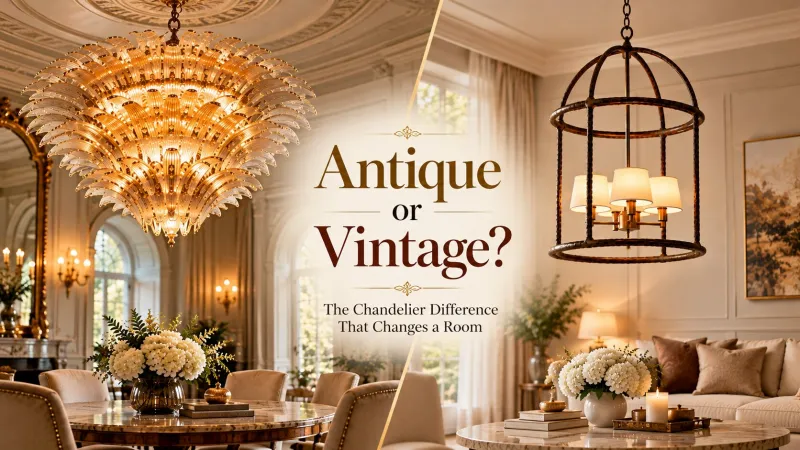
Antique or Vintage? The Chandelier Difference That Changes a Room
Posted by Isabella Moreau / Luxury Chandelier / October 24, 2026
Walk into a beautifully designed European interior and look upwards. Before you notice the furniture, artwork, or architectural details, there is a good chance that the lighting has already shaped how the room feels.
A chandelier does more than illuminate a space. It establishes atmosphere, introduces scale, and can quietly communicate the character of an entire interior. This is particularly true of antique chandeliers and vintage chandeliers, two styles that are often treated as interchangeable but actually tell very different stories.
So, what really separates them?
The answer is not simply age. It is history, craftsmanship, design language, materials, and the emotional character each piece brings into a room.
The Word “Antique” Changes Everything
An antique chandelier is generally understood as a genuinely old piece with historical significance. In luxury interiors, the term often refers to lighting originating from earlier periods of European design, where craftsmanship was highly individual and production was far less industrialised.
Imagine a chandelier with hand-finished metalwork, aged crystal, intricate arms and decorative details that reveal subtle imperfections. Those imperfections are not necessarily flaws. They are evidence of its history.
An antique piece may carry the visual vocabulary of a particular era, from ornate classical forms to elaborate decorative motifs. Its appeal lies partly in the fact that it has existed through another generation of interiors.
That sense of authenticity is difficult to reproduce.
For homeowners designing premium residences, an antique chandelier can therefore function almost like an architectural artefact. It does not simply complete the room; it gives the room a sense of heritage.
Vintage Has a Different Personality
Vintage chandeliers occupy a broader and often more relaxed design territory.
Rather than being defined purely by historical age, vintage lighting is frequently associated with the distinctive aesthetic of a past period. Mid-century forms, Art Deco influences, retro silhouettes and decorative pieces from the twentieth century can all fall under the vintage umbrella.
This creates an important distinction.
An antique chandelier often feels connected to history itself, while a vintage chandelier may feel connected to a particular design movement.
That difference can dramatically influence the atmosphere of a room.
A sculptural vintage chandelier can look remarkably sophisticated above a contemporary dining table, while an ornate antique chandelier may feel more natural inside a traditionally styled dining room, heritage property or classically proportioned entrance hall.
When Craftsmanship Becomes the Decoration
The fascination with both styles ultimately comes down to craftsmanship.
Traditional chandeliers often contain layers of detail that reward closer inspection. Curved arms, carved elements, decorative metalwork, crystal drops and carefully proportioned structures create visual depth that a simpler modern fixture may not provide.
This is where a luxury chandelier becomes more than a lighting product.
It becomes part of the interior's identity.
In a premium home, the chandelier may become the object that connects the ceiling architecture with the furniture below. A richly detailed piece can echo carved cabinetry, decorative mirrors and classic mouldings. A more restrained vintage design can introduce character into a minimalist interior without overwhelming it.
The best choice is therefore not always the most elaborate one.
It is the chandelier that understands the room.
Antique Chandeliers: Designed to Make History Visible
There is something inherently dramatic about an authentic antique chandelier.
Its aged surfaces can introduce warmth. Its decorative language can create a connection with European architectural traditions. Its presence can make a dining room feel ceremonial, an entrance hall feel grander, or a drawing room feel more established.
For interiors built around heritage materials such as marble, dark timber, plaster mouldings or richly patterned textiles, antique chandeliers can create a remarkably cohesive atmosphere.
They also work beautifully when the objective is contrast.
Place an ornate antique chandelier inside a restrained contemporary interior and the result can become unexpectedly sophisticated. The old and new begin to communicate with each other.
This is one of the reasons classic chandeliers remain relevant in modern luxury interiors.
Vintage Chandeliers: Character Without Excess
Vintage chandeliers often offer greater freedom.
Their forms can be more graphic, sculptural or understated, making them particularly suitable for contemporary European homes where luxury is expressed through proportion rather than ornament.
A vintage-inspired chandelier above a long dining table can create a focal point without competing with artwork. In a living room, a sculptural design can introduce personality while maintaining a clean architectural silhouette.
This makes vintage lighting especially interesting for buyers who want their interiors to feel collected rather than overly coordinated.
The room does not need to look like it belongs to one historical period.
Instead, it can feel as though beautiful pieces have been discovered over time.
The Real Question: Which Story Should Your Room Tell?
Choosing between antique and vintage chandeliers is ultimately a question of narrative.
Does your interior need heritage?
An antique chandelier may provide the depth and authenticity you are looking for.
Does it need character with a lighter contemporary attitude?
A vintage chandelier may be the more natural choice.
Does the room combine modern furniture with classical architecture?
Either can work beautifully, provided the proportions and finishes are carefully considered.
Luxury interiors rarely succeed because every element belongs to the same style. They succeed because seemingly different elements share something deeper — scale, material, colour, craftsmanship or visual rhythm.
Let the Architecture Decide
Before choosing a chandelier, look at the room rather than the product.
A high-ceilinged entrance hall can accommodate a more substantial chandelier with a strong vertical presence. A dining room may benefit from a wider horizontal silhouette that visually relates to the dining table. A bedroom may call for something softer and more intimate.
The ceiling height, room dimensions, furniture scale and natural light should all influence the decision.
Even the finish matters.
Crystal can introduce brilliance. Aged brass can add warmth. Dark metal can create definition. Patinated surfaces can soften a highly polished interior.
This is where classic lighting becomes an exercise in balance rather than decoration.
Why the Difference Matters for Premium Homes
For buyers investing in chandeliers for premium homes, understanding the difference between antique and vintage is valuable because the lighting choice can influence the perceived age and personality of an entire interior.
An antique chandelier can make a newly built residence feel established.
A vintage chandelier can make a carefully designed modern home feel more individual.
Neither is automatically more luxurious.
Authenticity, proportion, material quality and craftsmanship determine whether the piece feels truly exceptional.
And perhaps that is the most interesting part of the comparison.
Luxury is not necessarily about choosing the oldest, largest or most expensive chandelier in the room. It is about choosing something that feels inevitable once it is installed — as though the architecture was waiting for it.
The Final Glow
Antique and vintage chandeliers may share a love of character, craftsmanship and classic design, but they create distinctly different experiences.
Antique chandeliers bring history, heritage and a sense of permanence. Vintage chandeliers bring personality, nostalgia and design freedom. Both can become extraordinary focal points when their proportions and visual language complement the surrounding interior.
For European luxury homes, that distinction opens up an exciting world of possibilities.
Because the right chandelier does not merely brighten a room.
It tells you how the room wants to be remembered.
Note:- Shop exclusive collections anytime with the luxury furniture app from Luxury Group International.
RECENT POSTS
-

The New Language of Luxury: Why Modern Bedrooms Are Designed to Be Felt
October 24, 2026
-
Antique or Vintage? The Chandelier Difference That Changes a Room
October 24, 2026
-
The Art That Welcomes You: Making Luxury Hotel Landscapes Unforgettable
October 23, 2026
-
The Invisible Art of an Elegant Bedroom: How Coordinated Furniture Creates Calm
October 23, 2026
-
Where Elegance Finds a Seat: Luxury Bench Designs for Refined European Interiors
October 22, 2026
-
The Art of the Perfect Centre: Luxury Coffee Tables That Transform Elegant Interiors
October 22, 2026
-
Side Table Height Guide: What Should Sit Next to a Sofa or Armchair?
October 21, 2026
-
Formal Dining Room Case Study: Seating 10 Without Overcrowding
October 21, 2026
-
What Size Dresser Fits Your Bedroom? A Simple Measurement Guide
October 20, 2026
-
Swivel vs Fixed Bar Stools: Which Is Better for Everyday Use?
October 20, 2026


