








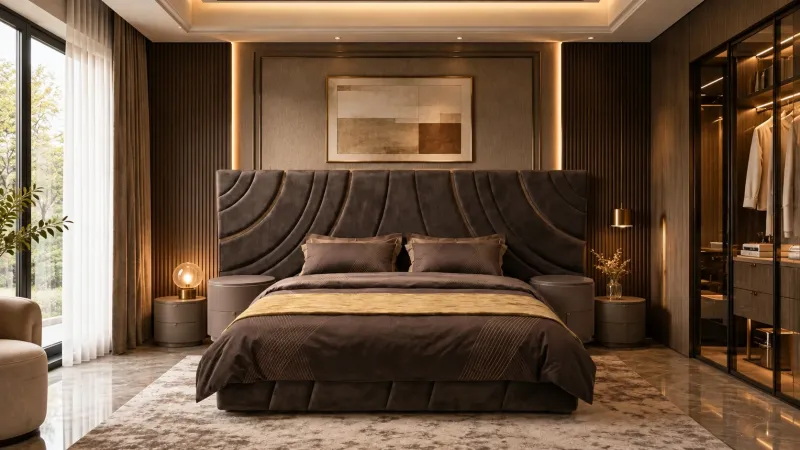
The New Language of Luxury: Why Modern Bedrooms Are Designed to Be Felt
Posted by Sophie Laurent / Luxury Bedroom Furniture / October 24, 2026
Luxury used to be easy to recognise.
A grand headboard. Elaborate detailing. Expensive materials. A room filled with objects designed to announce their value.
But something has changed.
Walk into a beautifully designed bedroom today and the most luxurious element may be the one you cannot immediately identify. It might be the softness of the lighting, the silence created by carefully chosen materials, the proportions of the bed, or simply the feeling that nothing in the room is asking for attention.
This is the quieter side of modern bedroom luxury.
It is not necessarily about making a bedroom look more impressive. It is about making it feel better to inhabit.
The Moment Luxury Becomes Personal
A bedroom is fundamentally different from a living room or entrance hall.
It is private.
There are no guests to impress and no need to create a dramatic first impression. Its real purpose is deeply personal: to provide a place where the mind can slow down.
That changes the meaning of luxury.
A beautiful bedroom is no longer judged only by how it photographs. It is judged by how it feels at midnight, how peaceful it feels early in the morning, and how naturally it allows you to disconnect from the outside world.
This is why modern luxury bedroom interiors increasingly favour atmosphere over ornament.
The design may be visually sophisticated, but its real success is measured through experience.
The Bed Is More Than a Centrepiece
Every bedroom has a focal point, and more often than not, it is the bed.
But the most successful luxury beds for premium interiors do more than occupy the centre of the room. They establish its emotional character.
A generously upholstered headboard can introduce softness and intimacy. Rich timber can bring warmth and permanence. Sculptural forms can create a sense of architectural calm.
The important question is not simply, “Does the bed look luxurious?”
A better question is:
“What does this bed make the room feel like?”
That subtle distinction changes the entire design process.
Instead of selecting a bed because it is visually impressive, homeowners begin considering scale, touch, texture, height and proportion. The bed becomes an experience rather than an object.
Restraint Is the New Expression
There was a time when luxury interiors competed for attention.
Today, restraint can be far more powerful.
A room with fewer, better-considered elements often communicates sophistication more effectively than one crowded with decorative features.
This does not mean minimalism in the strict sense. A luxurious bedroom can still contain rich fabrics, dramatic furniture, sculptural lighting and beautiful decorative pieces.
The difference is intention.
Every element has a reason for being there.
A velvet surface introduces tactility. A warm metallic accent catches the light. A natural stone surface adds weight. A carefully selected artwork provides personality.
Nothing feels accidental.
That is the essence of contemporary luxury: less visual noise, more emotional depth.
When Materials Become Part of the Experience
Luxury is often described through materials, but the real fascination lies in how those materials make us feel.
Wood has warmth.
Stone has permanence.
Velvet feels intimate.
Metal introduces precision.
Glass creates lightness.
When these materials are combined thoughtfully, they create an environment that communicates without words.
This is where luxury bedroom furniture becomes particularly important. A bedside table is not merely storage. A dresser is not simply functional. A chair is not simply somewhere to sit.
Each piece contributes to the sensory language of the room.
The grain of the wood, the softness of upholstery, the weight of a drawer and the reflection of a metallic detail can all influence how the room is experienced.
Luxury begins to move beyond appearance.
Lighting Changes Everything
Even the finest bedroom furniture can feel ordinary under the wrong lighting.
Lighting has the ability to completely alter perception.
Soft, layered illumination can make rich fabrics appear deeper, timber warmer and architectural details more pronounced. A bedside lamp creates intimacy. Concealed lighting adds depth. A sculptural pendant can introduce drama without overwhelming the space.
The objective is rarely to make the bedroom bright.
It is to make it atmospheric.
This is why modern bedroom luxury increasingly considers lighting as part of the emotional architecture of the room rather than simply a practical necessity.
The same bedroom can feel energetic in the morning and cocooning at night simply because the lighting changes.
That is luxury in its most experiential form.
The Beauty of Coming Home to Nothing
There is another reason restraint has become so important.
Modern life is visually exhausting.
Screens, advertisements, notifications, traffic, architecture and constant information compete for attention throughout the day.
The bedroom can become the opposite.
A calm palette. Comfortable textures. Balanced furniture. Gentle lighting. Clear surfaces.
Nothing demands anything from you.
This is perhaps one of the most valuable qualities a luxury interior can provide: mental space.
The room becomes somewhere to recover rather than somewhere to perform.
European Luxury Is Evolving
Across European interiors, luxury design has always had a relationship with craftsmanship and heritage. But contemporary homeowners are increasingly combining that heritage with a more relaxed understanding of comfort.
Classic materials can sit alongside modern silhouettes.
Traditional craftsmanship can meet contemporary proportions.
Statement furniture can exist within restrained surroundings.
This creates a style that feels sophisticated without becoming formal.
For premium homes, the result is particularly compelling. The bedroom feels established, yet personal; luxurious, yet comfortable; considered, yet completely natural.
That balance is difficult to achieve—and precisely why it feels so valuable.
What You Don't See May Matter Most
The most interesting luxury details are sometimes invisible.
A bed positioned at exactly the right scale for the room.
A bedside table designed to sit naturally within reach.
A fabric selected because it feels exceptional against the skin.
Storage planned so that everyday objects disappear from sight.
Lighting positioned to eliminate harsh shadows.
These details may never appear in a photograph.
Yet they determine how the room works.
And that is the difference between decorating a bedroom and designing an experience.
A Different Definition of Luxury
Perhaps modern luxury should no longer be measured by how much a bedroom contains.
Perhaps it should be measured by how effortlessly the room allows you to live.
The finest modern bedroom luxury does not constantly remind you of its price, craftsmanship or exclusivity. Instead, it quietly improves ordinary moments.
Reading before sleep feels better.
Waking up feels calmer.
Getting ready in the morning feels less rushed.
Returning home feels comforting.
That is when luxury becomes meaningful.
Because ultimately, the most sophisticated bedroom is not the one that makes everyone else say “beautiful.”
It is the one that makes you quietly think:
“I never want to leave.”
Note:- Shop exclusive collections anytime with the luxury furniture app from Luxury Group International.
RECENT POSTS
-
The New Language of Luxury: Why Modern Bedrooms Are Designed to Be Felt
October 24, 2026
-

Antique or Vintage? The Chandelier Difference That Changes a Room
October 24, 2026
-

The Art That Welcomes You: Making Luxury Hotel Landscapes Unforgettable
October 23, 2026
-
The Invisible Art of an Elegant Bedroom: How Coordinated Furniture Creates Calm
October 23, 2026
-
Where Elegance Finds a Seat: Luxury Bench Designs for Refined European Interiors
October 22, 2026
-
The Art of the Perfect Centre: Luxury Coffee Tables That Transform Elegant Interiors
October 22, 2026
-
Side Table Height Guide: What Should Sit Next to a Sofa or Armchair?
October 21, 2026
-
Formal Dining Room Case Study: Seating 10 Without Overcrowding
October 21, 2026
-
What Size Dresser Fits Your Bedroom? A Simple Measurement Guide
October 20, 2026
-
Swivel vs Fixed Bar Stools: Which Is Better for Everyday Use?
October 20, 2026


