





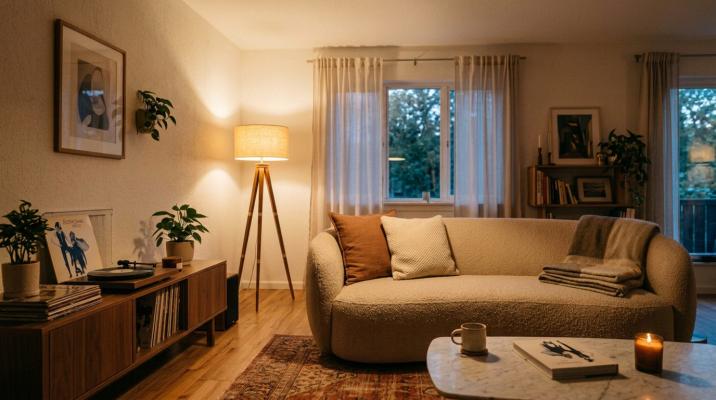
Mid-Century Floor Lamps: Why This Iconic Style Still Feels Relevant Today
Posted by Luxury Group International Design Team / Decorative Lighting / April 11, 2026
Close your eyes for a second.Picture a 1950s living room. Rat-pack jazz playing softly. A martini glass on a walnut side table. And in the corner—arching gracefully like a crane in flight—a mid-century floor lamp.
Now open your eyes.
That same lamp is probably trending on Pinterest right now.
There's something magical about mid-century floor lamps. They aren't just lighting. They are time machines. They carry the optimism of the space age, the cool of old Hollywood, and the warmth of your grandmother's den—all wrapped in one sleek, sculptural package.
But here's the real question: Why does a 70-year-old design still look so… fresh?
In this post, we'll explore the nostalgic pull of the mid-century floor lamp, uncover the design secrets behind its longevity, and show you exactly how to use a vintage floor lamp in your very modern home.
Spoiler alert: It's easier (and cooler) than you think.
Part 1: A Quick Trip Back in Time (The Nostalgia Hit)
Let's start with a little history—because context makes everything more beautiful.
The Birth of Mid-Century Modern
The mid-century modern movement peaked roughly between 1945 and 1969. World War II had ended. People were optimistic. Suburbs were booming. And designers were tired of heavy, dark, Victorian furniture.
They wanted:
- Clean lines
- Honest materials (wood, metal, fiberglass)
- Function without fuss
Lighting became sculpture. And the mid-century floor lamp was born.
The Icons You've Definitely Seen
Even if you don't know the names, you know the shapes:
- The Arco Lamp (1962) – A marble base with a sweeping arc of stainless steel. Designed to hang over a sofa without a ceiling fixture.
- The Tripod Lamp – Three slender wooden legs holding a cone or drum shade. Effortlessly elegant.
- The Sputnik Floor Lamp – Atomic age. Exploding starbursts of light. Pure 1950s space-race energy.
These weren't just lamps. They were conversation starters. And they still are.
Why We're So Nostalgic for Them
Let's be honest. The 2020s are chaotic. Our homes have become sanctuaries. And there's something deeply comforting about objects that remind us of a "simpler time"—even if that time never actually existed.
A vintage floor lamp whispers, "Relax. Put on some vinyl. Stay awhile."
It's not just a light source. It's a feeling.
Part 2: The Timeless Design Secrets (Why They Still Work)
Okay, nostalgia aside. Why do mid-century floor lamps in modern interiors look so effortlessly good?
Let's break down the design DNA.
Secret #1: Sculptural Silence
Mid-century lamps don't scream. They pose.Unlike ornate Victorian or busy Baroque pieces, a mid-century floor lamp is a single, confident gesture. One arc. One tripod. One perfect curve.
That restraint means it can sit next to almost anything—a velvet sofa, a concrete floor, a rustic farmhouse table—without clashing.
Secret #2: Honest Materials That Age Beautifully
Brass that patinas. Teak that warms. Steel that stays crisp.Mid-century designers didn't hide their materials under layers of paint or gilding. They celebrated them. So when you buy a genuine vintage floor lamp, it looks better with age.
- Brass tarnishes → More character
- Wood scratches → More soul
- Metal dents → More history
Compare that to cheap modern lamps with fake chrome that peels. There's no contest.
Secret #3: Task + Ambient Lighting in One
Before mid-century, floor lamps were either:
- Reading lamps (functional, ugly)
- Decorative lamps (pretty, useless)
Mid-century designers merged both. The arc floor lamp lights a reading chair and fills the room with soft ambient glow. The torchiere washes the ceiling with light and looks like a sculpture.
That dual function is why mid-century floor lamps feel so relevant today. We all need lighting that works hard and looks good doing it.
Secret #4: The Human Scale
Here's something you've felt but never named.
A Victorian lamp is tall and imposing. A modern LED tower is cold and anonymous.
But a mid-century floor lamp hits the sweet spot. It stands at eye level when you're seated. It bends toward you like a curious friend. It feels human.
That's intentional. Designers like Poul Henningsen and Gino Sarfatti studied how light falls on the human face. They weren't making lamps. They were making mood.
Part 3: How to Style Mid-Century Floor Lamps in a Modern Home (Real Examples)
Alright, you're convinced. You want a mid-century floor lamp. But how do you make it work in your home—which probably isn't a time capsule from 1962?
Here are four foolproof styling scenarios.
Scenario 1: The Arc Lamp Over a Modern Sofa
The challenge: Your ceiling has no overhead light. Your sofa floats in the middle of the room.
The solution: A tall arc floor lamp (like the iconic Arco). Let the shade hang directly over your coffee table or sofa arm.
Why it works: The arc creates a "ceiling" where none exists. It defines the seating area. And the contrast between a vintage-inspired arc lamp and a crisp modern sofa is chef's kiss.
Pro tip: Use a warm Edison bulb. The arc lamp's metal shade can feel harsh. Soft, amber light fixes that.
Scenario 2: The Tripod Lamp in a Corner
The challenge: A dark, empty corner that needs warmth.
The solution: A wooden tripod floor lamp with a fabric drum shade.
Why it works: The three legs take up visual space without feeling bulky. The fabric shade diffuses light softly. And the natural wood brings organic texture to a room full of drywall and glass.
Pro tip: Angle the shade toward the wall, not the room. It creates a beautiful wash of light and hides the bulb.
Scenario 3: The Sputnik Lamp in a Home Office
The challenge: Your work-from-home setup is boring. You need inspiration.
The solution: A Sputnik-style floor lamp with multiple arms and exposed bulbs.
Why it works: The atomic-age energy literally sparks creativity. It's playful without being childish. And it provides excellent task lighting for a desk or drafting table.
Pro tip: Use dimmable smart bulbs. Sputnik lamps look best when you can adjust from "focused work" to "cocktail hour" with a tap.
Scenario 4: Mixing Vintage and Modern (The Pro Move)
The challenge: You want a vintage floor lamp but fear it will look like a museum piece.
The solution: Deliberate contrast.
- Put a 1950s brass lamp next to a 2024 acrylic coffee table.
- Place a teak tripod lamp on a concrete floor.
- Stand a glossy white Sputnik lamp against a dark, moody wall.
Why it works: Design is conversation. When old and new sit together, both become more interesting. The vintage lamp feels intentional, not dated. The modern furniture feels grounded, not cold.
Golden rule: One genuine vintage floor lamp per room. More than that, and you risk time-capsule territory. One is a statement. Two is a theme.
Part 4: Buying Guide – Original vs. Reproduction vs. Inspired
You have three paths to mid-century floor lamp glory. Here's the honest breakdown.
Path 1: Genuine Vintage (The Purist)
- Price range: $300 – $3,000+
- Pros: Real history, investment value, unmatched patina.
- Cons: May need rewiring. Heavy. No returns.
- Best for: Collectors and one-of-a-kind seekers.
Path 2: High-Quality Reproduction (The Sweet Spot)
- Price range: $150 – $800
- Pros: Safe wiring, return policies, same iconic shapes.
- Cons: No antique value. Some miss the "soul."
- Best for: 90% of people reading this.
Path 3: Modern-Inspired (The Budget Move)
- Price range: $50 – $150
- Pros: Cheap. Lightweight. Easy.
- Cons: Won't last a decade. Materials are lesser.
- Best for: Renters or testing the style before committing.
My honest advice: Buy a reproduction of a Louis Poulsen PH floor lamp or an Arco replica. Spend $300–$500. You'll use it for 20 years. That's pennies per year.
Part 5: Final Verdict – Why They Still Feel Relevant
So. After 70 years of trends—shag carpet, neon, brass, matte black, farmhouse, industrial—why do mid-century floor lamps refuse to die?
Because they were never trendy.
They were right.
Trends chase novelty. Mid-century design chased honesty. And honest design doesn't expire.
A mid-century floor lamp works in a minimalist apartment. It works in a maximalist loft. It works in a suburban colonial with a fresh coat of paint.
It works because it's humble enough to stand in the corner and confident enough to arch over a room.
It works because it reminds us of a time when people believed the future would be beautiful.
And honestly? We could all use a little of that hope right now.
Your Turn: Bring One Home Tonight
You don't need a full mid-century makeover. You don't need a Mad Men wardrobe or a vintage record player.
Just start with one lamp.
One mid-century floor lamp in the corner of your living room. Arc it over your modern sofa. Watch how the light falls. Notice how the room breathes differently.
Then pour yourself a drink. Put on some slow jazz. And smile.
You just brought home a piece of the good past—and it fits perfectly in your present.
RECENT POSTS
-
The Art of Hospitality on Wheels: How Luxury Trolleys Elevate Boutique Hotel Experiences
September 25, 2026
-
The Art of Grandeur: How Baroque Coffee Tables Transform Luxury Living Spaces
September 25, 2026
-
The Art of Entertaining: How Luxury Bar Furniture Transforms Sophisticated Interiors
September 24, 2026
-
The New Art of Rest: Curating a Wellness-Focused Luxury Bedroom
September 24, 2026
-
Framed Prints That Bring Effortless European Elegance to Apartment Interiors
September 23, 2026
-

How Crystal Chandelier Lighting Transforms Light, Height and Luxury Interiors
September 23, 2026
-
Sculptural Illumination: How Contemporary Floor Lamps Are Becoming Modern Art Statements
September 22, 2026
-
The Art of Choosing a Luxury Table Clock: A Guide to Size, Style & Placement
September 21, 2026
-
Elegant Wall Lamps: The Secret to Warmer, More Characterful Luxury Interiors
September 21, 2026
-
Pairing Luxury TV Units with Living Room Furniture: Create Cohesive Elegance in Modern Homes & Hotel
September 20, 2026