





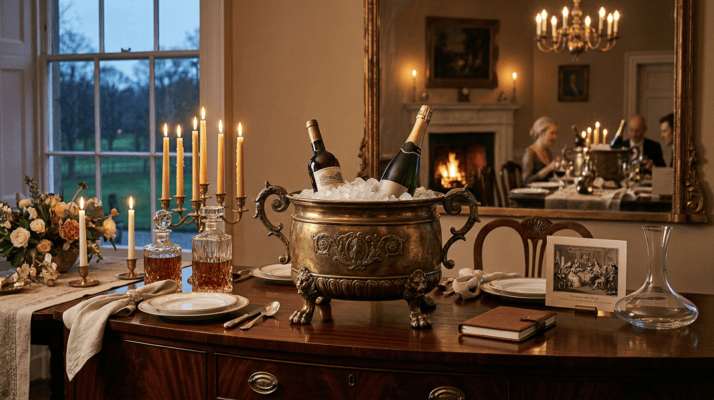
The Forgotten Ritual: How 18th-Century Wine Coolers Shaped Modern Luxury Hosting
Posted by Luxury Group International Design Team / Luxury Home Bar Accessories / April 13, 2026
There was a time when the dinner table was a theater, and every object upon it was a carefully chosen performer. In the sprawling manors of the 1700s, one actor commanded more attention than almost any other: the antique wine cooler.Long before the hum of the electric refrigerator, these majestic vessels—often called cellarets—were the undisputed pulse of high-society entertaining. Today, as we move back toward intimate, curated home bars, the ritual of the chilled bottle is making a triumphant return. But to truly master the art of the modern "slow pour," we must first look back at the Georgian era, where the chill was a status symbol and the service was a masterpiece.
The Georgian Power Play: Ice as the Ultimate Luxury
In the 18th century, serving a perfectly chilled bottle of wine wasn't just a hospitality choice; it was a display of sheer logistical power. Keeping ice in a world without freezers required deep ice houses, a massive staff, and highly insulated furniture.
Owning a vintage wine cooler signaled that you were a master of your environment. These early pieces were often massive, carved from dense mahogany and lined with lead to hold the cold for hours. Tucked discreetly yet visibly beneath a sideboard, the luxury wine cooler was the "silent butler" of the room—ready to offer up a perfectly tempered bottle at the flick of a wrist.
From Sarcophagus to Tabletop: A Design Evolution
The silhouette of the wine cooler has shifted through history, mirroring the architectural trends of the elite. Each era brought a new level of "architectural grace" to the chilling process:
• The Sarcophagus (1750–1780): Deep, boxy, and standing on lion-paw feet, these mirrored the classical stone tombs of Rome. They were heavy, masculine, and designed to anchor a room.
• The Pedestal Urn (1790–1820): As tastes moved toward the Neoclassical, coolers became slender and tall. They often flanked the host like twin towers of silver and brass.
• The Tabletop Tub (Mid-1800s): Eventually, the ritual moved from the floor to the table. This brought the antique wine cooler within arm's reach of the guests, making the act of chilling an interactive part of the conversation.
Why the "Slow Chill" is Beating Modern Tech
In our current world of instant gratification, why is the heavy, analog wine cooler trending again? The answer lies in the "psychology of weight."
There is a visceral, high-end feeling to the clink of a bottle against a heavy brass wall that a plastic chiller simply cannot replicate. A luxury wine cooler acts as a visual anchor in a modern home. It forces a pause. It turns a quick drink into a deliberate ceremony. By reintroducing these weighted elements into our home bars, we reclaim the "soul" of hosting that high-speed appliances have stripped away.
Recreating the Elite Ritual at Home
You don't need a manor or a staff of twenty to bring Georgian-era sophistication to your next gathering. Reclaiming the ritual is about the "prep" as much as the pour.
• The Thermal Hack: Fill your antique wine cooler with a 50/50 mix of crushed ice and water, then add a handful of rock salt. This creates a "super-chill" effect that mimics the heavy-duty insulation of 18th-century lead linings.
• The Centerpiece Strategy: Instead of hiding your cooler, place it on a dedicated service station or a marble bar cart. Use a vintage wine cooler with a rich patina to provide a warm contrast to modern glassware.
• The Linen Finish: Always keep a crisp, white linen napkin draped over the handle. In elite history, this was used to wipe the "tears" (condensation) off the bottle—a small detail that adds immense professional polish to your service.
Conclusion: A Legacy Worth Chilling For
The 18th-century cellaret was never just a bucket; it was a symbol of the host’s commitment to their guests' comfort. Today, whether you are a seasoned collector or a modern minimalist, integrating a luxury wine cooler into your setup is a nod to that legacy of excellence.
By stepping away from the "hidden fridge" and toward the visible, heavy-gauge ritual of the past, you aren't just serving wine—you are reviving a piece of history.
RECENT POSTS
-

Old Walls, New Stories: How Contemporary Furniture Revives Heritage Hotels
August 18, 2026
-
Designing Upward: Why 8 Drawer Dressers Belong in High-Ceiling European Bedrooms
August 18, 2026
-
From Lobby to Suite: The Art of a Seamless Luxury Material Story
August 17, 2026
-
Modern Dressers That Bring Timeless Luxury to Refined Interiors
August 17, 2026
-
Behind the Craft: How Master Sculptors Create Luxury Bronze Sculptures
August 16, 2026
-
Where Elegance Meets the Outdoors: Luxury Dining Tables for European Terraces
August 16, 2026
-
Grand Storage, Regal Style: 9 Drawer Dressers for Palace-Inspired Bedrooms
August 15, 2026
-
Legacy Over Trends: Why Hotels Invest in Hand-Carved, Gold-Leaf Furniture
August 15, 2026
-

Sustainable Luxury That Lasts: Materials Built for High-Traffic Hotel Interiors
August 14, 2026
-
Heritage Under the Open Sky: Vintage Dining Tables for Elegant Garden Living
August 14, 2026