





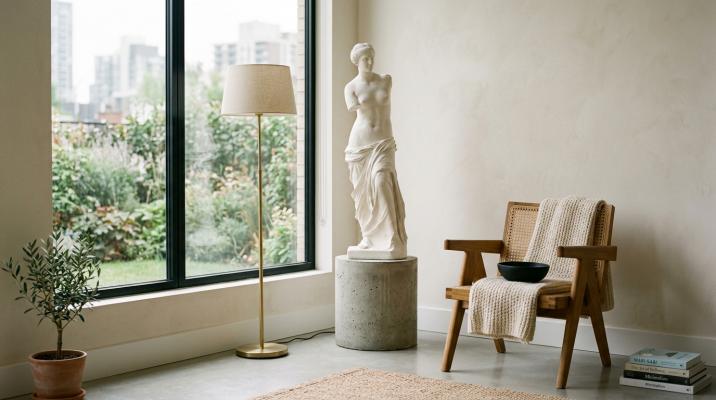
The Silent Storyteller: How a Single Classic Statue Can Transform Minimalist Spaces
Posted by Luxury Group International Design Team / Classic Sculptures / April 16, 2026
In the high-speed digital age, our homes have become our ultimate retreats—sanctuaries of silence and intentionality. But there is a fine line between a "minimalist" home and one that feels cold or unfinished. The secret to bridging that gap doesn't lie in more furniture or busier walls; it lies in the ancient grace of the classic statue.Integrating a neoclassical figure into a modern floor plan is an act of "curated contrast." It is the juxtaposition of 2,000-year-old aesthetics against the clean, sharp lines of 21st-century architecture. Whether it is a weathered replica of the Venus de Milo or the muscular tension of a David, these figures do more than occupy space—they provide a narrative.
1. The Power of One: Why Single-Figure Statuary Works
Minimalism is often misunderstood as the absence of things. In reality, it is the celebration of the essential. When you introduce a single, powerful classic statue into a quiet corner, you aren't adding "clutter." You are adding a focal point that anchors the room.The human form is the most relatable shape in the world of art. A single figure creates a sense of company without the noise of a crowd. It introduces organic curves—the sweep of an arm, the drape of a robe—that soften the rigid right angles of modern sofas and rectangular coffee tables.
The Venus vs. The David
- The Venus (Grace & Flow): Ideal for bedrooms or reading nooks, her curved silhouette promotes a sense of calm and fluid beauty.
- The David (Strength & Precision): Better suited for entryways or home offices, this figure represents focus and the pinnacle of human potential.
2. Classic Statue Styling Tips for Minimalist Interiors
The challenge with neoclassical art in a modern home is avoiding the "museum" look. You want your home to feel lived-in and artful, not like a dusty gallery. Here is how to master classic statue styling tips for minimalist interiors:
Respect the Negative Space
In a minimalist room, the air around the statue is just as important as the statue itself. Do not crowd your neoclassical figure with plants or stacks of books. Let the statue "breathe." A marble bust placed on a simple wooden pedestal against a bare white wall creates a moment of high-impact drama through sheer simplicity.
Play with Scale and Elevation
Size matters, but placement matters more.- Floor-level placement: A large-scale statue placed directly on a concrete or hardwood floor feels grounded and contemporary.
- The Gallery Lift: Placing a smaller classic statue on a tall, slender plinth elevates the eye level, turning a forgotten corner into a vertical art installation.
Material Alchemy
Modern minimalism often leans heavily on glass, steel, and matte paint. To elevate the space, look for statues in contrasting textures:- Matte Plaster: Provides a soft, chalky texture that absorbs light beautifully.
- Cast Stone or Resin: Offers a rugged, tactile quality that feels "found" rather than "manufactured."
- Carrara Marble Replicas: Adds a touch of cool, polished luxury that reflects light and brightens dark corners.
3. Creating "Artful Sanctuaries": The Narrative of the Corner
Every home has a "dead zone"—that awkward space at the end of a hallway, the gap under the stairs, or the corner of the primary suite. These are the perfect opportunities to create an artful sanctuary.By placing a classic statue in these quiet zones, you create a "pause point." It invites the resident to stop, look, and breathe. This is the essence of the "Sanctuary" trend: using art to dictate the pace of your life. A neoclassical figure doesn't demand your attention with bright colors; it earns it through timeless proportion and the play of shadows across its surface.
4. Lighting the Soul of the Stone
In a minimalist interior, lighting is your primary tool for depth. To make your classic statue truly sing, avoid harsh overhead lighting which flattens the form.- The "Rembrandt" Effect: Use a small floor spotlight (uplighting) to cast long, dramatic shadows into the musculature or drapery of the figure.
- Natural Side-Lighting: Positioning a statue perpendicular to a window allows the changing sun to "animate" the figure throughout the day. In the morning, it may look soft and ethereal; by sunset, it becomes bold and heroic.
5. Curating the Conversation: Mixing Eras
One of the most effective classic statue styling tips for minimalist interiors is the "Old Meets New" dialogue.Try placing your classic statue next to a piece of ultra-modern tech or a minimalist line drawing. This creates a "design friction" that is incredibly sophisticated. It shows that the homeowner is well-traveled, historically aware, and confident enough to break the rules of a single design era.
"A room is like a story. If every word is the same, it’s boring. The classic statue is the unexpected plot twist that makes the minimalist narrative interesting."
6. Maintenance of Minimalism
To keep the "sanctuary" feeling, the statue must be kept pristine. In a minimalist environment, dust is highly visible.- Cleaning: Use a soft-bristle brush to clean the intricate folds of the drapery.
- Rotation: Don’t be afraid to move your statue. Part of the joy of a single-figure piece is its versatility. Moving it from the lounge to the foyer can completely refresh the energy of the home without a single cent spent on new decor.
Conclusion: Investing in Timelessness
Trends in interior design come and go—Scandinavian, Industrial, Japandi—but the neoclassical figure has remained a symbol of taste for centuries. By integrating a classic statue into your modern home, you are making a commitment to beauty that transcends the "flavor of the month."You aren't just decorating; you are curating. You are turning a house of four walls into an artful sanctuary that whispers of history, grace, and the enduring power of the human spirit.
RECENT POSTS
-
The Art of Sitting Beautifully: Upholstered Bench Designs Where Comfort Meets Craftsmanship
October 08, 2026
-
Modern Luxury Lighting Trends That Are Quietly Transforming Elegant Interiors
October 08, 2026
-
The Quiet Power of Luxury Statues: Sculptural Accents for Opulent Interiors
October 07, 2026
-
The Art of Calm: Why Elegant Bedroom Furniture Never Feels Overwhelming
October 07, 2026
-
Royal Dressing Tables: The Elegant Centrepiece of a Sophisticated Bedroom
October 06, 2026
-
The Perfect Glow: How Luxury Dining Chandeliers Transform Formal Dining Spaces
October 06, 2026
-
When Lighting Becomes Art: Luxury Chandelier Designs That Define Grand Interiors
October 05, 2026
-
The Art of Entertaining: Luxury Bar Cabinets That Turn Home Lounges Into Statement Spaces
October 05, 2026
-
The Quiet Luxury Bathroom: Why Hidden Bathtubs Are Defining 2026
October 04, 2026
-
The Timeless Allure of Round Marble Coffee Tables in Luxury Interiors
October 04, 2026