





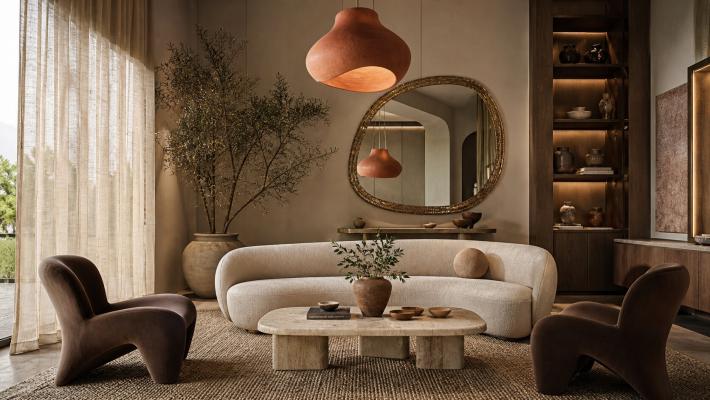
How to Design a 5-Star Living Room at Home: The Luxury Furniture Blueprint
Posted by Luxury Group International Design Team / Living Room Furniture / May 05, 2026
A step-by-step guide that feels like hiring a private interior designer — saving you months of planning and costly mistakes.Introduction: Why Your Living Room Deserves a Blueprint
The living room is the emotional center of your home. It’s where you entertain, unwind, and make first impressions. Yet most people approach it reactively — buying a sofa here, a lamp there, hoping the pieces eventually "work together."
In 2026, luxury living room design has shifted toward intentionality. The era of flashy, logo-driven opulence is over. Today’s high-end interiors favor quiet luxury — spaces that whisper sophistication through material honesty, sculptural form, and sensory comfort . Think of it as the difference between wearing a loud designer label and a perfectly tailored suit in Italian cashmere. Both signal wealth; only one signals taste.
This blueprint breaks the process into four executable phases: Layout, Materials, Lighting, and Statement Pieces. Follow it sequentially, and you’ll build a living room that rivals the interiors of a five-star boutique hotel — without the $500/hour design fee.
Phase 1: The Layout — Architecting Movement and Conversation
Before you buy a single piece of luxury living room furniture, you need a spatial strategy. High-end designers don’t start with aesthetics; they start with circulation — how people move through and settle into a room.
The Foundation Rule: Float Your Furniture
The most common mistake in luxury apartment interiors is pushing all furniture against the walls. This creates a "waiting room" effect — sterile and disconnected. Instead, float your primary seating at least 18 inches from the walls. This creates breathing room, defines conversation zones, and makes the space feel intentionally composed .The 3-Point Conversation Triangle
For a room to feel welcoming, arrange seating so no one is more than 8 feet from another person. Your anchor pieces — typically a sofa and two accent chairs — should form a rough triangle or U-shape. Add a coffee table in the center, keeping 14–18 inches of clearance from the sofa edge for legroom and tray-passing .Layered Seating: The 2026 Approach
This year, designers are moving beyond the rigid "sofa + two chairs" formula. Layered seating — mixing chaises, ottomans, and sculptural accent chairs — adds dimension and adaptability . Consider a pair of ottomans instead of a second coffee table; they function as extra seating, footrests, and surface space while keeping the layout fluid .Pro Tip: If your living room serves multiple functions (work, entertaining, family time), invest in a modular sofa system. In 2026, luxury brands have refined modular designs that maintain architectural integrity regardless of configuration — elegant adaptability without visual compromise .
Phase 2: Materials — The Tactile Language of Luxury
Once your layout is locked, material selection becomes your primary tool for signaling quality. In high-end furniture, materials are no longer just visual; they’re sensory. The shift toward tactile, character-driven surfaces is one of the defining trends of 2026 .
Upholstery: Texture Over Pattern
Forget busy prints. The new luxury standard favors textured solids that invite touch:
- Bouclé — The fabric of the moment. Its nubby, looped surface adds warmth and depth without overwhelming the eye. Perfect for sofas and oversized accent chairs .
- Chenille and velvet — These plush materials catch light beautifully and create an immediate sense of comfort and permanence .
- Washed linen and soft leathers — For a more relaxed, lived-in elegance. Thick-cut cognac leather, in particular, ages gracefully and deepens in character over time .
Wood: Warm, Dark, and Honest
Cool gray woods are officially dated. 2026 luxury interiors embrace smoked oak, rich walnut, and mahogany with visible grain and natural imperfections . The goal is material honesty — surfaces that celebrate where they came from. Look for hand-finished details, live edges, or visible joinery that signals artisan craftsmanship .
Stone and Metal Accents
- Honed marble and travertine — Matte finishes replace high-gloss stone. These materials add cool contrast to warm textiles and ground the room with geological weight .
- Brushed bronze and patinated metals — Used sparingly in lighting, hardware, and side table bases. They add warmth without the coldness of chrome .
The Duality Principle: The most sophisticated luxury living rooms mix hard and soft materials deliberately. A bouclé sofa paired with a travertine coffee table. A velvet armchair beside a smoked oak side table. This contrast creates visual tension and tactile richness .
Phase 3: Lighting — Designing with Light, Not Just Fixtures
Lighting is where amateur interiors die and luxury apartment interiors come alive. In 2026, light is treated as a structural element — shaping how surfaces, colors, and volumes are perceived throughout the day .
The Three-Layer System
Every five-star living room uses three distinct lighting layers:
1. Ambient Lighting — The Foundation Recessed ceiling lights or a central chandelier provide overall illumination. In 2026, the trend is toward sculptural ceramic fixtures — hand-shaped clay shades with matte earth tones or high-shine glazes that double as art objects . Choose a piece with presence; this is your room’s crown jewel.
2. Task Lighting — The Functional Layer Table lamps and floor lamps near reading chairs. Look for designs with colored glass elements — amber, cobalt, or emerald shades that cast tinted light and animate the room’s palette as daylight fades .
3. Accent Lighting — The Drama LED strips inside built-in shelving, picture lights over art, or uplighting behind plants. In luxury spaces, technology disappears — wireless charging surfaces and hidden cable management keep the aesthetic pure . Programmable systems that shift color temperature from warm morning light to cooler evening tones are now standard in high-end homes .
Pro Tip: Install dimmers on every switch. A room lit at 30% capacity feels intimate and expensive; the same room at full brightness feels like an airport lounge.
Phase 4: Statement Pieces — Curating the Conversation Starters
This is where personality enters. A luxury living room without a statement piece is like a tailored suit without a pocket square — technically correct, but forgettable.
The Sculptural Accent Chair
In 2026, the accent chair has evolved from supporting actor to lead role. Designers are selecting chairs with organic, biomorphic silhouettes — curved backs, asymmetrical forms, and materials that read as functional sculpture . Position one chair at an angle to your main seating group; the asymmetry creates movement and draws the eye .The Curved Sofa as Centerpiece
The straight-lined sectional is being replaced by curved and semi-circular sofas. These pieces soften the room’s geometry, improve conversation flow, and serve as architectural anchors . If your space allows, a channeled curved sofa in a rich neutral becomes the room’s defining gesture.Artisanal and Maximalist Mirrors
Mirrors in 2026 are no longer mere reflectors — they’re sculptural focal points. Look for frames in carved wood, woven brass, or layered resin with irregular polygons and clustered panels . A large-scale mirror opposite a window doubles natural light and visually expands the room.
Controlled Maximalism
The final layer is personal curation. 2026’s "balanced maximalism" means displaying collected objects — books, ceramics, travel finds — with intention rather than clutter . Group items in odd numbers, vary heights, and leave negative space between clusters. The result feels collected over time, not purchased in a weekend.The 2026 Color Blueprint
Pulling it all together requires a cohesive palette. This year’s luxury interiors favor warm, layered neutrals with strategic depth :
| Layer | Colors | Application |
| Base | Caramel, cream, warm taupe, soft clay | Walls, large upholstery, rugs |
| Mid-tone | Mocha mousse, olive-gray, terracotta rose | Accent chairs, drapery, throws |
| Depth | Deep walnut, blackened bronze, burgundy | Wood furniture, metal accents, small decor |
| Accent | Emerald, sapphire, amber (via glass/art) | Lighting, ceramics, single statement pieces |
Rule of thumb: 60% base, 30% mid-tone, 10% depth and accent. This ratio ensures serenity with sophistication.
Final Thoughts: The Luxury Mindset
Designing a 5-star living room isn’t about buying the most expensive pieces. It’s about intentionality — every item earning its place through quality, function, and emotional resonance.
The 2026 definition of luxury is quiet confidence: materials that age beautifully, shapes that invite relaxation, and technology that serves without showing off . Start with your layout, build with honest materials, sculpt with light, and finish with pieces that tell your story.
Follow this blueprint, and you won’t just have a beautiful living room. You’ll have a space that feels like the best version of home.
RECENT POSTS
-
The Art of Hospitality on Wheels: How Luxury Trolleys Elevate Boutique Hotel Experiences
September 25, 2026
-
The Art of Grandeur: How Baroque Coffee Tables Transform Luxury Living Spaces
September 25, 2026
-
The Art of Entertaining: How Luxury Bar Furniture Transforms Sophisticated Interiors
September 24, 2026
-
The New Art of Rest: Curating a Wellness-Focused Luxury Bedroom
September 24, 2026
-
Framed Prints That Bring Effortless European Elegance to Apartment Interiors
September 23, 2026
-
How Crystal Chandelier Lighting Transforms Light, Height and Luxury Interiors
September 23, 2026
-
Sculptural Illumination: How Contemporary Floor Lamps Are Becoming Modern Art Statements
September 22, 2026
-
The Art of Choosing a Luxury Table Clock: A Guide to Size, Style & Placement
September 21, 2026
-
Elegant Wall Lamps: The Secret to Warmer, More Characterful Luxury Interiors
September 21, 2026
-
Pairing Luxury TV Units with Living Room Furniture: Create Cohesive Elegance in Modern Homes & Hotel
September 20, 2026