






The Collector's Complete Guide to Buying, Displaying, and Preserving Handcrafted Bronze Luxury Piece
Posted by Luxury Group International Design Team / Classic Sculptures / May 13, 2026
There is a reason bronze has endured for over five thousand years. It does not merely decorate a room — it commands it. For European collectors who understand that the objects surrounding them are a reflection of taste, culture, and discernment, handcrafted bronze luxury pieces occupy a category entirely their own. This guide covers everything you need to know: how to buy with confidence, how to display with intention, and how to preserve what may well become a family heirloom.Part One: Buying Handcrafted Bronze Luxury Pieces the Right Way
Know What You Are Actually Buying
Not all bronze is created equal. Genuine handcrafted pieces are produced using time-honoured methods — principally lost-wax casting (cire perdue) — where liquid bronze is poured into an individually prepared mould, then hand-finished by a skilled artisan. The result carries subtle, irreplaceable surface variation: slight tool marks, organic patination, and a weight and density that mass-produced resin or zinc alloy imitations simply cannot replicate.When evaluating a piece, look for:
- Solid weight relative to size — genuine bronze is dense and substantial
- Hand-chased surfaces where you can see the artisan's finishing work up close
- A natural patina that has depth and tonal variation, not a uniform spray coating
- Maker's marks or foundry stamps on the base, confirming authentic origin
- A certificate of authenticity or provenance documentation, particularly important for investment-grade pieces
At Luxury Group International, every piece in the bronze sculpture collection is produced through solid casting with artisan patinas and hand-finished detailing in the European atelier tradition — giving buyers the assurance of genuine craft behind each acquisition.
Match the Piece to Your Intention
Are you buying to live with art daily, to anchor an interior concept, or to build a collection with long-term value? Each motivation calls for a slightly different approach. For everyday living, choose pieces whose scale, subject matter, and finish feel genuinely personal — a bronze eagle, a classical ballerina, a majestic bull — pieces that spark conversation and hold emotional resonance. For investment or legacy collecting, focus on craftsmanship quality, limited or bespoke production, and documented provenance.
Part Two: Displaying Handcrafted Bronze Luxury Pieces With Intention
Placement Is Everything
Bronze does not belong on a shelf as an afterthought. It belongs where it will be seen, lit, and appreciated. The most effective placements for handcrafted bronze luxury pieces in European interiors are:- Console tables in entrance halls — where a striking figurative sculpture sets the tone the moment a guest enters
- Library and study settings — where classical motifs and heritage-inspired forms reinforce an atmosphere of intellectual gravitas
- Living room focal points — positioned on a pedestal or prominent surface where ambient and directional lighting can work together
- Dining room sideboards — where the permanence of bronze contrasts beautifully with the ephemeral nature of food, flowers, and candlelight
Lighting Makes or Breaks the Display
Bronze responds exceptionally well to warm directional light. Halogen or warm-LED spotlights positioned at a 30–45° angle reveal surface texture, patina depth, and sculptural form in a way that ambient light alone never will. Avoid cold, blue-toned lighting — it flattens the warmth of the metal and dulls the patina entirely.
What to Pair With Bronze
Bronze reads as both masculine and refined. It pairs naturally with marble, dark walnut, aged leather, linen, and velvet. In modern European interiors that favour quiet luxury — clean architecture with rich material choices — a single well-chosen bronze piece provides the warmth and cultural depth that contemporary minimalism can otherwise lack.Part Three: Preserving Your Bronze for Generations
Understand the Patina — It Is Not Damage
The patina on a bronze piece is its fingerprint. It develops through the natural oxidation of the alloy over time and is, to a knowledgeable collector, proof of authenticity and age. Attempting to polish a patinated bronze back to a bright finish is one of the most common and costly mistakes new collectors make. Preserve it — do not fight it.Routine Care
- Dust regularly with a soft, dry microfibre cloth — never abrasive materials
- Avoid moisture — keep bronze away from bathrooms, kitchens, and areas of high humidity
- Apply a thin coat of microcrystalline wax (such as Renaissance Wax) once or twice a year to protect the surface and maintain lustre
- Never use household metal polishes — they strip patina and can cause irreversible surface damage
- Handle with clean cotton gloves when moving or repositioning pieces, as the oils in skin can accelerate unwanted corrosion over time
When to Seek Professional Restoration
If you notice active green powdering — known as bronze disease, caused by chloride contamination — do not attempt to treat it yourself. Contact a professional conservator. Caught early, bronze disease is entirely manageable. Left untreated, it is destructive.Where to Begin Your Collection
For European collectors seeking handcrafted bronze luxury pieces that honour the atelier tradition — from classical figurines and equestrian sculptures to expressive contemporary forms — the bronze sculpture collection at Luxury Group International offers a curated range with shipping across the EU, UK, and beyond.
Explore the full collection at Luxury Group International and begin — or continue — your collection with the confidence that every piece has been chosen for its craft, its character, and its capacity to endure.
Bronze does not age. It evolves. And in the hands of the right collector, it tells a story that outlasts everyone in the room.
RECENT POSTS
-
The Art of Sitting Beautifully: Upholstered Bench Designs Where Comfort Meets Craftsmanship
October 08, 2026
-
Modern Luxury Lighting Trends That Are Quietly Transforming Elegant Interiors
October 08, 2026
-
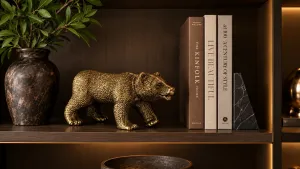
The Quiet Power of Luxury Statues: Sculptural Accents for Opulent Interiors
October 07, 2026
-
The Art of Calm: Why Elegant Bedroom Furniture Never Feels Overwhelming
October 07, 2026
-
Royal Dressing Tables: The Elegant Centrepiece of a Sophisticated Bedroom
October 06, 2026
-
The Perfect Glow: How Luxury Dining Chandeliers Transform Formal Dining Spaces
October 06, 2026
-
When Lighting Becomes Art: Luxury Chandelier Designs That Define Grand Interiors
October 05, 2026
-
The Art of Entertaining: Luxury Bar Cabinets That Turn Home Lounges Into Statement Spaces
October 05, 2026
-
The Quiet Luxury Bathroom: Why Hidden Bathtubs Are Defining 2026
October 04, 2026
-
The Timeless Allure of Round Marble Coffee Tables in Luxury Interiors
October 04, 2026